 The Greatest Disability Is in the Mind, Not in the Body
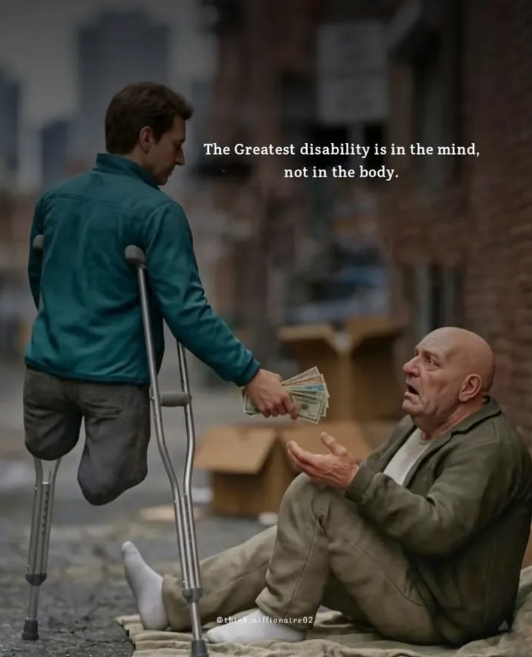
A single image can sometimes communicate a message more powerfully than a lengthy speech. The image above portrays a man using crutches extending money to an older man sitting on the ground. Across the top appears the quote, “The Greatest Disability Is in the Mind, Not in the Body.” While the image presents a symbolic message rather than documenting a known event, it invites viewers to reflect on compassion, resilience, generosity, and the many ways people define strength.
At first glance, many people naturally focus on the man’s physical disability. He is standing with the assistance of crutches, suggesting that mobility may be difficult for him. Yet despite facing his own challenges, he is shown helping someone else by offering money. The older man seated on the ground appears surprised and grateful, reinforcing the emotional impact of the moment.
The message encourages viewers to look beyond physical appearances. Society often assumes that people with visible disabilities are primarily in need of assistance. While accessibility and support are important, many individuals with disabilities also contribute significantly to their families, communities, workplaces, and charitable causes. Physical limitations do not determine a person’s character, kindness, or ability to make a positive difference.
The quote, “The Greatest Disability Is in the Mind, Not in the Body,” is not meant to diminish the real challenges that people with disabilities face. Physical disabilities can create genuine obstacles that require accommodations, medical care, and inclusive environments. Instead, the statement points toward another kind of limitation: attitudes that prevent compassion, determination, or empathy.
History provides countless examples of people who overcame extraordinary physical challenges to achieve remarkable accomplishments. Scientists, athletes, artists, educators, entrepreneurs, and public servants have demonstrated that perseverance and opportunity can allow people to thrive despite significant obstacles. Their stories remind us that human potential cannot be measured simply by physical ability.
At the same time, the image highlights the importance of generosity. The amount of money being offered is not the central focus. Rather, it is the willingness to help someone else despite having personal challenges of one’s own. Acts of kindness often carry emotional value far beyond their financial worth. A small gesture of compassion can restore hope, encourage dignity, and remind another person that they are not alone.
Many people assume generosity belongs primarily to those with great wealth. In reality, some of the most meaningful acts of kindness come from individuals with limited resources. People frequently share meals, volunteer their time, comfort strangers, donate clothing, or offer encouragement even when they themselves face difficulties. Kindness is measured less by the size of the gift than by the willingness to give.
The image also invites reflection on empathy. It is easy to overlook people experiencing hardship when daily life becomes busy and demanding. Yet taking a moment to recognize another person’s humanity can have a lasting impact. Whether through a conversation, a smile, practical assistance, or charitable support, small actions often matter more than we realize.
The phrase about the “mind” also speaks to limiting beliefs. Sometimes the greatest obstacles people face are not physical barriers but internal ones. Fear of failure, lack of confidence, prejudice, hopelessness, or unwillingness to learn can prevent individuals from reaching their full potential. These mental barriers may affect anyone, regardless of physical health or financial circumstances.
Conversely, a positive mindset alone cannot solve every problem. Real-world challenges such as poverty, disability, illness, or discrimination require practical solutions alongside personal determination. It is therefore important to interpret inspirational quotes thoughtfully rather than literally. Motivation is valuable, but so are accessible communities, equal opportunities, healthcare, education, and social support.
The image also reminds us not to judge others solely by appearances. The man using crutches may appear vulnerable, yet he is the one extending help. The older man receiving assistance may have a story that viewers cannot see. Every individual carries experiences, struggles, and strengths that are invisible in a single photograph.
This lesson extends beyond the image itself. In everyday life, people often make quick assumptions based on appearance, clothing, age, disability, or social status. Such assumptions can be inaccurate and unfair. Taking time to understand another person’s circumstances encourages empathy rather than judgment.
Communities become stronger when people recognize that everyone has something valuable to contribute. Accessibility initiatives, inclusive education, fair employment practices, and respectful attitudes help ensure that people of all abilities can participate fully in society. Inclusion benefits not only individuals with disabilities but the community as a whole by welcoming diverse talents, perspectives, and experiences.
The emotional power of this image also lies in its simplicity. There are no dramatic special effects or elaborate settings. Instead, it captures a quiet act of generosity that many viewers can understand immediately. Such moments often resonate because they reflect values shared across cultures: compassion, dignity, respect, and helping those in need.
Social media frequently amplifies inspirational images because they evoke strong emotions. However, viewers should remember that many viral images are symbolic or staged to communicate a broader message rather than document a verified event. Whether or not this specific scene occurred exactly as shown, the values it represents remain meaningful.
Ultimately, the image encourages us to ask an important question: how do we define strength? Physical ability is one form of strength, but courage, generosity, resilience, integrity, and compassion are equally important. A person may face physical limitations while possessing remarkable emotional strength. Another may enjoy excellent physical health yet struggle to show empathy or kindness.
The quote, “The Greatest Disability Is in the Mind, Not in the Body,” serves as a reminder that our attitudes often shape how we respond to life’s challenges. Choosing empathy over indifference, hope over despair, and generosity over selfishness can transform not only our own lives but also the lives of those around us.
In the end, the most powerful message is not about disability alone. It is about recognizing the humanity in every person we encounter. When we judge less, help more, and remember that everyone faces unseen struggles, we build communities defined not by weakness, but by compassion. That is a form of strength available to everyone, regardless of age, ability, or circumstance.