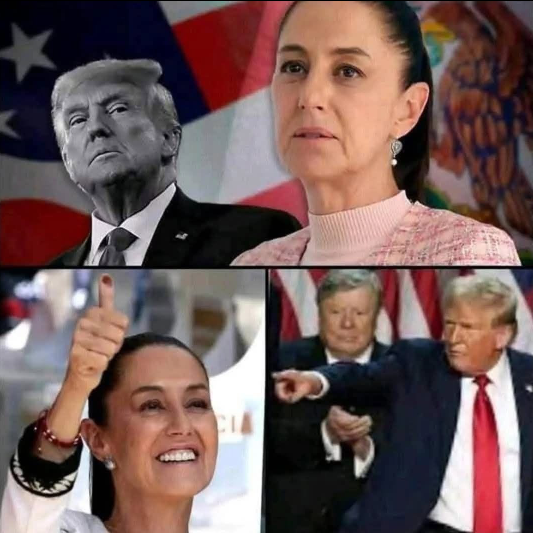
Mexican President Says Trump Is “Not Well Informed” Amid Dispute Over Cartel Comments
Relations between the United States and Mexico once again took center stage after Mexican President Claudia Sheinbaum responded to remarks made by U.S. President Donald Trump regarding the influence of drug cartels in Mexico. Speaking during one of her regular morning press conferences, Sheinbaum rejected Trump’s characterization of the security situation in her country and said the U.S. president was “not well informed” about conditions in Mexico. (Xinhua News)
The exchange followed comments Trump made during the G7 Summit, where he claimed that drug cartels were effectively running Mexico and suggested that Sheinbaum was unable to control the criminal organizations operating within the country. Trump’s remarks quickly drew international attention and sparked renewed debate over border security, organized crime, and the relationship between the neighboring nations. (Xinhua News)
Addressing reporters in Mexico City, Sheinbaum sought to downplay the controversy while firmly disagreeing with Trump’s assessment.
“He has said it before,” she noted, adding that Trump has his own communication style and that her government does not need to respond to every public statement he makes. Nevertheless, she made clear that she believes Trump’s description of Mexico is inaccurate.
According to Sheinbaum, “He is not well informed.” She said she has communicated that message directly to Trump in previous conversations and emphasized that the Mexican government continues to function effectively despite the serious challenges posed by organized crime. (Xinhua News)
The Mexican president also defended her administration’s security strategy, pointing to government statistics that she said show declines in intentional homicides and improvements in public safety. While acknowledging that drug cartels remain a major threat, Sheinbaum argued that describing criminal groups as controlling the entire country does not reflect reality.
“The Mexican state exists,” she reportedly said, stressing that government institutions continue operating throughout the nation and remain committed to combating organized crime. (Breitbart)
Trump has repeatedly criticized Mexico’s handling of drug cartels, particularly organizations involved in fentanyl trafficking and human smuggling. Throughout his presidency, he has advocated a tougher approach toward transnational criminal organizations and has suggested that the United States should consider stronger military options to dismantle cartel networks operating across the border.
Those proposals, however, have consistently met resistance from Mexican leaders, who argue that foreign military intervention would violate Mexico’s sovereignty.
Earlier this year, Sheinbaum confirmed that she spoke directly with Trump about security cooperation. She described the conversation as constructive but reiterated that Mexico does not support U.S. military operations inside Mexican territory. Instead, she said both countries should continue cooperating through intelligence sharing, law enforcement partnerships, and joint efforts against drug trafficking. (ABC News)
The issue of cartel violence has become one of the defining topics in U.S.-Mexico relations. Drug trafficking organizations continue to operate across large portions of Mexico while supplying narcotics, including fentanyl, to markets in the United States. American officials have repeatedly identified the opioid epidemic as one of the nation’s most pressing public health crises.
Mexico, meanwhile, argues that the United States also bears responsibility because American demand for illegal drugs fuels cartel profits. Mexican leaders have additionally called on Washington to do more to stop firearms from being trafficked south across the border, where many weapons ultimately end up in the hands of criminal organizations. (Los Angeles Times)
Despite the public disagreement, officials from both countries have continued working together on border security, migration, and efforts to combat organized crime. Security cooperation remains an important part of the bilateral relationship, even as political leaders publicly disagree over strategy.
Analysts note that disputes between U.S. and Mexican presidents over security policy are not new. Successive administrations in both countries have faced disagreements over immigration enforcement, drug trafficking, border security, trade, and sovereignty. Nevertheless, the two governments remain closely connected through economic ties, shared borders, and law enforcement cooperation.
Trump has argued that stronger action is necessary to stop the flow of fentanyl and reduce cartel violence. His administration has emphasized aggressive border enforcement and increased pressure on criminal organizations operating in Mexico.
Sheinbaum, by contrast, has maintained that lasting solutions require cooperation rather than unilateral military action. She has argued that both countries should address the root causes of organized crime while respecting each nation’s sovereignty and legal system. (ABC News)
Political observers expect the rhetoric between the two leaders to continue as security and immigration remain central issues in both countries. However, diplomats on both sides have indicated that communication channels remain open and that cooperation on shared security challenges will continue despite public disagreements.
For now, Sheinbaum’s response underscores Mexico’s position that while cartel violence is a serious concern, descriptions suggesting the government has lost control of the country are inaccurate. Trump, meanwhile, has continued to argue that stronger measures are needed to confront criminal organizations responsible for drug trafficking and violence affecting both sides of the border.
As both governments navigate these complex issues, the debate illustrates the delicate balance between maintaining close cooperation on security while respecting national sovereignty and differing political approaches. The exchange also highlights how deeply intertwined the two nations remain, with decisions made in Washington and Mexico City carrying significant consequences for millions of people living along both sides of the border.