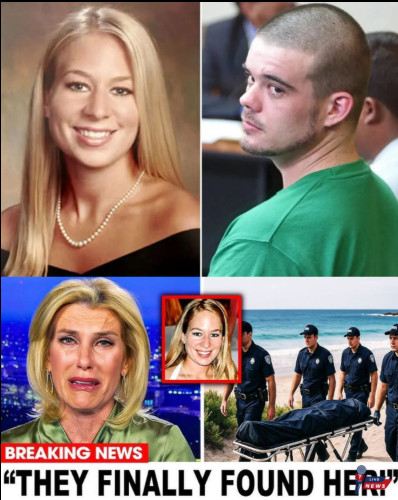
20 Years Later, The Natalee Holloway Mystery Is Finally Solved… And It’s Bad
For nearly two decades, the disappearance of Natalee Holloway remained one of the world’s most haunting unsolved mysteries. The Alabama teenager vanished during a high school graduation trip to Aruba in May 2005, sparking an international search, countless television specials, and years of speculation. Her family refused to give up hope, investigators pursued countless leads, and millions followed every development, wondering if the truth would ever come to light.
Twenty years later, the central mystery is no longer a mystery—but the truth is every bit as heartbreaking as many feared.
Natalee Holloway was just 18 years old when she traveled to Aruba with classmates to celebrate her graduation. On the final evening of the trip, she was seen leaving a nightclub with Joran van der Sloot and two other young men. She never returned to her hotel.
The disappearance immediately triggered an extensive search involving local authorities, volunteers, and investigators from multiple countries. Beaches were combed, underwater searches were conducted, and numerous tips poured in from around the world. Despite enormous effort, no trace of Natalee was ever found.
As the years passed, Joran van der Sloot became the primary suspect. Although he was questioned multiple times, his story changed repeatedly. Over the years, he offered several different versions of what allegedly happened that night, only to later contradict or retract them. These conflicting statements frustrated investigators and devastated Natalee’s family, who continued searching for answers.
The case remained in the public spotlight through documentaries, news reports, books, and television programs. Every new claim raised hopes that the mystery was close to being solved, only for those hopes to fade again.
The breakthrough finally came years later through a different criminal investigation.
In 2010, van der Sloot was arrested in Peru in connection with the murder of Stephany Flores Ramírez. He was ultimately convicted and sentenced to prison there. While serving that sentence, he remained connected to the Holloway investigation.
Authorities also charged van der Sloot with attempting to extort money from Natalee’s mother, Beth Holloway, by falsely claiming he could reveal the location of Natalee’s remains in exchange for a large payment. The information he provided proved to be fabricated, leading to additional criminal charges against him.
The most significant development came in 2023, when van der Sloot was temporarily transferred to the United States to face the federal extortion charges. As part of a plea agreement, he admitted responsibility for killing Natalee Holloway and described the events surrounding her death. According to prosecutors, he confessed that after Natalee rejected his sexual advances on a beach, he struck her in the head with a concrete block and then disposed of her body in the ocean. Investigators have not recovered her remains, but officials stated they believe his confession is credible based on the evidence gathered during the investigation.
For Beth Holloway, the confession marked the end of an agonizing search that had lasted nearly two decades. Although it did not bring her daughter back, it provided the answers she had sought for years.
In a statement following the confession, Beth said that learning the truth allowed her family to finally close a painful chapter. She acknowledged that nothing could erase the loss, but knowing what happened ended years of uncertainty.
The confession also brought renewed attention to the importance of international cooperation in criminal investigations. Because the case involved multiple countries—including Aruba, the United States, and Peru—investigators faced significant legal and jurisdictional challenges throughout the years.
Natalee Holloway’s disappearance had a lasting impact beyond her own case. It changed how many families approached international travel, inspired discussions about personal safety, and highlighted the emotional toll that missing-person cases place on loved ones. Her story became a symbol of the enduring pain caused when families are left without answers.
Even with the confession, one painful reality remains: Natalee’s body has never been recovered. For many families of missing persons, recovering their loved one’s remains is an important part of the grieving process. In this case, that opportunity has not yet come.
The Holloway case also serves as a reminder that justice can take many forms. While some questions may never be answered completely, holding those responsible accountable and uncovering the truth can still provide a measure of closure.
Today, Natalee Holloway is remembered not only for the tragedy of her disappearance but also for the perseverance shown by her family. Their determination kept the investigation alive through years of uncertainty and ultimately led to the confession that resolved one of the most well-known missing-person cases in recent history.
The ending is undeniably heartbreaking. There was no miraculous rescue, no hidden escape, and no happy reunion. Instead, the truth confirmed the worst fears that had lingered since that night in Aruba. Yet after nearly twenty years of unanswered questions, the confession finally brought clarity to a mystery that had captivated the world and deeply affected everyone who hoped that one day, Natalee Holloway’s family would learn what happened to their daughter.