⚡️ “IMPOSSIBLE!” — Iran Claims B-21 Raider SHOT DOWN Over Hostile Airspace… What Happened Next Shocked Military Experts
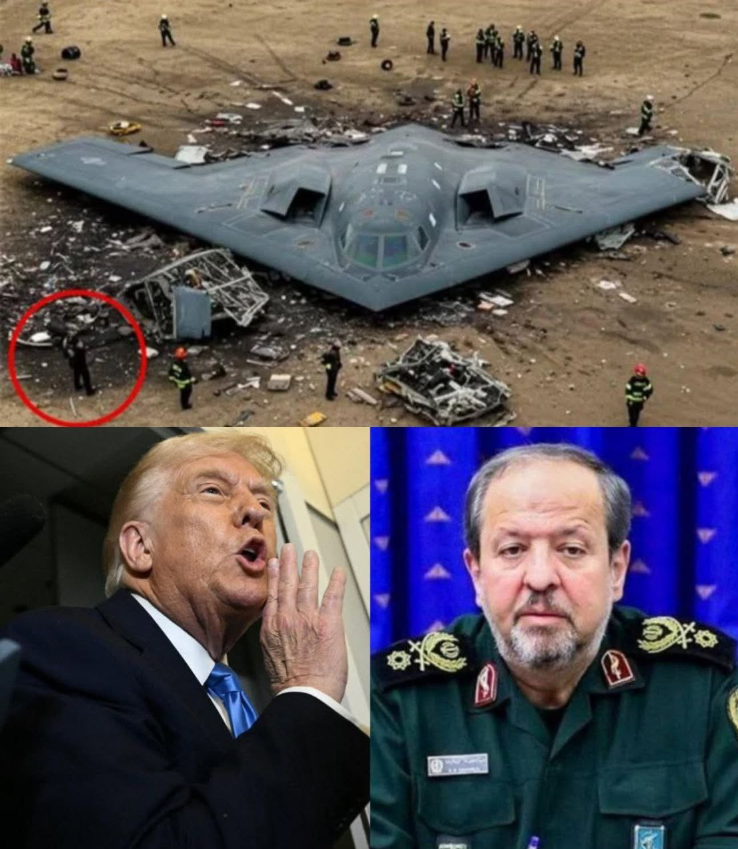
In a dramatic development that sent social media into a frenzy, reports began circulating online claiming that Iran had successfully shot down a highly advanced American stealth bomber—this time allegedly the futuristic B-21 Raider.
The claim spread rapidly across various platforms, accompanied by dramatic headlines, grainy images, and sensational videos. Supporters called it a historic military breakthrough. Skeptics immediately questioned the authenticity of the reports.
But what was the truth?
As military analysts rushed to verify the story, one major problem quickly emerged: there was no credible evidence that a B-21 Raider had been shot down anywhere in the world. In fact, many of the images and videos being shared showed clear signs of digital manipulation or artificial intelligence generation. Similar viral claims involving American stealth aircraft had previously been debunked by fact-checkers and defense analysts.
The B-21 Raider is widely regarded as one of the most advanced military aircraft ever developed. Built by Northrop Grumman, the aircraft was designed to penetrate sophisticated air-defense networks and operate in highly contested environments.
Because of its advanced stealth technology, the mere suggestion that one had been shot down immediately attracted worldwide attention.
Online commentators quickly split into two camps.
One group argued that no aircraft is truly invisible and that modern radar systems are becoming increasingly capable of detecting stealth platforms.
The other side pointed out that extraordinary claims require extraordinary evidence.
Military experts noted that if a B-21 were actually lost in combat, the event would likely trigger immediate responses from governments, intelligence agencies, defense contractors, and major news organizations around the globe.
Yet none of that happened.
No official confirmation emerged.
No verified wreckage photographs appeared.
No independent satellite imagery surfaced.
No credible evidence showed that a B-21 had crashed or been destroyed.
Instead, analysts noticed that many of the viral images closely resembled previous false claims involving American stealth bombers. Fact-checking organizations have repeatedly identified AI-generated images falsely claiming that Iran had shot down U.S. stealth aircraft.
The incident highlighted a growing challenge in modern information warfare.
In previous decades, verifying battlefield events often required reporters, photographs, and eyewitness accounts. Today, realistic AI-generated content can spread globally within minutes, reaching millions of people before experts have time to investigate.
Defense analysts warn that misinformation can sometimes be almost as powerful as actual military operations.
A convincing fake image can influence public opinion, fuel speculation, and create confusion even when the underlying event never occurred.
This is not the first time dramatic claims about American aircraft have surfaced. Recent years have seen multiple reports alleging that various U.S. aircraft had been shot down, only for those claims to be disputed or debunked after further investigation.
The B-21 Raider itself remains a subject of fascination because relatively little information about its capabilities has been publicly released.
Military planners intentionally keep many details classified.
What is known is that the aircraft represents the next generation of long-range stealth bombers and is expected to play a major role in future American air power.
That secrecy sometimes creates fertile ground for rumors.
When people know only limited details about a system, speculation can fill the gaps.
As the story continued to circulate online, aviation specialists pointed out another issue: many of the alleged images did not even resemble the known dimensions or design characteristics of the B-21.
Some contained visual distortions commonly associated with AI-generated content.
Others showed physical inconsistencies that would be unlikely in a genuine crash scene.
These observations further weakened the credibility of the claim.
By the end of the news cycle, most independent observers reached the same conclusion: there was no verified evidence that a B-21 Raider had been shot down.
While discussions about stealth technology, air-defense systems, and future warfare remain legitimate topics, the specific viral claim lacked reliable support.
The episode serves as a reminder that in today’s digital age, sensational headlines can travel much faster than verified facts.
Before accepting dramatic military claims, experts recommend looking for confirmation from multiple credible sources, official statements, and independently verifiable evidence.
Until such evidence emerges, reports that Iran shot down a B-21 Raider should be treated with caution.