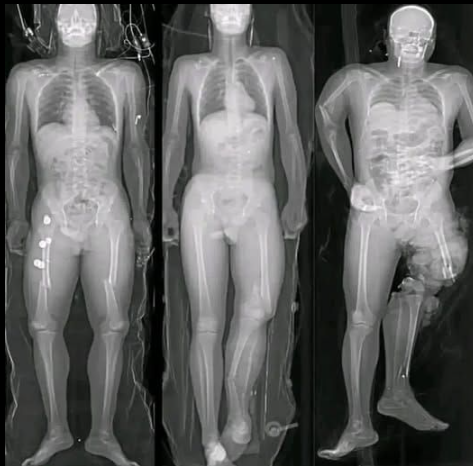
🚨COVID-19 Global Alert: “Vaccinated Individuals Discover New Cancer” — What the Headline Doesn’t Tell You
A dramatic headline began circulating across social media:
“COVID-19. Global alert: Vaccinated individuals discover new cancer… See more.”
The wording is alarming. It suggests that scientists have uncovered a new form of cancer caused by COVID-19 vaccines and that vaccinated people around the world are suddenly at risk.
But before accepting such claims, it’s important to examine what is actually known, what researchers have found, and what evidence supports the statement.
The first thing to understand is that headlines are often designed to provoke strong emotional reactions. Fear, curiosity, and uncertainty drive clicks and shares. A headline that appears shocking may leave out critical context, making ordinary findings sound far more dramatic than they really are.
When medical researchers investigate potential links between vaccines and diseases, they rely on extensive studies involving thousands or even millions of participants. These studies are reviewed by experts, compared with other research, and continuously monitored by health authorities around the world.
Since COVID-19 vaccines were introduced, scientists have conducted one of the largest vaccine-monitoring efforts in history. Researchers have examined potential side effects, long-term outcomes, and patterns of illness among vaccinated and unvaccinated populations.
To date, there is no accepted scientific evidence showing that COVID-19 vaccines create a new type of cancer.
That doesn’t mean researchers have stopped investigating health concerns. In science, questions are constantly examined. If unusual patterns appear, experts study them carefully. However, studying a possibility is very different from proving a cause-and-effect relationship.
One reason misleading headlines spread so easily is because cancer itself is extremely common. Millions of people worldwide are diagnosed with cancer every year. Because billions of people have received COVID-19 vaccines, some individuals will naturally develop cancer after vaccination simply due to normal population statistics.
Imagine a city where thousands of people receive vaccines in January. Over the following months, some of those individuals will experience heart disease, some will develop diabetes, some will suffer injuries, and some will receive cancer diagnoses. The timing alone does not prove that vaccination caused those events.
Scientists call this the difference between correlation and causation.
Correlation means two events occur around the same time.
Causation means one event directly causes the other.
Establishing causation requires rigorous evidence.
Unfortunately, social media posts often blur that distinction.
For example, if someone receives a vaccine and is diagnosed with cancer six months later, a post may imply that the vaccine caused the cancer. However, many cancers take years to develop before symptoms appear. In numerous cases, the disease was likely present long before diagnosis.
Medical experts frequently caution against drawing conclusions from isolated stories.
Individual experiences can be emotionally powerful, but scientific conclusions require large-scale evidence.
Another factor contributing to confusion is the speed at which information travels online. A claim can reach millions of users within hours, while fact-checking and scientific review take much longer. By the time experts address a rumor, the original story may already have spread worldwide.
This creates an environment where sensational claims often receive more attention than careful explanations.
The phrase “global alert” is another example.
In public health, a genuine global alert typically involves official announcements from major organizations, government agencies, or international health authorities. Such alerts include detailed reports, evidence, recommendations, and ongoing updates.
Many viral posts use the term “global alert” without referencing any official warning at all.
That doesn’t automatically make the information false, but it should encourage readers to investigate further.
Critical thinking remains one of the most valuable tools for evaluating health information.
When encountering alarming claims, consider asking several questions:
Who is making the claim?
What evidence is provided?
Have multiple reputable sources reported the same finding?
Do recognized medical experts support the conclusion?
Is the information based on research or speculation?
These questions can help separate evidence-based reporting from sensational content.
The COVID-19 pandemic demonstrated both the strengths and weaknesses of the modern information ecosystem. Researchers developed vaccines at unprecedented speed and shared data globally. At the same time, misinformation spread rapidly through social media networks, often creating confusion among the public.
As a result, many people became uncertain about whom to trust.
The answer is not to accept every official statement without question, nor is it to believe every viral post. Instead, informed decision-making involves examining evidence, comparing sources, and remaining open to new information as it emerges.
Science is a process, not a fixed set of conclusions.
Researchers continuously update their understanding when new evidence becomes available.
If future studies were to identify previously unknown risks associated with any medical treatment, scientists would investigate them thoroughly. That is how the scientific system is designed to function.
For now, however, claims that COVID-19 vaccines have been proven to create a new cancer are not supported by established scientific evidence.
This distinction matters.
Fear-based headlines can influence personal decisions, shape public opinion, and affect trust in healthcare systems. When health information is shared without proper context, people may make choices based on incomplete or inaccurate understanding.
That is why responsible reporting is so important.
The next time you see a headline promising shocking revelations, hidden truths, or secret discoveries, resist the urge to react immediately. Read beyond the headline. Look for evidence. Seek information from reliable sources.
The truth is often more complex than a viral social media post suggests.
A headline may claim that vaccinated individuals have discovered a new cancer.
A closer examination may reveal that researchers are merely studying a question, analyzing data, or investigating isolated reports.
Those are very different situations.
In an age where information travels faster than ever, the ability to evaluate claims critically is essential.
Not every alarming headline reflects a genuine emergency.
Sometimes the most important part of the story is the context that appears after the words: