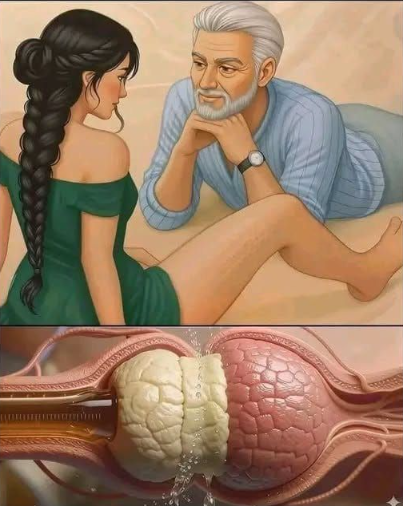
Did You Know That Older Men Have Sperm That Changes With Age?
Many people assume that only women experience age-related changes in fertility, but the truth is that men’s reproductive health also changes over time. While men can often father children later in life, age can influence sperm quality, fertility, and even certain health outcomes.
Scientists have spent decades studying how aging affects the male reproductive system, and their findings reveal a fascinating picture of gradual biological change.
One of the most noticeable changes involves sperm production. Unlike women, who are born with a finite number of eggs, men continuously produce sperm throughout their lives. However, the efficiency of this process can decline with age. Testosterone levels, which play a key role in sperm production, tend to decrease gradually as men get older.
This decline doesn’t mean that fertility suddenly disappears. Many men remain fertile well into their 60s, 70s, and beyond. However, the quantity and quality of sperm may not be the same as they were during younger years.
Research suggests that sperm motility—the ability of sperm to swim effectively—often decreases with age. Since sperm must travel through the female reproductive tract to reach and fertilize an egg, strong motility is important for successful conception.
Sperm morphology, or shape, may also change over time. Healthy sperm typically have a streamlined structure that helps them move efficiently. As men age, a higher percentage of sperm may develop structural abnormalities, which can reduce fertility potential.
Another factor involves sperm DNA. Scientists have discovered that the genetic material carried by sperm can accumulate small mutations over the years. Most of these changes are harmless, but some studies suggest that advanced paternal age may be associated with a slightly increased risk of certain genetic conditions in offspring.
It’s important to emphasize that these risks generally remain low. Millions of healthy children are born to older fathers every year. Age is simply one factor among many that influences reproductive outcomes.
Lifestyle habits can have a significant impact on sperm health regardless of age. Regular exercise, balanced nutrition, adequate sleep, and avoiding smoking can all contribute to healthier sperm production.
Smoking, in particular, has been linked to reduced sperm count, lower motility, and increased DNA damage. Excessive alcohol consumption may also negatively affect reproductive health. These factors can sometimes have a greater impact on fertility than age alone.
Stress is another important consideration. Chronic stress can influence hormone levels and may interfere with reproductive function. Men experiencing prolonged stress often benefit from stress-management strategies such as exercise, mindfulness practices, or professional support.
Body weight also plays a role. Obesity has been associated with hormonal imbalances that can affect sperm production. Maintaining a healthy weight may improve overall reproductive health and fertility.
Modern medical advances have made it possible to evaluate sperm health more accurately than ever before. Semen analysis can assess sperm count, movement, shape, and other characteristics that influence fertility. For couples experiencing difficulty conceiving, these tests often provide valuable information.
Interestingly, not all age-related changes occur at the same rate. Some men experience minimal declines in fertility well into later life, while others notice changes earlier. Genetics, overall health, and lifestyle choices all contribute to these individual differences.
The conversation around male fertility is becoming increasingly important as more people choose to start families later in life. Understanding how age affects reproductive health helps individuals make informed decisions about family planning.
Beyond fertility, sperm health can sometimes reflect broader aspects of overall wellness. Researchers have found connections between reproductive health and general physical health, suggesting that maintaining healthy habits benefits multiple body systems simultaneously.
Public awareness of male reproductive aging remains relatively limited compared to discussions about female fertility. Yet scientific evidence clearly shows that reproductive changes occur in both sexes as part of the natural aging process.
This doesn’t mean older men should be concerned about inevitable fertility problems. Rather, it highlights the importance of maintaining good health throughout life. Healthy lifestyle choices can support reproductive function and overall well-being at any age.
Advances in medicine continue to expand our understanding of male fertility. Researchers are investigating new ways to evaluate sperm quality, understand age-related changes, and develop treatments that may improve reproductive outcomes.
Ultimately, aging is a normal part of life, and reproductive health evolves along with the rest of the body. While sperm characteristics may change over time, many men remain capable of fathering children well into older adulthood.
The key takeaway is simple: age can influence sperm quality, but it is only one piece of a much larger picture. Genetics, lifestyle, overall health, and environmental factors all contribute to reproductive success. By understanding these factors and taking care of their health, men can support their fertility and well-being throughout every stage of life