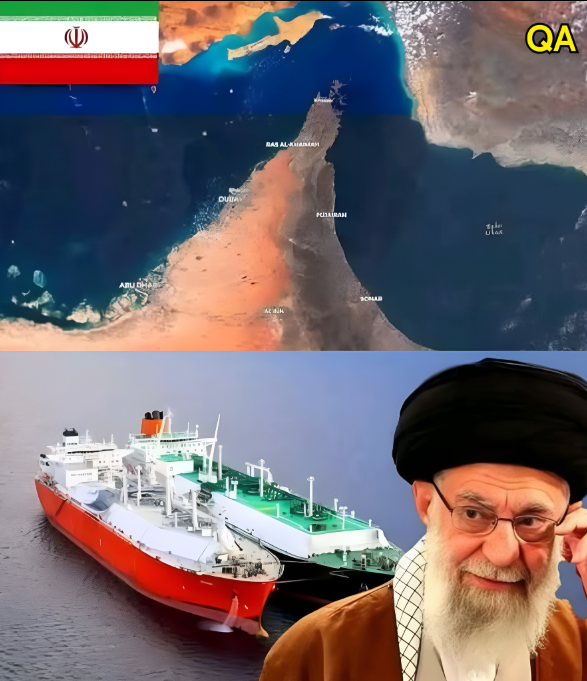
BREAKING: Iranian Parliament Approves Closure of the Strait of Hormuz in Response to U.S. Strikes
In a dramatic escalation of tensions in the Middle East, Iran’s parliament (the Majlis) has unanimously approved a measure calling for the closure of the Strait of Hormuz, one of the world’s most critical oil chokepoints. This development comes in direct retaliation for recent U.S. airstrikes on Iranian nuclear facilities at Fordow, Natanz, and Isfahan. While the parliamentary vote signals strong domestic support for a hardline response, the final decision rests with Iran’s Supreme National Security Council.
Background: A Flashpoint in Global Energy Security
The Strait of Hormuz is a narrow waterway between the Persian Gulf and the Gulf of Oman, through which approximately 20-30% of the world’s seaborne oil and a significant portion of liquefied natural gas (LNG) passes daily. It’s a vital artery for global energy markets, with major exporters like Saudi Arabia, Iraq, the UAE, Kuwait, and Qatar relying on it heavily. Iran has long threatened to close it during periods of heightened conflict, viewing it as a strategic deterrent against foreign aggression.
The current crisis traces back to escalating confrontations involving Iran’s nuclear program. Reports indicate that the United States conducted precision strikes on key Iranian nuclear sites following intelligence assessments of advanced enrichment activities and perceived threats to regional stability. These strikes, described by U.S. officials as “very successful,” targeted underground facilities designed to withstand conventional attacks. Iran condemned the action as an act of war, prompting swift parliamentary action.
On June 22, 2025 (with ongoing developments into 2026), Iranian state media like Press TV reported that lawmakers gathered in an emotional session, chanting slogans and vowing to defend national sovereignty. Major General Esmaeil Kowsari, a member of the parliament’s National Security Commission and a Revolutionary Guards commander, stated: “The parliament has reached the conclusion that the Strait of Hormuz should be closed.” However, he emphasized that implementation requires approval from the Supreme National Security Council, chaired by President and involving top military and clerical figures.
Strategic and Military Implications
Closing the Strait of Hormuz would not be a simple on-off switch. The waterway is about 21 miles wide at its narrowest point, with shipping lanes carefully delineated. Iran possesses a range of asymmetric capabilities to disrupt traffic:
- Naval Forces: The Islamic Revolutionary Guard Corps Navy (IRGCN) operates swarms of fast-attack boats, mines, and coastal missile batteries.
- Missile and Drone Arsenal: Iran could deploy anti-ship missiles like the Khalij Fars or deploy drones to target tankers.
- Mining Operations: Laying naval mines in the confined waters could halt commercial shipping for weeks or months.
Historically, during the 1980s “Tanker War” in the Iran-Iraq conflict, both sides attacked shipping, leading to U.S. naval intervention (Operation Earnest Will). A modern closure could trigger similar international responses, potentially involving U.S. and allied naval forces from the Fifth Fleet based in Bahrain.
Experts warn that even a partial disruption could send oil prices skyrocketing. Global markets are already jittery; analysts estimate that a full closure might spike crude prices by 50-100% or more in the short term, depending on duration. This would ripple through economies worldwide, hitting importers like China, India, Japan, and Europe hardest. Stock markets reacted with volatility, while gold and other safe-haven assets climbed.
Geopolitical Ramifications
This move places enormous pressure on regional actors. Gulf Cooperation Council (GCC) states, many of which have normalized or improved ties with Israel and maintain backchannel communications with Iran, face a dilemma. Saudi Arabia and the UAE have diversified export routes (e.g., pipelines to the Red Sea), but full reliance on alternatives remains limited.
China, Iran’s largest oil customer and a key diplomatic partner via the Belt and Road Initiative, would likely urge restraint. Beijing has significant stakes in Gulf stability and has mediated in past Iran-Saudi talks. Russia, another ally, might offer rhetorical support but has its own energy interests.
For the United States, this tests the limits of its “maximum pressure” or deterrence strategy post-strikes. The Biden-to-Trump transition context (given the timeline) adds layers of domestic U.S. politics, with hawks pushing for decisive action and doves warning against broader war. Israel, which has conducted its own operations against Iranian targets, remains a wildcard.
Domestically in Iran, the vote unifies hardliners. Supreme Leader Ayatollah Ali Khamenei’s inner circle views the nuclear strikes as an existential threat, justifying escalation. However, Iran’s economy is already strained by sanctions, and prolonged closure could backfire by isolating Tehran further and causing domestic hardship.
Economic and Humanitarian Fallout
A sustained closure would devastate global supply chains. Insurance premiums for tankers would surge, rerouting via the longer Cape of Good Hope route would add weeks and costs. Developing nations dependent on affordable energy could face inflation, fuel shortages, and blackouts.
Humanitarian concerns loom large. Disruptions could exacerbate tensions in Yemen, where Houthi rebels (Iran-backed) have already targeted shipping in the Red Sea. Refugee flows, proxy conflicts, and cyber retaliation are additional risks.
Potential Pathways Forward
Several scenarios exist:
- Symbolic Gesture: The approval remains a threat without full implementation, used for leverage in negotiations.
- Limited Disruption: Selective harassment of vessels linked to “hostile” nations, avoiding total closure.
- Full Implementation: Leading to direct confrontation with international naval coalitions.
- De-escalation: Backchannel diplomacy, possibly involving Oman or Qatar, brokers a face-saving compromise.
International bodies like the UN Security Council would likely convene emergency sessions, though veto powers limit binding action. The IAEA’s role in monitoring Iran’s nuclear activities adds another diplomatic layer.
Historical Context and Broader Lessons
Iran has threatened Hormuz closure before—during the 2019 tanker incidents and various sanctions episodes—but rarely followed through fully due to the self-inflicted economic damage. The current episode reflects deeper structural issues: Iran’s nuclear ambitions, regional proxy network (Axis of Resistance), and resistance to Western-led order.
This event underscores vulnerabilities in global energy architecture. Calls for diversified supplies, renewable acceleration, and strategic reserves gain urgency. It also highlights how great-power competition (U.S.-China-Russia) plays out through regional flashpoints.
As of late May 2026, the situation remains fluid. Markets watch nervously for Supreme National Security Council announcements. Diplomatic efforts intensify behind the scenes. The stakes could not be higher: a miscalculation risks broader conflict, while restraint might open paths to renewed talks on Iran’s nuclear program and regional security.
This parliamentary decision encapsulates decades of mistrust, proxy wars, and energy geopolitics. Its resolution—or escalation—will shape the Middle East and global economy for years. Observers urge all parties toward de-escalation, as the costs of war in the Hormuz theater would be borne globally.