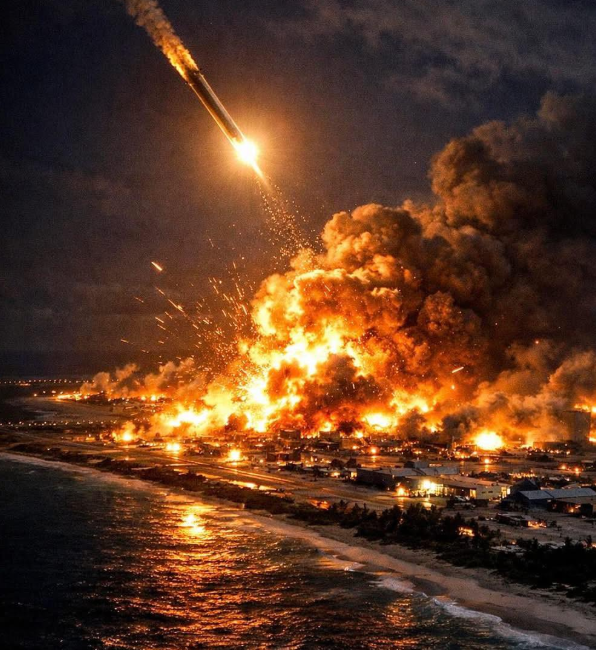
BREAKING NEWS: IRAN STRIKES U.S. TARGETS IN MAJOR ESCALATION – “UNBELIEVABLE” DIRECT HITS REPORTED AMID FRAGILE CEASEFIRE
Just hours ago, shocking reports emerged that Iranian forces launched direct attacks on American military positions, sending shockwaves through Washington and global capitals. The dramatic escalation in the ongoing 2026 Iran conflict has many asking: Has Iran finally hit America? While no strikes have reached the U.S. homeland, Iranian missiles and drones have slammed into key U.S. installations in the Persian Gulf region, killing and injuring American personnel in what officials are calling a brazen violation of the fragile ceasefire.
The latest flare-up began late Monday night into Tuesday, May 26-27, 2026, when Iran’s Islamic Revolutionary Guard Corps (IRGC) unleashed a barrage targeting U.S. bases and assets. Explosions rocked areas near the Strait of Hormuz, with confirmed impacts on U.S.-linked facilities in Qatar, Kuwait, and surrounding waters. U.S. Central Command confirmed defensive strikes in response but acknowledged incoming fire from Iranian positions.
The Spark: Ceasefire Collapses in Real Time
Tensions had been building for weeks during delicate peace talks in Qatar. President Donald Trump’s administration claimed progress toward reopening the critical Strait of Hormuz, which Iran had partially blocked, disrupting global oil flows. But just as negotiators seemed close to a breakthrough, U.S. forces conducted “self-defense” strikes on Iranian missile sites and boats attempting to lay naval mines along Iran’s southern coast.
Iran immediately cried foul, accusing Washington of “bad faith” and a blatant ceasefire violation. Hours later, retaliation came fast and furious. IRGC commanders vowed to “leave no act of aggression unanswered,” and they delivered. Multiple waves of drones and ballistic missiles targeted Al Udeid Air Base in Qatar—the largest U.S. military installation in the Middle East—along with positions in Kuwait and the UAE.
Eyewitness videos circulating on social media show streaks of light across the night sky, followed by thunderous booms. One viral clip from near Doha captures air defense systems lighting up as incoming projectiles are intercepted—some successfully, others not. U.S. officials report damage to infrastructure, with early assessments indicating at least one Patriot missile battery hit and several aircraft affected.
Casualties and Chaos on the Ground
Initial reports confirm American casualties. Sources indicate at least several U.S. service members killed or seriously wounded in the strikes, adding to the hundreds already injured since the broader conflict erupted in late February. This marks one of the most direct Iranian hits on U.S. forces in the current war.
A Pentagon spokesperson stated: “We are assessing the full scope of the damage. Our forces responded proportionally to neutralize immediate threats. Iran’s actions endanger not just American lives but the stability of the entire region and global energy markets.”
In Kuwait, near Camp Arifjan, similar attacks were reported earlier in the conflict phase, with past incidents claiming American lives. The latest barrage has forced bases across the Gulf into lockdown. Non-essential personnel are being evacuated where possible, and commercial flights in the region have been heavily disrupted.
Back in the United States, the news hit like a bombshell. Markets reacted instantly—oil prices spiked over 8% in early trading as fears mounted over further closures of the Strait of Hormuz, through which nearly 20% of global oil passes. Stock futures tumbled, with defense stocks surging.
President Trump addressed the nation via Truth Social and a brief White House statement: “Iran has made a big mistake. We hit them hard before, and we’ll do it again if necessary. But we still want a deal—no nukes, open shipping lanes, and peace. They’re weak and their economy is collapsing. Make the smart choice.”
Background: How We Got Here
This isn’t happening in a vacuum. The 2026 Iran War began dramatically on February 28 when U.S. and Israeli forces launched massive preemptive strikes on Iranian nuclear sites, missile facilities, and leadership targets. The operation reportedly killed Supreme Leader Ali Khamenei and dealt a severe blow to Iran’s military capabilities. Iran retaliated with hundreds of missiles and drones aimed at Israel, U.S. bases, and Gulf allies.
Casualties mounted quickly: Thousands dead in Iran, dozens in Israel and Gulf states, and significant U.S. personnel losses. A ceasefire was brokered in early April, but it has been shaky at best. Iran has used the pause to try rebuilding hidden missile stocks, while the U.S. maintained pressure through naval blockades and sanctions.
The current crisis centers on several flashpoints:
- Strait of Hormuz control: Iran has mined parts of the vital waterway, stranding hundreds of tankers.
- Nuclear ambitions: Tehran insists its program is peaceful; the U.S. demands verifiable dismantlement.
- Regional proxies: Hezbollah in Lebanon, Houthis in Yemen, and militias in Iraq continue low-level attacks.
Global Reactions Pour In
Allies and adversaries alike are weighing in. Israel has intensified operations against Hezbollah, signaling no let-up on its northern front. Saudi Arabia and the UAE, hosts to U.S. bases, have urged restraint while quietly bolstering their own defenses. China called for immediate de-escalation and offered to mediate, while Russia accused the U.S. of provocation.
In Europe, leaders expressed concern over energy security. “This could trigger a broader conflict with devastating economic consequences,” said one EU foreign policy official.
Inside Iran, state media portrayed the strikes as heroic resistance. Crowds chanted anti-American slogans in Tehran, though independent reports suggest war fatigue is growing amid economic collapse and infrastructure damage.
What Happens Next?
Military analysts warn this could spiral. U.S. carrier groups in the Arabian Sea are on high alert. Additional fighter squadrons have been deployed to the region. Iran claims to have shot down a U.S. MQ-9 Reaper drone and forced others to retreat.
Diplomatic channels remain open but strained. Talks in Qatar continue, with U.S. Secretary of State Marco Rubio insisting a comprehensive deal is still possible if Iran backs down. Key sticking points include sanctions relief, missile program limits, and guarantees for free navigation in the Gulf.
For American families with loved ones stationed abroad, the anxiety is palpable. Support groups for military families are seeing a surge in calls. “We thought the ceasefire meant safety,” said one spouse in a viral interview. “Now we’re glued to the news again.”
Broader implications stretch far beyond the battlefield. A prolonged conflict risks higher inflation at U.S. gas pumps, supply chain disruptions, and potential cyber or proxy attacks on American interests worldwide. Climate and humanitarian concerns also loom large, as damaged oil infrastructure could lead to environmental disasters.
A Nation on Edge
The phrase “Iran hit America” captures the raw emotion of the moment, even if the battlefield remains thousands of miles away. For many, any strike on U.S. troops feels like a strike on the homeland. Flags flew at half-staff at some bases as the Pentagon prepared updated casualty figures.
Congressional leaders from both parties called for briefings. Some hawks demand overwhelming force; others push for renewed diplomacy to avoid another endless Middle East quagmire.
As dawn breaks over the Gulf, the smoke is still rising. Firefighting and damage assessment teams are working under heavy security. Satellites monitor Iranian movements closely. The world holds its breath to see whether this becomes a footnote in a winding-down war or the spark for something far more catastrophic.
This is a fast-moving story. Officials urge the public to rely on verified sources and avoid spreading unconfirmed videos that could include disinformation. Updates will follow as more details emerge on casualties, damage, and the diplomatic fallout.
The coming hours could determine the fate of peace efforts—or ignite a wider regional war with global repercussions.