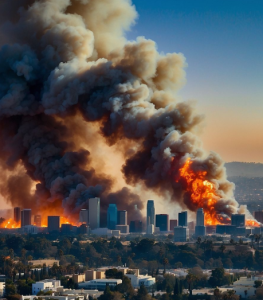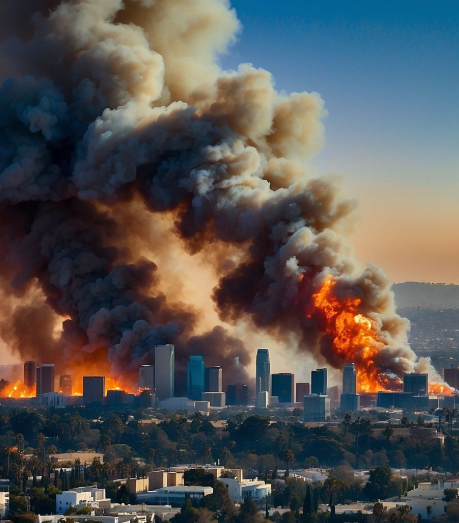
BREAKING NEWS: Massive Wildfire Erupts in California, Forcing Evacuations and Battling Extreme Winds
Just hours ago, a tremendous fire broke out in California, rapidly becoming one of the most aggressive blazes of the season. The fire ignited around 2:15 PM local time in the rugged hills above Calabasas, in Los Angeles County. By late afternoon, it had scorched over 1,200 acres and was spreading at an alarming rate, driven by powerful Santa Ana winds gusting up to 60 miles per hour.
Fire officials have named it the “Canyon Blaze.” Initial reports suggest the fire may have started near a popular hiking trail in the Santa Monica Mountains, close to areas that burned during the devastating Woolsey Fire several years ago. While the exact cause remains under investigation, authorities have not ruled out human activity, including possible sparks from utility equipment or an unattended campfire. High temperatures, low humidity, and bone-dry vegetation—conditions that have persisted through a prolonged drought—created a perfect storm for rapid growth.
Immediate Impact and Evacuations
Within minutes of the first 911 calls, flames were visible from miles away, painting the sky in ominous orange hues. Residents in Calabasas, Hidden Hills, and parts of Agoura Hills received mandatory evacuation orders via the county’s alert system. By 5 PM, thousands were fleeing their homes, packing pets, important documents, and precious belongings into cars amid chaotic traffic on the Ventura Freeway (101) and Las Virgenes Road.
“I saw the smoke and thought it was just another brush fire at first,” said Maria Gonzalez, a 42-year-old teacher who lives in a hillside neighborhood. “But then the wind picked up, and within 20 minutes, the flames were jumping across the ridge like they had a mind of their own. We grabbed the kids and the dog and left with nothing but the clothes on our backs.”
Local schools dismissed students early, and several major roads were closed. Los Angeles County Sheriff’s Department officers went door-to-door in affected zones, urging residents to leave immediately. Animal shelters and rescue groups mobilized to help evacuate horses from nearby ranches and stables, a common challenge in this equestrian-friendly region.
As of this evening, no fatalities have been reported, but at least three people have been treated for smoke inhalation at local hospitals. Property damage is still being assessed, but early drone footage shows multiple structures threatened, with at least two outbuildings already destroyed.
Firefighting Efforts Underway
Hundreds of firefighters from Los Angeles County, Ventura County, and state Cal Fire resources are on the scene. More than 15 helicopters and fixed-wing aircraft, including massive air tankers, have been dropping water and fire retardant. However, the extreme winds have grounded some aerial operations at times, forcing crews to rely heavily on ground teams.
“We are throwing everything we have at this,” said Cal Fire Incident Commander Robert Kline during a hastily organized press briefing. “The winds are our biggest enemy right now. They’re creating spot fires miles ahead of the main front. Containment is currently at zero percent, but we’re hoping for a shift in weather overnight.”
Overnight, winds are expected to remain strong but may ease slightly by Thursday morning. Forecasters warn that another round of critical fire weather could return later in the week. Climate experts point to broader patterns: California’s wildfire season has grown longer and more intense due to climate change, with earlier starts and later endings becoming the norm.
This blaze comes just weeks after smaller fires in the region strained resources. Statewide, fire crews are already stretched thin after battling blazes in Northern California earlier this spring. Governor Gavin Newsom has declared a state of emergency for Los Angeles County, unlocking additional funding and support from the federal government. The White House has been briefed, and President Biden has offered full federal assistance.
The Human and Economic Toll
The Santa Monica Mountains and surrounding communities represent a unique blend of suburban luxury and wildland interface. Million-dollar homes sit next to chaparral-covered hills that haven’t burned in decades, creating what fire scientists call an “extreme risk zone.” Insurance companies have been pulling out of high-risk areas in recent years, leaving many homeowners underinsured or scrambling for coverage.
Local businesses are already feeling the impact. Restaurants and shops in Calabasas and nearby Woodland Hills reported sharp drops in customers as smoke filled the air. Tourism in the area, popular for its hiking trails and celebrity homes, may take a hit. The famous Paramount Ranch, a historic film set location, lies not far from the fire’s origin, raising concerns among Hollywood historians and preservationists.
Environmental groups are also watching closely. The area is home to diverse wildlife, including mountain lions, deer, and rare birds. While fires are a natural part of California’s ecosystem, the frequency and intensity of modern blazes often outpace nature’s recovery ability, leading to habitat loss and increased erosion risks.
Eyewitness Accounts and Community Response
Social media has exploded with videos and photos. One viral clip shows flames leaping across a canyon in dramatic fashion, illuminated against the setting sun. Another captures a line of fire trucks racing up a narrow road as embers swirl around them like fireflies.
Community centers in unaffected areas have opened as evacuation points, offering food, water, Wi-Fi, and cots. The Red Cross and local nonprofits have mobilized volunteers. Stories of neighbors helping neighbors are emerging— one group of residents used their own trucks to help an elderly couple move livestock to safety.
Yet anxiety runs high. Many recall the Woolsey Fire of 2018, which burned nearly 100,000 acres, destroyed over 1,600 structures, and claimed three lives. Others remember the Thomas Fire or the more recent devastating seasons that made California wildfires a symbol of the climate crisis.
Psychologists warn of the mental health toll. “Repeated evacuations and the constant threat create what we call ‘solastalgia’—a form of distress caused by environmental change in one’s home,” noted Dr. Elena Ramirez of UCLA. “People feel powerless, and that builds over time.”
Looking Ahead: Containment and Recovery
Fire officials hope to achieve 10-15% containment by Thursday morning if conditions improve. Long-term, the focus will shift to recovery: assessing damage, supporting displaced families, and investigating the cause. Utility companies like Southern California Edison are inspecting equipment in the area, as power lines have been a frequent culprit in past fires.
Broader questions linger about prevention. Experts call for more prescribed burns, better forest management, defensible space requirements for homes, and updated building codes. Some advocate for relocating people from the wildland-urban interface altogether, though that remains politically and practically challenging.
As night falls over Southern California, the glow of the Canyon Blaze lights up the hills. Thousands remain displaced, hundreds fight on the front lines, and millions watch with concern. This is not just another fire—it is another chapter in California’s ongoing struggle with its fiery landscape in an era of changing climate.
The coming days will determine whether this blaze becomes a manageable incident or grows into a historic disaster. Updates will continue as the situation develops. Residents are urged to stay informed through official channels and prepare for potential further evacuations.