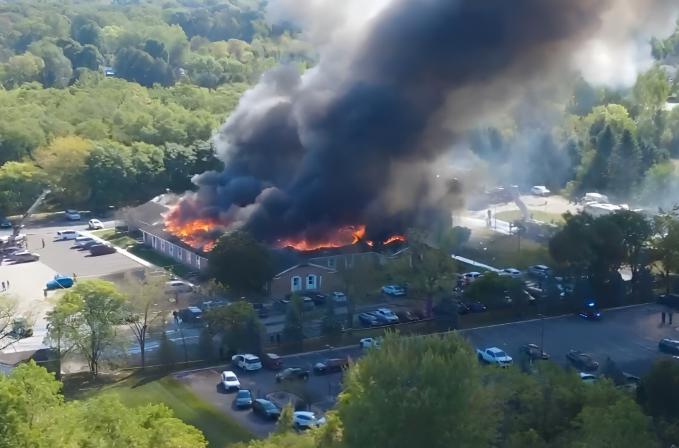
BREAKING NEWS: At least 10 shot, 2 fatally, at church set on fire by the gunman – Horror in Grand Blanc, Michigan
On the morning of Sunday, September 28, 2025, what should have been a peaceful worship service at The Church of Jesus Christ of Latter-day Saints in Grand Blanc Township, Michigan, turned into a scene of unimaginable terror. A gunman drove his pickup truck into the building, opened fire on hundreds of congregants—including families and children—then deliberately set the church ablaze. At least 10 people were shot, with four total deaths reported: two from gunfire and two from smoke inhalation in the rapidly spreading fire. The suspect was killed by police in a swift confrontation.
The attack unfolded around 10:25 a.m. EDT during a well-attended Sunday service. Witnesses described a deafening crash as 40-year-old Thomas Jacob Sanford rammed his GMC Sierra pickup truck through the brick wall near the steeple. He exited armed with a rifle and began shooting indiscriminately into the panicked crowd. Chaos erupted as parents shielded children, elderly members struggled to evacuate, and heroic bystanders tried to help the wounded. At some point during the rampage, Sanford used an accelerant—likely gasoline—to ignite the building, turning a house of worship into an inferno.
Grand Blanc Township police responded with remarkable speed. Officers arrived within minutes and engaged the shooter in the parking lot. A brief shootout ended with Sanford dead. Firefighters battled the blaze for hours, eventually recovering the bodies of two victims who had succumbed to smoke inhalation inside the destroyed structure. In total, eight people were injured—five by gunfire and three by smoke—ranging in age from 6 to 78. Hospitals in the area, including Henry Ford Genesys, treated the victims as the community reeled in shock.
The Suspect: Thomas Jacob Sanford
Sanford, a 40-year-old resident of nearby Burton, Michigan, had no prior major criminal record that immediately explained such violence, but investigators later uncovered a motive rooted in anti-religious, specifically anti-Mormon, beliefs. The FBI classified the attack as a targeted hate crime against the LDS community. Evidence at the scene included unused weapons (an AK-47, SKS rifle, and shotgun) and suspected improvised explosive devices, suggesting the attack could have been far deadlier.
Friends and neighbors described Sanford as increasingly isolated and vocal about his grievances against organized religion. While the full manifesto or digital footprint is still under analysis, authorities believe personal failures, mental health struggles, and ideological extremism converged into this deadly outburst. He had reportedly researched the church’s schedule and chosen a time when the building would be packed.
The Human Toll
The victims remain in the hearts of a tight-knit community. Among the fallen were dedicated church members: teachers in the children’s ministry, grandparents, and everyday worshippers who came seeking peace. One survivor recounted shielding a young child as bullets flew. Another described helping an elderly woman to safety while the building filled with smoke. The injured faced a long road—surgeries, physical therapy, and profound trauma.
The Church of Jesus Christ of Latter-day Saints released a statement expressing deep sorrow and gratitude for first responders. Local leaders organized vigils, blood drives, and counseling services. Michigan Governor Gretchen Whitmer visited the site, calling the attack “an assault on our shared values of faith and community.” National figures from both political parties condemned the violence, with renewed calls for mental health reform and addressing rising extremism.
Community Response and Investigation
Grand Blanc, a suburb about 60 miles northwest of Detroit, is known for its family-oriented neighborhoods and strong faith communities. The destruction of the meetinghouse left hundreds without their spiritual home. In the days that followed, neighboring churches opened their doors for joint services. GoFundMe campaigns for victims’ families raised hundreds of thousands of dollars within 48 hours. LDS missionaries and volunteers from across the region arrived to offer support.
Federal agencies, including the ATF and FBI, joined the probe. The speed of the police response—under four minutes from dispatch to neutralizing the threat—was credited with preventing an even higher death toll. Bodycam and surveillance footage provided a clear timeline, helping piece together the horror for investigators and prosecutors (though the shooter’s death closed the criminal case against him).
Broader Context: Violence Against Places of Worship
This tragedy joins a painful list of attacks on sacred spaces in America—Charleston, Sutherland Springs, Pittsburgh, and others. Churches, mosques, synagogues, and temples have increasingly become targets for those harboring hatred toward faith communities. The LDS Church, known for its emphasis on family and service, had not faced an attack of this scale in recent memory, making the targeting especially jarring.
Experts point to a toxic mix: untreated mental illness, online radicalization, easy access to firearms for troubled individuals, and cultural polarization that sometimes demonizes religious groups. In the aftermath, faith leaders across denominations called for unity and vigilance without succumbing to fear.
Healing and Resilience
Weeks and months later, the Grand Blanc community began the long process of rebuilding—both the physical structure and emotional wounds. Plans for a new meetinghouse were announced, incorporating enhanced security features like better barriers, surveillance, and trained volunteer responders. Survivors shared stories of faith sustaining them: prayers whispered amid gunfire, hands holding one another in the smoke-filled halls.
One survivor, a mother of three, told reporters: “We came to worship our Heavenly Father and left knowing evil exists—but so does overwhelming love and courage.” Church members emphasized forgiveness alongside justice, a hallmark of their beliefs, while acknowledging the need for societal changes to prevent future atrocities.
The attack also spotlighted the bravery of everyday heroes: the off-duty officer who helped confront the threat, the teachers who evacuated classrooms of children, and the firefighters who entered a burning building to search for the trapped.
A Community Forever Changed
The Grand Blanc church attack of 2025 was a stark reminder that no place is entirely safe from violence. Yet it also showcased the resilience of faith communities. As the ruins were cleared and memorials erected, the message from survivors and leaders remained one of hope: darkness may strike suddenly, but light—through prayer, service, community support, and justice—endures.
Investigations continue into every aspect of Sanford’s life to ensure no warning signs were missed and to inform prevention strategies nationwide. For the families who lost loved ones, the injured fighting for recovery, and a congregation mourning its sanctuary, the road ahead is painful. But in the words spoken at countless vigils: “Love is stronger than hate. Faith is stronger than fear.”
Michigan, and the nation, grieved with them. In the face of evil, Grand Blanc chose unity, remembrance, and rebuilding. The church may have burned, but the spirit of its people did not.
As one local pastor said at a interfaith memorial: “They tried to silence prayer with fire and bullets. Instead, thousands more are praying today.”
The investigation remains active for any accomplices or broader threats, but for now, a community mourns, honors the fallen, and vows to stand taller in faith and solidarity.