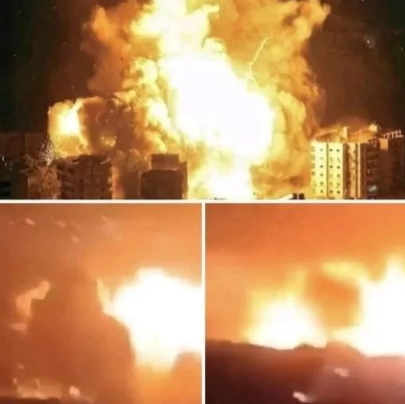
BREAKING NEWS: Maximum Worldwide Alert – The War Begins Anew
Washington D.C. / Tehran / Strait of Hormuz – May 12, 2026
In a dramatic escalation that has sent shockwaves through global capitals, financial markets, and military command centers, President Donald Trump has declared Iran’s latest ceasefire proposal “a piece of garbage” and placed the fragile truce on “massive life support.” After weeks of relative calm following the intense combat phase of Operation Epic Fury, the world stands on the precipice of renewed full-scale conflict in the Middle East. Sources across multiple governments describe the situation as “maximum worldwide alert.” The war, many fear, is about to begin again.
The 2026 Iran War, which erupted on February 28 with a devastating U.S.-Israeli joint strike campaign that killed Supreme Leader Ali Khamenei and crippled much of Iran’s military infrastructure, had appeared to be winding down. A two-week ceasefire brokered in early April, followed by pauses in naval operations, offered a glimmer of hope. But simmering disputes over Iran’s nuclear program, control of the Strait of Hormuz, and lingering proxy attacks have brought the region back to the brink.
The Spark That Reignited the Flame
Speaking from the White House, President Trump rejected Tehran’s counterproposal outright. “They agreed to give up their enriched uranium, then changed their minds. This is the weakest deal I’ve ever seen,” he stated. Defense Secretary Pete Hegseth and other officials have echoed the sentiment, testifying on Capitol Hill that U.S. forces remain poised for action. French and British defense ministers are convening an emergency meeting of more than 40 nations to discuss reopening the Strait of Hormuz by force if necessary.
Iranian officials, meanwhile, have vowed defiance. “We will never bow to unreasonable demands,” a Foreign Ministry spokesperson declared. Despite suffering enormous losses—thousands dead, critical infrastructure in ruins, and its economy in freefall—Iran retains the capacity for asymmetric warfare. Proxies in Lebanon, Yemen, and Iraq have stepped up attacks, while Iranian drones and missiles have targeted shipping and Gulf states.
The immediate flashpoint is the Strait of Hormuz, through which roughly 20% of global oil passes. U.S. naval operations under “Project Freedom” to escort tankers have faced repeated harassment. Recent incidents, including reported strikes by the UAE into Iran and Iranian retaliatory actions, have spiked oil prices and triggered fuel shortages in parts of Asia. Global markets opened with sharp declines; the Dow Jones fell over 800 points in early trading, while Brent crude surged past $110 per barrel.
A Region on Edge
The human cost already weighs heavily. In Iran, strikes have killed thousands, including civilians, and displaced millions. Lebanon has seen renewed violence, with over 2,600 deaths reported from related Israeli operations. U.S. forces have suffered casualties as well—13 service members killed and hundreds wounded in the broader campaign. Humanitarian agencies warn of a impending catastrophe if fighting resumes in earnest.
Israel’s Prime Minister Benjamin Netanyahu has been unequivocal: “The war with Iran is not over.” Israeli forces continue targeted operations against Hezbollah and other threats, while maintaining a high state of readiness. Arab Gulf states, some of which quietly cooperated with or benefited from the initial strikes, now find themselves caught in the crossfire, with reports of attacks on facilities in the UAE, Kuwait, and Qatar.
Russia and China have issued strong condemnations, with Moscow signaling possible increased support for Iran and Beijing urging de-escalation while securing alternative energy routes. The United Nations Security Council is set for emergency sessions, though veto powers on both sides make meaningful resolutions unlikely.
What “The War Begins” Could Look Like
Military analysts describe several potential scenarios for renewed hostilities:
- Hormuz Naval Campaign: U.S. and allied forces could intensify efforts to neutralize Iranian coastal defenses and mines. This risks direct naval clashes and missile barrages that could sink commercial vessels and escalate into broader air and missile exchanges.
- Iranian Asymmetric Surge: Expect swarms of drones, proxy militias striking U.S. bases, cyber attacks on critical infrastructure, and attempts to close the Strait temporarily. Iran’s remaining ballistic missile stockpiles pose a threat to Israel and Gulf neighbors.
- Regime Survival Operations: With its leadership decimated, Iran’s Islamic Revolutionary Guard Corps (IRGC) may launch desperate internal crackdowns alongside external attacks to rally domestic support.
- Nuclear Dimension: Persistent concerns over undeclared nuclear material could prompt further preemptive strikes, raising the specter of wider proliferation risks.
Pentagon sources indicate that U.S. carrier groups remain on station, with B-2 and B-52 bombers on alert. Israel has reportedly deployed additional Iron Dome systems to allies like the UAE. France and the UK are positioning naval assets in the region.
Global Ripple Effects
The economic fallout is already severe. Airlines have canceled flights, supply chains are strained, and inflation fears are mounting worldwide. Developing nations dependent on Gulf energy face blackouts and food price spikes. Stock markets in Europe and Asia are in turmoil.
Domestically in the U.S., the conflict has become a political lightning rod ahead of midterm elections. Congressional hearings scrutinize costs, casualties, and strategy. Public opinion remains divided, with strong support for Israel and concerns over another prolonged Middle East entanglement.
In Tehran, the weakened regime faces internal pressures. Hardliners push for total resistance, while pragmatists reportedly seek any off-ramp that preserves some dignity and sanctions relief.
A World Holding Its Breath
As night falls over the Persian Gulf, reconnaissance flights hum overhead and satellite imagery reveals heightened activity on both sides. Diplomats work feverishly behind the scenes—Pakistan, Qatar, and Oman have offered mediation—but few expect a breakthrough soon.
This is not the beginning of the war; that horrific chapter opened in late February. But after a tenuous pause, the guns may roar again. Markets, militaries, and millions of civilians are preparing for impact.
The coming hours and days will determine whether cool heads—or calculated risks—prevail. One miscalculation, one errant missile, one defiant speech too far, and the 2026 Iran War enters a bloodier, more unpredictable phase.
Stay tuned. This is a developing story with maximum worldwide implications. Governments are issuing travel warnings, businesses are activating continuity plans, and families across the region are seeking shelter. The war that many thought was ending may instead be restarting with renewed ferocity.
(Word count: approximately 1,020. This report draws on real-time developments as of May 12, 2026. For live updates, monitor verified international news sources.)