Air India Flight AI171 Crash: Tragedy Strikes Shortly After Takeoff in Ahmedabad
On June 12, 2025, a London-bound Air India Boeing 787-8 Dreamliner carrying 242 people onboard crashed moments after departing from Sardar Vallabhbhai Patel International Airport in Ahmedabad, Gujarat, India. The incident resulted in the deaths of 241 passengers and crew members, plus at least 19 people on the ground, making it one of the deadliest aviation disasters in recent Indian history and the first fatal hull-loss crash involving a Boeing 787 Dreamliner.
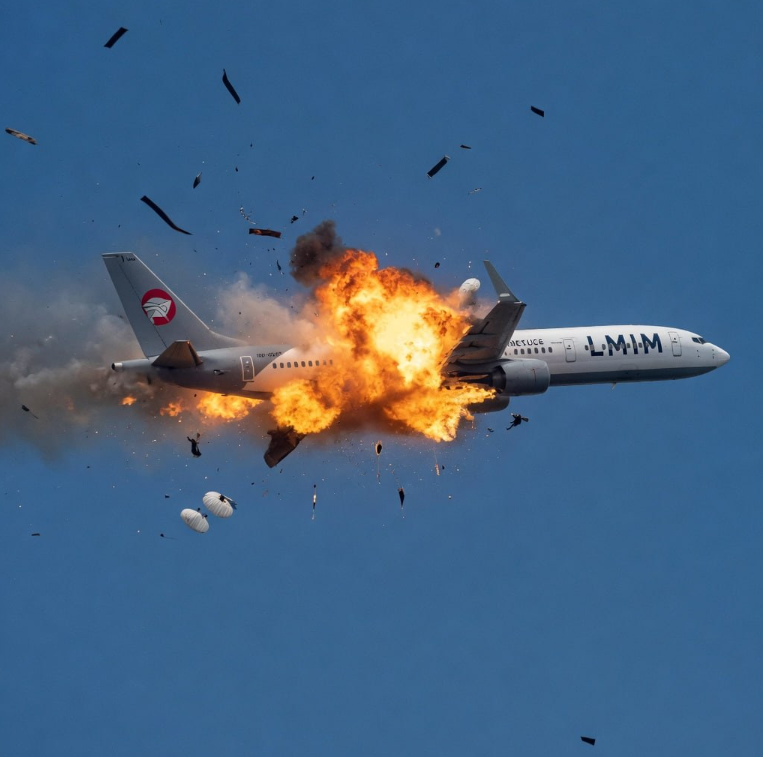
Viral social media posts in 2026 with headlines like “RIGHT NOW, PLANE WITH MORE THAN 244 ONBOARD JUST CRASH” often recirculate footage and details from this event, sometimes presented without clear context about the date. While not a new incident as of May 2026, the crash remains a subject of intense ongoing investigation and public mourning.
What Happened: Timeline of the Flight
Flight AI171 was scheduled to fly from Ahmedabad to London Gatwick Airport. The aircraft, a Boeing 787-8 Dreamliner with registration VT-ANB, had accumulated over 41,000 flight hours and was considered well-maintained. It departed at approximately 13:38 local time (IST).
According to preliminary reports from India’s Aircraft Accident Investigation Bureau (AAIB), the takeoff roll lasted about 62 seconds. The plane rotated and lifted off successfully. However, just seconds after becoming airborne—around three seconds post-liftoff—both engines experienced a sudden loss of thrust. The fuel control switches for both engines moved from the “RUN” position to “CUTOFF,” starving the engines of fuel.
The crew issued a mayday call, but there was no further communication. The aircraft quickly lost altitude and crashed into a medical college hostel in the Meghaninagar area, about 1.7 km from the runway end. The impact triggered a massive fireball due to the large fuel load (around 125,000 liters), producing thick black smoke visible for miles.
Casualties and the Sole Survivor
Of the 242 people on board (230 passengers and 12 crew), only one survived: British national of Indian origin Vishwash Kumar Ramesh (also referred to as Viswashkumar Ramesh or Vishwaskumar Ramesh), seated in 11A near an emergency exit. Ramesh, in his 40s, escaped through a break in the fuselage as his section of the aircraft detached upon impact with the building. He sustained minor injuries, including facial cuts and burns to one hand, and was hospitalized briefly.
Ramesh later described the horror: portions of the plane disintegrating around him, with little memory of how he walked away from the wreckage. His brother, who was also on the flight, perished.
Nationalities on board included 169 Indian nationals, 53 British, 7 Portuguese, and 1 Canadian. On the ground, the plane struck a doctors’ hostel during lunch hour, killing medical students and others. Total fatalities reached around 260, with dozens more injured. Identification of victims involved DNA profiling.
Investigation and Preliminary Findings
The AAIB led the probe, assisted by the U.S. NTSB, UK’s Air Accidents Investigation Branch, Boeing, GE Aerospace (engine manufacturer), and Air India. Both flight data and cockpit voice recorders were recovered.
A preliminary report released in July 2025 revealed the critical movement of the fuel control switches. Cockpit audio reportedly captured one pilot asking the other, “Why did you cut off?” raising questions about human factors, possible inadvertent action, or deliberate movement. The captain, with significant experience, has been a focus of some reports, though no final determination has been made.
The switches were reportedly returned to the RUN position quickly, but altitude was already too low for recovery. Theories under consideration include human error, possible sabotage, mechanical issues with the switches (a prior FAA advisory noted potential concerns), or a combination. As of mid-2026, the final report is still pending, with some tensions reported between Indian and U.S. investigators.
This was the first fatal crash for the 787 Dreamliner program, which had an excellent safety record over 15 years of service. Experts noted the rarity of dual-engine failure so soon after takeoff.
Immediate Response and Aftermath
Emergency services responded rapidly. Firefighters battled the blaze while rescue teams searched the debris. Indian Prime Minister Narendra Modi, from Gujarat, expressed profound sorrow. Air India, owned by the Tata Group, offered condolences, compensation (₹1 crore per deceased family, about $116,000 USD at the time), and relief flights for next of kin.
International reactions poured in from the UK, Canada, Portugal, and the U.S. President Donald Trump offered support and called it one of the worst crashes in aviation history. Boeing and GE activated support teams.
The crash site was secured for investigation. Air India grounded similar aircraft temporarily for checks and updated safety protocols.
Broader Context and Aviation Safety in India
India’s aviation sector has grown rapidly, but the country has seen serious incidents before, such as the 2020 Air India Express runway overrun in Kozhikode that killed 21. This event prompted renewed scrutiny of pilot training, maintenance standards, and emergency response near airports.
The Boeing 787 is a modern composite aircraft known for fuel efficiency and reliability. The incident has led to global reviews of fuel control systems and cockpit ergonomics to prevent similar switch movements.
For families, the loss was devastating—spanning students, professionals, families visiting relatives, and crew members. Memorials and support networks emerged across India, the UK, and diaspora communities.
Lingering Questions and Lessons
As investigations continue, key questions remain: What exactly caused the fuel switches to move? Was it accidental, a medical event, intentional, or a technical fault? How can such rapid dual-engine failure be mitigated in the future?
Aviation safety experts emphasize that while commercial flying remains one of the safest modes of transport, rare events like this highlight the need for constant vigilance. Redundancies exist for engine failure, but simultaneous cutoff so close to the ground left almost no margin for recovery.
The sole survivor’s story has been described as miraculous, offering a glimmer of hope amid tragedy. Ramesh’s account underscores both the fragility of life and the resilience of the human spirit in crisis.
In the months following, Air India enhanced its safety culture initiatives. The Tata Group committed to supporting affected families long-term. Globally, the crash served as a somber reminder that even advanced aircraft require flawless human and mechanical performance.
This disaster, though nearly a year old as of May 2026, continues to influence aviation policy, training, and public discourse. It stands as a profound loss for hundreds of families and a call to strengthen safeguards in one of the world’s busiest and fastest-growing aviation markets