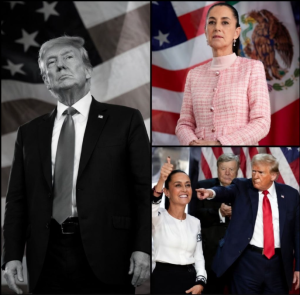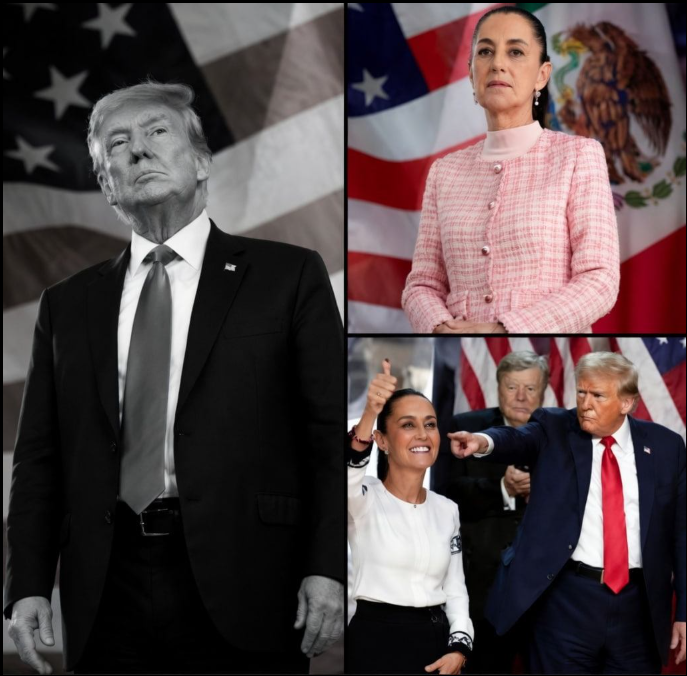
Mexican President Claudia Sheinbaum Responds to Trump’s Claim That Mexico Is Run by Drug Cartels, Not Its Leadership
In early January 2026, U.S. President Donald Trump made pointed remarks about Mexico’s governance during public statements and interactions with Latin American leaders. He asserted that Mexico was not truly run by its elected president but by powerful drug cartels, suggesting that cartel influence had overtaken political authority in key areas and that stronger action might be needed to address the resulting security threats to the United States.
Mexican President Claudia Sheinbaum pushed back firmly but measuredly, emphasizing Mexico’s sovereignty, the progress of bilateral cooperation on security, and the unacceptability of any direct U.S. military intervention on Mexican soil. This exchange fits into a broader pattern of tense yet pragmatic diplomacy between the two leaders since Trump’s return to office.
Background on the Comments
Trump’s January 3, 2026, statements came amid ongoing concerns over fentanyl trafficking, cartel violence spilling across the border, and migration flows. He described cartels as controlling significant portions of Mexico, with politicians and police operating in fear. Trump framed this as a national security issue for the U.S., reiterating offers of assistance—including potential military options if Mexico did not “do the job” itself.
These comments echoed Trump’s long-standing rhetoric on border security but gained fresh urgency after U.S. actions in Venezuela and heightened focus on hemispheric drug networks. Trump has praised Sheinbaum personally in some contexts, calling her a “terrific person,” while criticizing the security situation in Mexico.
Sheinbaum’s Response: Sovereignty First
Sheinbaum responded through public statements and direct communications. In a notable phone conversation, she told Trump that U.S. military intervention was “not on the table” and not necessary. She referenced Mexico’s constitution, which prohibits foreign interventions, and stressed that cooperation should respect territorial integrity.
Key elements of her position:
- Rejection of intervention: Sheinbaum made clear that Mexico would not accept U.S. troops or strikes on its soil, even while acknowledging shared challenges with cartels.
- Cooperation emphasis: Both governments continue working on security through intelligence sharing, law enforcement coordination, and existing agreements. Mexico has increased drug seizures and arrests in recent periods.
- “Cool head” approach: Sheinbaum has repeatedly described her strategy as maintaining composure amid provocations, focusing on dialogue rather than escalation.
She has also used moments of tension for light sarcasm, such as her earlier proposal to rename North America “América Mexicana” in response to Trump’s ideas about renaming the Gulf of Mexico.
The Broader U.S.-Mexico Relationship Under Trump and Sheinbaum
Claudia Sheinbaum, a scientist and successor to Andrés Manuel López Obrador (AMLO), assumed office in late 2024 as Mexico’s first female president. Her administration inherited complex ties with the U.S., Mexico’s largest trading partner under the USMCA framework.
Key flashpoints include:
- Tariffs and trade: Threats of broad tariffs on Mexican goods to pressure action on migration and drugs.
- Immigration and border security: Demands for Mexico to curb flows northward.
- Cartel and fentanyl crisis: U.S. pressure for more aggressive Mexican action against organizations like the Sinaloa and Jalisco New Generation cartels.
- Regional politics: Differing views on issues like Venezuela and Cuba.
Despite public friction, reports indicate pragmatic concessions behind the scenes. Sheinbaum has reportedly strengthened security cooperation to avoid economic fallout from tariffs or escalated conflicts. Trump has alternated between criticism and compliments, suggesting a personal rapport that contrasts with harsher tones toward other leaders.
Context of Cartel Influence in Mexico
Trump’s claim that cartels exert outsized control touches on real challenges. Mexican cartels dominate much of the fentanyl precursor chemical trade, engage in extortion, fuel local violence, and sometimes corrupt or intimidate officials at municipal and state levels. Homicide rates in certain regions remain high, and high-profile incidents underscore the power of these organizations.
However, Mexico is a functioning democracy with a strong central government, vibrant civil society, and a professional military and federal police force actively combating cartels. Sheinbaum’s government argues that the solution lies in sustained Mexican-led efforts combined with U.S. demand reduction and bilateral cooperation—not unilateral U.S. action inside Mexico, which could inflame nationalism and complicate operations.
Critics of intervention note historical precedents (e.g., past U.S. involvement in Latin America) often breed resentment and unintended consequences. Supporters of stronger measures argue that the scale of the drug crisis—killing tens of thousands of Americans annually via fentanyl—demands bolder steps when Mexican efforts appear insufficient.
Diplomatic Tightrope
Sheinbaum walks a careful line. As a progressive leader from the Morena party, she defends Mexican sovereignty and rejects subordination. At the same time, economic interdependence (trade, remittances, supply chains) makes outright confrontation costly. Mexico has cooperated on migration enforcement in the past to de-escalate tensions.
Trump’s approach blends personal diplomacy with maximum pressure. His warm personal comments about Sheinbaum contrast with stark warnings about cartels, creating a dynamic of “tough love” negotiation familiar from his first term.
Public opinion in Mexico generally supports defending sovereignty, while many recognize the need for effective anti-cartel strategies. In the U.S., border security and fentanyl remain high-salience issues driving policy.
Looking Ahead
As of mid-2026, the relationship remains dynamic. Security cooperation continues under frameworks established or renewed in recent years, with periodic high-level calls. Challenges persist: migrant deaths in U.S. custody have drawn Mexican protests, water treaty disputes flare up, and cartel violence continues.
The Trump-Sheinbaum dynamic illustrates classic neighborly friction between a superpower and a proud middle power. Success depends on balancing sovereignty with pragmatism—delivering results on drugs and borders without destabilizing the broader partnership.
This episode, sparked by Trump’s blunt assessment and Sheinbaum’s defense of Mexican authority, underscores enduring themes: mutual dependence, differing threat perceptions, and the difficulty of addressing transnational crime without stepping on national sensitivities. Whether it leads to deeper cooperation or renewed tensions will shape North American security for years.