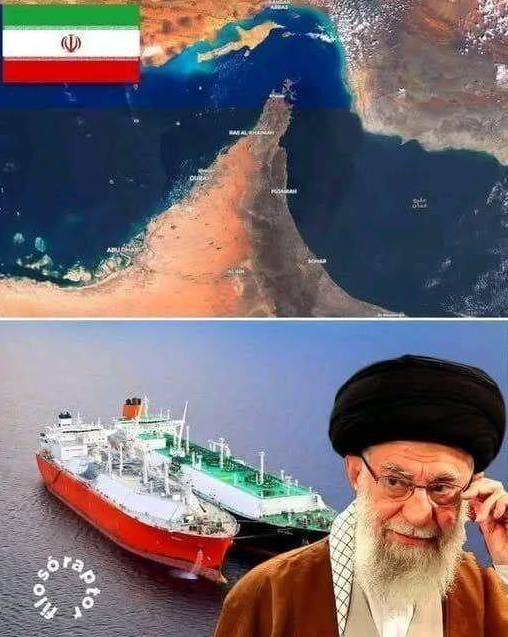
As tensions continue to rise in the Middle East, global markets are watching Iran more closely than ever — and many analysts believe the next major shock to the world economy may not begin with missiles or sanctions, but with ships.
In recent weeks, growing concern over Iran’s maritime strategy has triggered fears across the energy industry, financial markets, and international shipping networks. The reason is simple: Iran sits beside one of the most strategically important waterways on Earth — the Strait of Hormuz.
That narrow stretch of water may look small on a map, but its importance to the global economy is enormous. Roughly one-fifth of the world’s oil supply passes through the Strait of Hormuz every single day, making it one of the most critical energy chokepoints on the planet. ()
And now, signs of a possible maritime shift involving Iran are raising serious questions about what could happen next.
For years, experts warned that any disruption in the region could send shockwaves through oil prices and global trade. But many believed a full-scale maritime crisis would never happen because the economic consequences would simply be too severe for everyone involved.
Today, that assumption is being tested.
Reports of shipping slowdowns, vessel rerouting, rising insurance costs, and increased military activity near the Strait of Hormuz have already begun affecting global energy markets. () Some tankers have delayed entering the Gulf altogether, while others are taking longer, more expensive routes around Africa to avoid potential danger zones. Shipping companies are now calculating whether the risks outweigh the profits.
And that calculation alone is enough to shake the world economy.
One of the biggest fears is not necessarily a complete blockade, but a controlled disruption strategy. Analysts say Iran may not need to fully close the strait to create massive economic pressure. Even small delays, inspections, drone threats, or isolated attacks could dramatically reduce shipping confidence. ()
That matters because modern trade depends heavily on predictability.
Global supply chains operate on tightly scheduled delivery systems. Oil tankers, container ships, and LNG carriers move according to carefully timed logistics. Once uncertainty enters the equation, costs begin rising almost immediately.
Insurance premiums spike.
Shipping rates increase.
Energy traders panic.
Markets react.
Consumers eventually pay the price.
The energy sector is especially vulnerable. Oil prices historically surge whenever tensions rise near Hormuz because traders fear supply interruptions. According to the International Energy Agency, approximately 20 million barrels of crude oil and petroleum products move through the strait daily. () If even a portion of that flow becomes unreliable, the effects could spread worldwide within days.
Countries across Asia would likely feel the impact first.
China, India, Japan, and South Korea depend heavily on Gulf energy exports. Many Asian economies rely on steady shipments from Saudi Arabia, Qatar, Kuwait, Iraq, and the United Arab Emirates. Disruptions near Iran could threaten those supply chains almost instantly. ()
Europe would also face pressure, especially as energy markets remain sensitive after years of geopolitical instability.
But the consequences may go beyond oil alone.
Experts increasingly warn that the Strait of Hormuz is not just an energy corridor — it is a trade artery affecting food, chemicals, fertilizers, and industrial goods. Shipping disruptions can slow everything from electronics manufacturing to agricultural supply chains. ()
This is why financial markets are reacting so aggressively to every new headline from the region.
Some analysts believe Iran understands this leverage extremely well.
Rather than pursuing a total shutdown, Tehran may benefit more from creating controlled uncertainty. A situation where the route technically remains open — but risky enough to raise prices, disrupt schedules, and pressure foreign governments — could provide strategic advantages without triggering an outright global military response.
That possibility has become one of the biggest fears among maritime experts.
In many ways, the situation highlights how fragile globalization truly is. The modern economy depends on a handful of critical trade corridors functioning smoothly at all times. When one of those corridors faces instability, the ripple effects spread rapidly through shipping networks, manufacturing systems, stock markets, and consumer prices.
The Strait of Hormuz may be the clearest example of that vulnerability.
Military activity in the region has also intensified concerns. Several nations, including the United States and the United Kingdom, have increased naval operations aimed at protecting commercial shipping routes. () The goal is to reassure shipping companies and prevent panic from escalating into a larger trade crisis.
But restoring confidence is not easy.
Commercial shipping companies think differently from governments. Even a small chance of losing a massive cargo vessel, oil tanker, or crew can convince firms to avoid dangerous areas entirely. That’s why some experts believe the psychological effect of maritime threats may be just as powerful as physical disruptions themselves.
And once rerouting becomes normalized, global trade patterns can begin changing permanently.
Some Gulf nations are already accelerating plans to diversify export routes away from Hormuz. Saudi Arabia and the UAE have pipelines that partially bypass the strait, but many regional economies remain deeply dependent on it. ()
Meanwhile, energy companies are scrambling to prepare for worst-case scenarios.
Strategic oil reserves may be released.
Alternative suppliers may gain influence.
Shipping costs may continue climbing.
And inflation — already a major issue in many countries — could worsen significantly if energy prices surge again.
What makes this moment particularly dangerous is the uncertainty surrounding how long tensions could last. Markets can often survive short-term disruptions. But prolonged instability changes investor behavior, government policy, and corporate strategy.
Some experts now believe the world may be entering a new era where maritime chokepoints become increasingly weaponized in geopolitical conflicts. () If true, the implications stretch far beyond Iran alone.
The global economy was built around the assumption that major trade routes would remain relatively secure and open.
That assumption is no longer guaranteed.
And as the world watches developments near the Strait of Hormuz unfold in real time, one thing has become clear:
What happens in that narrow stretch of water could shape energy prices, inflation, trade stability, and global politics for years to come.