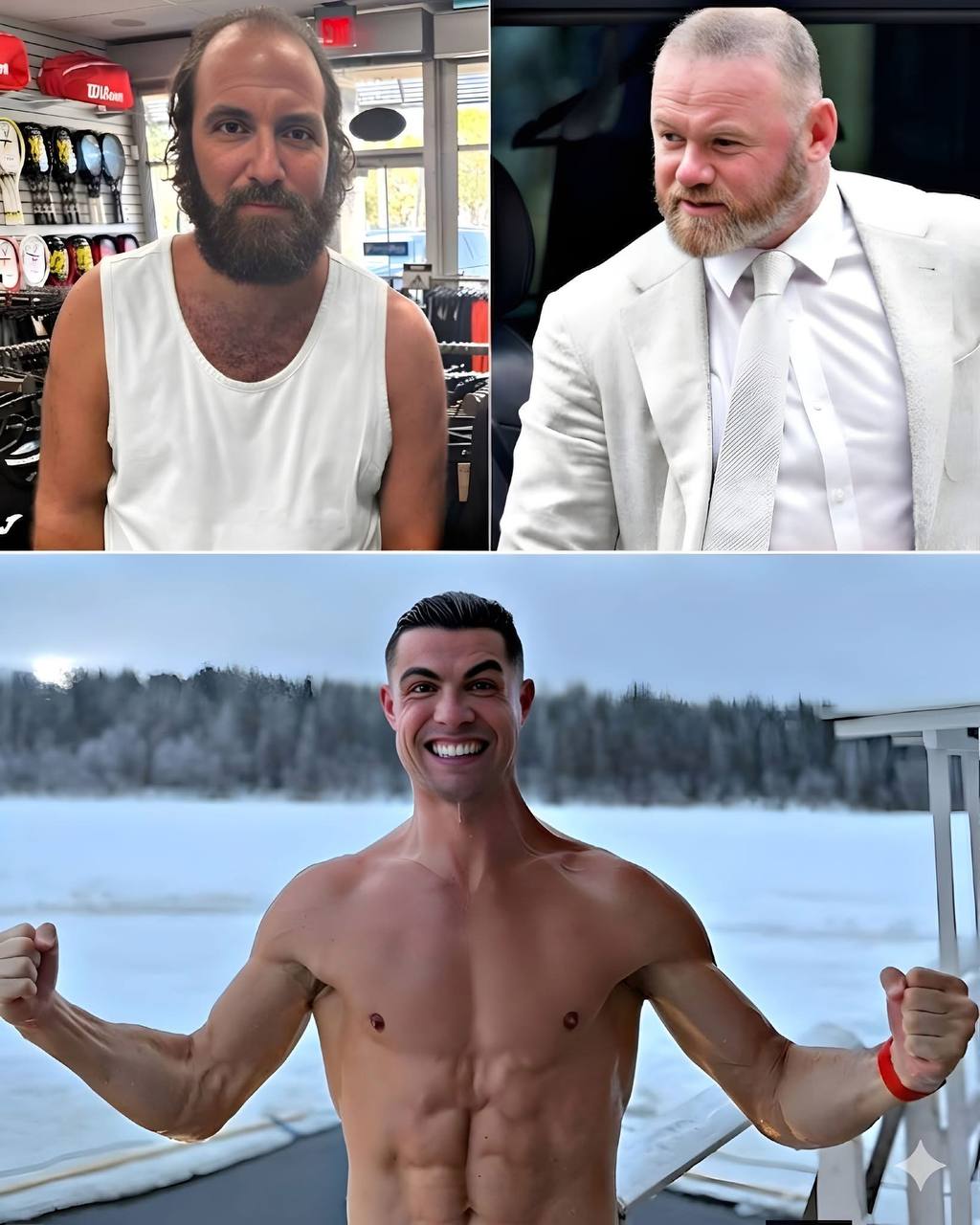

About 30 minutes ago, a clip began making the rounds online comparing three iconic forwards from the same era: Gonzalo Higuaín, Wayne Rooney, and Cristiano Ronaldo. The caption was simple but provocative—what do players look like in their late 30s compared to Ronaldo at 41? And as expected, it sparked a flood of reactions, debates, admiration, and a bit of disbelief.
At first glance, the comparison feels almost unfair. Higuaín and Rooney were both extraordinary in their prime—clinical finishers, intelligent movers, and leaders for club and country. Higuaín was once one of Europe’s most feared strikers, racking up goals for clubs like Real Madrid and Juventus, while Rooney became the all-time leading scorer for Manchester United and a symbol of English football grit. By the time they reached 38, however, both had clearly slowed down. Their bodies showed the wear and tear of years at the highest level—injuries, reduced pace, and the natural decline that comes with age.
Then there’s Ronaldo.
At 41, most footballers are long retired, perhaps working as pundits, coaches, or simply enjoying life away from the relentless physical demands of professional sport. But Ronaldo seems to exist in a category of his own. Clips circulating show him still sprinting, still leaping, still scoring—his physique closer to that of a player in his late 20s than someone entering his fifth decade of life. It’s not just about aesthetics either; his output remains impressive, his hunger unchanged.
So what explains the difference?
Part of it is genetics—there’s no denying that some athletes are naturally built for longevity. But that’s only one piece of the puzzle. Ronaldo has built a career not just on talent, but on an almost obsessive commitment to discipline. His training routines, recovery methods, diet, sleep schedule—everything is calibrated for peak performance. While many players ease off slightly after their prime years, Ronaldo appears to have doubled down.
In contrast, players like Higuaín and Rooney followed more traditional career arcs. They gave everything during their peak years, often playing through pain, taking hits, and carrying the burden of expectation. Rooney, in particular, was known for his fearless, all-action style—tracking back, tackling, pressing—essentially playing multiple roles on the pitch. That kind of intensity takes a toll. By his mid-30s, it was clear his body had paid the price for his all-in approach.
Higuaín’s journey was different but equally demanding. As a striker, he relied heavily on positioning and finishing, but also endured immense pressure—especially after high-profile misses in international tournaments. Mental strain, combined with physical demands, can accelerate a player’s decline in ways fans don’t always see.
Ronaldo, on the other hand, has managed to evolve. Early in his career, he was a flashy winger, relying on speed and dribbling. Over time, he transformed into a more central, efficient forward, conserving energy and maximizing impact. This ability to adapt has been crucial. He didn’t just try to outlast time—he adjusted his game to work with it.
Another factor is motivation. Not every player wants to keep pushing at 40. After decades of pressure, scrutiny, and sacrifice, many are ready to step away. Rooney has spoken openly about enjoying life after retirement, focusing on coaching and family. Higuaín, too, has embraced a quieter post-playing life. Ronaldo, however, seems driven by something deeper—records, legacy, perhaps even a desire to redefine what’s possible in football.
The viral comparison also says something about fan culture. There’s a tendency to turn everything into a debate—who aged better, who had the better career, who sacrificed more. But these comparisons often ignore context. Longevity is just one measure of greatness, not the only one. Rooney’s influence on English football, Higuaín’s goal-scoring feats in Europe—those achievements don’t diminish just because Ronaldo is still playing at an elite level.
What the moment really highlights is how rare Ronaldo’s trajectory is. It’s not a standard to expect from every player; it’s an exception. Just as not every artist paints like a master into their old age, not every athlete can maintain peak performance into their 40s.
And maybe that’s why the clip resonated so strongly. It wasn’t just about three players—it was about time itself. Watching athletes age reminds fans of their own passing years, their own limits. Seeing someone like Ronaldo seemingly resist that decline, even if only partially, feels almost surreal.
In the end, the comparison isn’t really about who’s better. It’s about appreciating different paths. Higuaín and Rooney represent the classic arc—brilliant peaks followed by a gradual descent. Ronaldo represents something else entirely—a prolonged defiance of that arc, fueled by discipline, adaptation, and relentless ambition.
Whether you admire one path more than the other probably says more about what you value: brilliance at its peak, or endurance against the odds. Either way, all three players have left a lasting mark on the game—and moments like this remind us just how extraordinary their journeys have been.