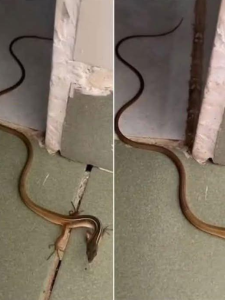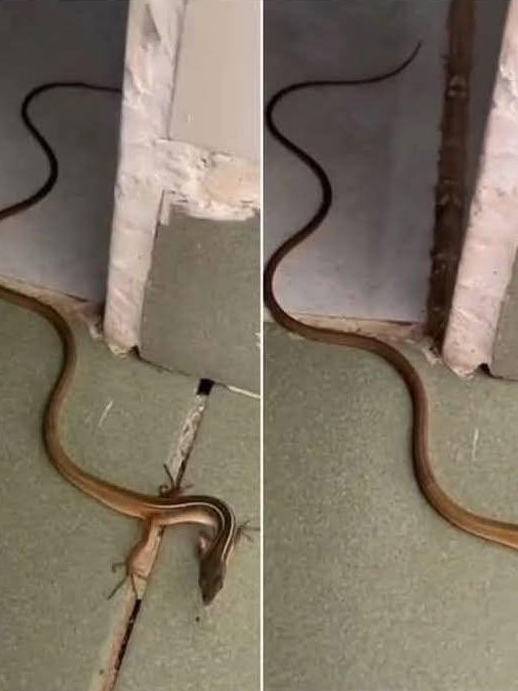
When a snake enters your house, the first reaction for most people is fear. It’s sudden, unexpected, and primal. A silent, slithering presence crossing the boundary between the wild and your private space feels like more than just coincidence. Across cultures, stories have grown around this moment—some mystical, some symbolic, and some grounded in simple reality. But what does it really mean when a snake shows up inside your home?
The truth is, it can mean many different things depending on how you choose to see it.
From a practical standpoint, a snake entering your house usually has very little to do with fate or hidden messages. Snakes are driven by survival. They look for three things: food, shelter, and safety. If a snake slips into your home, it often means your house offers one or more of these. Maybe there are small rodents hiding in walls or basements. Maybe there’s a cool, dark space that feels safe during hot weather. Or perhaps doors, cracks, or gaps in the foundation made it easy for the animal to wander inside without resistance.
In that sense, the snake isn’t a symbol—it’s a visitor responding to its environment.
But humans rarely stop at the practical. There’s something about snakes that has always stirred deeper interpretations. For centuries, they’ve appeared in myths, religions, and folklore as powerful symbols. In some traditions, a snake entering your home is seen as a sign of transformation. Snakes shed their skin, after all, and that act has long been associated with renewal, change, and rebirth. So people began to believe that such an encounter might signal that something in your life is about to shift—perhaps a chapter ending, or a new one beginning.
In other cultures, the meaning is more spiritual. Some believe a snake in the house represents a hidden truth coming to light. Just as a snake moves quietly and often unseen, it can symbolize something in your life that has been ignored, suppressed, or unnoticed. Its appearance may feel like a sudden confrontation with something you didn’t expect but can no longer avoid.
There are also interpretations tied to protection. In certain traditions, snakes are seen as guardians. A snake entering your home could be viewed not as a threat, but as a protector—an unseen force watching over the household. It’s an idea that flips fear into reassurance, suggesting that the presence of the snake is not meant to harm, but to guard.
Of course, not all symbolic meanings are positive. Some beliefs treat the snake as a warning. Its arrival might be interpreted as a sign of danger, betrayal, or negative energy nearby. This idea likely comes from the long-standing association of snakes with deception in various cultural stories. In this interpretation, the snake isn’t just an animal—it’s a signal to be cautious, to pay attention to your surroundings, or to reevaluate trust in certain relationships.
What’s interesting is how these meanings often say more about human psychology than about the snake itself. When something unusual happens, especially something that triggers fear, the mind tries to make sense of it. It looks for patterns, connections, and meaning. The snake becomes a canvas onto which we project our thoughts, worries, and beliefs.
But there’s another layer worth considering—the emotional reaction. The way you respond to the snake might actually reveal more than the snake’s presence itself. If your first instinct is panic, it might reflect a general discomfort with uncertainty or loss of control. If you’re curious instead of afraid, it could point to openness to change or new experiences. If you feel uneasy but calm, maybe it suggests you’re used to handling unexpected situations.
In that sense, the snake becomes a mirror rather than a message.
Still, it’s important not to romanticize a real situation too much. Snakes, while often harmless, can sometimes be dangerous depending on the species. If one enters your home, the priority should always be safety. Keeping a distance, identifying whether it’s venomous, and contacting animal control or a wildlife professional is the responsible course of action. Trying to interpret meaning should never come before protecting yourself and others in the household.
There’s also something grounding about returning to reality in moments like this. Not everything that feels significant carries a deeper message. Sometimes, a snake is just a snake. It followed a scent, found an opening, and ended up somewhere it doesn’t belong. That’s not fate—it’s nature.
And yet, the human tendency to search for meaning isn’t wrong. It’s part of how we process the world. If seeing a snake in your home makes you pause and reflect on your life, your environment, or your state of mind, that reflection can still be valuable—even if the snake itself had no symbolic intention.
So what does it mean when a snake enters your house?
It could mean your home has an entry point that needs sealing.
It could mean there’s a food source nearby attracting wildlife.
It could mean nothing more than coincidence.
Or, if you choose to see it differently, it could be a moment to reflect—on change, awareness, or something hidden beneath the surface of your everyday life.
The meaning isn’t built into the snake. It’s shaped by what you bring to the moment.
And sometimes, the most powerful part of an unexpected encounter isn’t the event itself—but the story you tell yourself afterward.