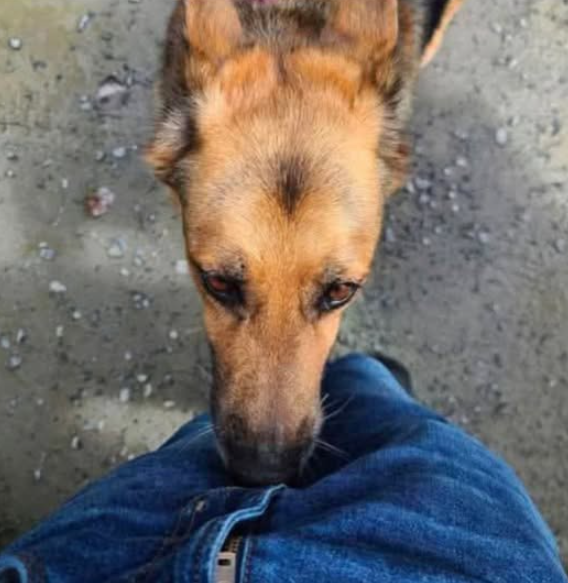
Why Dogs Sniff the Groin Area: The Science of Canine Communication
Dogs experience the world primarily through their sense of smell. While humans rely heavily on sight and language, dogs rely on scent in a far more detailed and information-rich way. To a dog, smell is not just an impression—it is a complete biological profile.
When a dog sniffs a human’s groin area, it is not behaving in a sexual or inappropriate way. It is engaging in a natural form of information gathering, driven by instinct and biology.
The role of scent glands
Humans have sweat glands all over their bodies, but certain areas contain a higher concentration of apocrine glands, including the underarms and groin. These glands produce pheromones and scent compounds that carry biological information.
Dogs are extremely sensitive to these scents. Their noses contain up to 300 million scent receptors, compared to about 5–6 million in humans. This means they can detect chemical signals that are completely invisible to us.
To a dog, these scent markers can provide information such as:
- Emotional state (stress, excitement, fear)
- Hormonal changes
- Recent activity (exercise, environment, other animals)
- General identity recognition
So when a dog sniffs that area, it is essentially “reading” biological data.
Dogs don’t understand human social boundaries
Humans have strong cultural rules about personal space and privacy. Dogs do not share these rules. Their social system is built around scent-first communication.
In canine behavior, sniffing is how greetings happen. Dogs sniff each other’s faces, ears, and rear areas as a normal form of introduction. These areas contain scent glands that reveal identity, health, and reproductive status.
When a dog transfers that same behavior to humans, it is not being disrespectful—it is simply applying its natural communication system to a different species.
Why that specific area?
From a dog’s perspective, the groin area is simply another high-information scent zone. It is warm, often less washed with heavily scented products than hands or face, and contains strong biological markers.
Dogs are not “choosing” this area because of human interpretations. They are following scent strength and accessibility.
It is also worth noting that dogs are drawn to areas where scent is concentrated, especially where clothing traps natural odors.
Excitement and social behavior
Dogs often perform intense sniffing when they are excited or curious. This behavior can be more noticeable when:
- Meeting a new person
- Greeting someone after a long absence
- Detecting hormonal changes (such as pregnancy or menstrual cycles)
- Sensing strong emotional states like anxiety or stress
However, the intent is not judgment or interpretation in a human sense. It is simply information collection.
Training and boundaries
Even though this behavior is natural, it is understandable that humans may find it uncomfortable or inappropriate. That is where training and redirection come in.
Dogs can be taught polite greeting behaviors, such as:
- Sitting before greeting guests
- Sniffing hands instead of lower body areas
- Waiting for permission before approaching people
Positive reinforcement is key. Dogs are not corrected for curiosity itself, but guided toward more socially acceptable ways to interact in human environments.
Misconceptions about meaning
A common misunderstanding is that this behavior reflects something “wrong” or unusual about the person being sniffed. This is not true.
Dogs do not detect moral, personal, or social judgments. They detect chemical signals. Every human produces them, and dogs respond naturally to them.
There is no hidden meaning such as health predictions or personality assessments in the dramatic sense often suggested online.
Why the internet exaggerates this behavior
Online content often turns normal animal behavior into sensational claims because it attracts attention. Phrases like “it means you have…” are designed to provoke curiosity, not to reflect scientific reality.
In truth, canine behavior is well-studied in veterinary science and animal cognition research. And the conclusion is simple: sniffing is communication, not judgment.
When to be concerned
In most cases, this behavior is completely normal. However, excessive or obsessive sniffing can sometimes indicate:
- The dog is untrained or overly excitable
- The dog has not learned appropriate greeting behavior
- The dog is under-stimulated and overly curious about people
- The dog is reacting strongly to hormonal changes in a household member
Even then, it is not a sign of something wrong with the human—it is a behavioral training issue for the dog.
How to manage it calmly
If a dog engages in this behavior and it makes someone uncomfortable, simple strategies can help:
- Redirect the dog immediately to a seated position
- Offer a hand for sniffing instead
- Turn slightly away and avoid reinforcing the behavior
- Reward calm greeting behavior instead
Consistency is far more effective than punishment.
Final understanding
At its core, this behavior is not about humans at all—it is about dogs interpreting the world through scent. What may feel awkward or personal to us is, for them, just a routine exchange of information.
Dogs are not being inappropriate. They are being dogs.
Understanding this helps replace embarrassment or confusion with clarity: this is biology, communication, and instinct—not symbolism or hidden meaning.