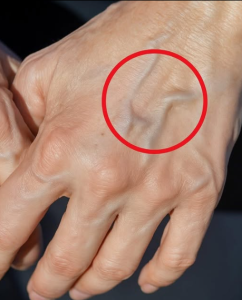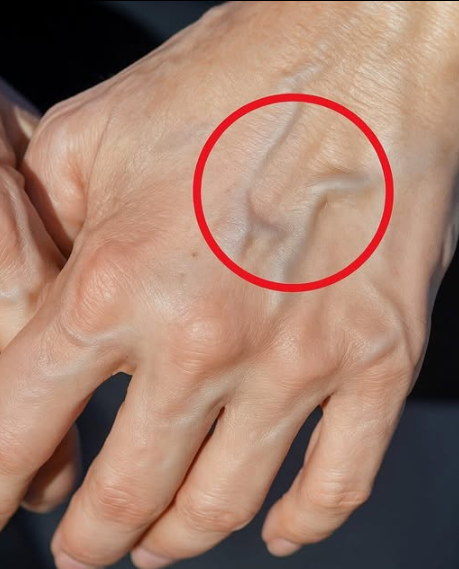
“If you have visible veins, it means you are…” — it’s the kind of headline designed to make you pause, look down at your hands or arms, and wonder if there’s some hidden truth about your body that you’ve never noticed before. It hints at a secret, something revealing, maybe even a little mysterious. But the real explanation is both simpler and more interesting than most people expect.
Visible veins are actually a completely normal part of human anatomy, and their appearance can be influenced by a variety of factors—many of which have nothing to do with health problems or hidden conditions. In fact, in many cases, visible veins are a sign that your body is functioning exactly as it should.
To understand why veins become more visible, it helps to know what they do. Veins are responsible for carrying blood back to the heart after oxygen has been delivered throughout the body. Unlike arteries, which are deeper and more protected, many veins run closer to the surface of the skin. That’s why you can sometimes see them, especially in areas like your hands, arms, feet, or even your chest.
One of the biggest reasons veins become visible is simply body fat percentage. When you have less fat beneath your skin, there’s less tissue covering your veins, making them easier to see. This is why athletes, bodybuilders, and people who are very lean often have more prominent veins. It’s not a secret signal of something unusual—it’s just anatomy becoming more visible due to less padding underneath the skin.
Another major factor is skin tone. People with lighter skin tend to have more noticeable veins because there’s less pigment to obscure the bluish or greenish color of the blood vessels beneath. On the other hand, veins can still be visible in darker skin tones, but they may appear less pronounced or require certain lighting conditions to notice.
Temperature also plays a role. When your body heats up—whether from exercise, a hot shower, or warm weather—your veins can expand in a process called vasodilation. This helps regulate body temperature by allowing more blood to flow closer to the skin’s surface, where heat can dissipate. As a result, your veins may appear larger and more visible. That’s why after a workout or on a hot day, your veins might seem to “pop” more than usual.
Hydration levels can subtly influence vein visibility as well. When you’re well-hydrated, your blood volume is optimal, and your circulation tends to be more efficient. While dehydration doesn’t necessarily make veins disappear, fluctuations in fluid balance can affect how prominent they look.
Age is another factor that gradually changes how veins appear. As people get older, the skin naturally becomes thinner and loses some of its elasticity. This thinning makes veins more noticeable over time. It’s a normal part of aging and not usually a cause for concern.
Genetics, too, play a significant role. Some people are simply born with veins that sit closer to the surface or are naturally more prominent. If you notice that your parents or relatives have visible veins, there’s a good chance you might as well. It’s one of those inherited traits that varies widely from person to person.
There’s also a common myth that visible veins reveal something specific about your personality, strength, or even attractiveness. You might have seen claims suggesting that prominent veins mean you’re more athletic, more energetic, or even more “intense.” While there’s a grain of truth—since low body fat and physical activity can contribute to visible veins—these interpretations are often exaggerated. Veins don’t define who you are; they simply reflect physical characteristics.
Some people associate visible veins with fitness and strength, especially in popular culture. Images of muscular arms with pronounced veins are often used to symbolize power and discipline. But it’s important to remember that health isn’t determined by how visible your veins are. Someone can be very healthy without noticeable veins, and someone with prominent veins isn’t automatically healthier.
On the flip side, there are times when vein changes might be worth paying attention to. If veins suddenly become swollen, painful, or unusually hard, it could indicate an underlying issue such as inflammation or circulation problems. Conditions like varicose veins or blood clots can cause veins to appear different than usual, often accompanied by discomfort. In those cases, it’s less about visibility and more about changes in texture, shape, or sensation.
Still, for most people, visible veins are simply a normal variation. They can change throughout your life depending on your activity level, weight, environment, and overall health. One day they might be more noticeable, and another day less so.
Interestingly, visible veins have also become a kind of aesthetic feature for some. In fitness communities, vascularity—how visible veins are—is sometimes seen as a sign of dedication and conditioning. It’s not uncommon for people to aim for that “vascular” look, especially in bodybuilding or competitive sports. But again, this is more about appearance than a universal marker of health or ability.
There’s also a psychological side to these viral “See more” statements. They tap into curiosity and a desire for self-discovery. When you read something like “If you have visible veins, it means you are…,” your mind immediately wants to fill in the blank with something meaningful or surprising. It creates a moment of suspense, making you feel like you’re about to learn something personal or revealing. In reality, the explanation is often grounded in basic biology rather than hidden truths.
So, what does it really mean if you have visible veins?
It means your body is uniquely yours. It reflects your genetics, your current physical condition, your environment, and even your daily habits. It doesn’t define your personality, your worth, or your destiny. It’s simply a visible reminder of the complex system working beneath your skin every second of the day.
Instead of seeing it as a mystery to solve, it can be more interesting to view it as a small window into how your body functions. Every vein you see is part of a vast network keeping you alive and moving. That’s far more fascinating than any one-line explanation a viral post might promise.
In the end, the “See more” hook is designed to pull you in—but the real story is less about a hidden meaning and more about understanding how beautifully ordinary the human body truly is.