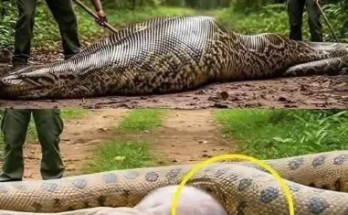
There’s something endlessly fascinating about photos that challenge the way we see the world. At first glance, everything might look normal—but give it a second, and suddenly your brain starts to question reality. Perspective twists, timing plays tricks, and ordinary moments become extraordinary illusions. These are the kinds of images that don’t just capture a scene—they capture confusion, curiosity, and that irresistible urge to look twice.
One of the most common types of mind-bending photos relies on perspective. Imagine a person appearing to hold up the sun between their fingers, or someone “leaning” against a building that’s actually miles away. These images work because of forced perspective—a technique where distance and angle align perfectly to create a visual illusion. Your brain, used to interpreting depth in a certain way, accepts the illusion before realizing something doesn’t quite add up.
Then there are perfectly timed photos—the kind that freeze a split second in a way that feels almost impossible. A dog mid-jump that looks like it’s floating in the air. A splash of water shaped exactly like a human figure. A bird captured at the exact moment its wings align with someone’s arms, making it look like they’ve suddenly grown feathers. These moments exist for only fractions of a second, but when captured, they turn into something surreal.
Shadows are another powerful trickster. Sometimes a shadow reveals something the object itself does not. A simple lamppost might cast a shadow that looks like a person. Two unrelated objects might align in such a way that their combined shadow forms a completely different shape. It’s a reminder that what we see isn’t always defined by the object itself, but by how light interacts with it.
Reflections can be just as deceptive. A calm lake can mirror the sky so perfectly that it becomes impossible to tell where the water ends and the horizon begins. Glass surfaces can layer multiple reflections on top of each other, creating scenes that look like they belong in a dream. You might see a person “walking in the clouds,” only to realize it’s a reflection on a puddle after rain.
Some of the most confusing images come from angles that distort the human body. A person lying on patterned tiles might appear to be floating. Someone sitting behind an object might look like they’re missing part of their body. In reality, everything is exactly as it should be—but the camera’s perspective removes the depth cues our brains rely on, leaving us momentarily baffled.
There are also photos that seem to break the laws of physics. Buildings that appear upside down, roads that look like they’re bending into the sky, or staircases that seem to loop endlessly. While some of these are created through clever design or editing, others are simply the result of unusual angles and architectural quirks. They challenge our understanding of space and structure, making us question what’s real.
Nature, too, has a way of creating illusions that feel almost magical. Clouds can form shapes that resemble faces or animals. Ice patterns can look like intricate artwork. Rock formations can appear to defy gravity, balancing in ways that seem impossible. These moments remind us that the natural world is full of surprises—sometimes stranger than anything we could imagine.
Animals often play a starring role in these kinds of photos. A cat curled up in a way that makes it look like it has two heads. A dog whose fur pattern creates the illusion of a completely different expression. Even insects can appear larger than life when photographed from just the right angle. These images are both amusing and puzzling, inviting us to take a closer look.
Urban environments offer endless opportunities for visual confusion. Graffiti that interacts perfectly with people walking by. Billboards that align with real-world objects to create unexpected scenes. Mirrors placed in public spaces that reflect parts of the city in ways that feel disorienting. In these settings, the line between art and reality becomes blurred.
What makes these photos so compelling is not just the illusion itself, but the moment of realization that follows. That split second when your brain shifts from confusion to understanding is deeply satisfying. It’s like solving a puzzle—one that doesn’t require logic or numbers, but perception and attention.
There’s also a deeper lesson hidden within these images. They remind us that our perception of reality is not always reliable. Our brains are constantly interpreting visual information, filling in gaps, and making assumptions. Most of the time, this process works seamlessly. But in these photos, those assumptions are exposed, revealing just how easily we can be fooled.
In a way, these images encourage us to slow down and look more carefully. In a world where we often scroll quickly past content, they demand a second glance. They reward curiosity and attention, offering a small moment of wonder in an otherwise ordinary day.
They also highlight the creativity of the people behind the camera. Some of these photos are the result of careful planning—photographers who understand exactly how to manipulate perspective and timing. Others are pure luck, moments that just happened to be captured at the perfect instant. Either way, they showcase the power of photography to transform the mundane into something extraordinary.
As you go through a collection of these “insane” photos, you might find yourself laughing, scratching your head, or even feeling a bit disoriented. But that’s part of the fun. Each image is a reminder that the world is more complex—and more interesting—than it sometimes appears.
So the next time you come across a photo that doesn’t make sense at first glance, don’t scroll past it. Take a moment. Look closer. Let your brain wrestle with the details. Because sometimes, the most fascinating things are the ones that don’t immediately make sense.