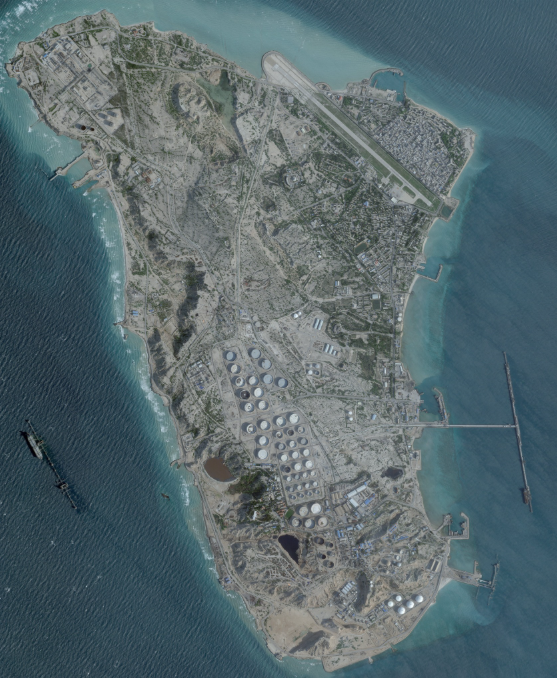
Reports claiming that the United States carried out overnight airstrikes on Iranian military targets on Kharg Island have quickly spread across social media and television, often framed as “breaking news.” According to the claim, dozens of targets—including bunkers, radar installations, and ammunition depots—were struck in a coordinated operation. The report attributes the information to a senior U.S. official speaking to journalist Jennifer Griffin. However, before drawing conclusions, it’s important to approach such claims with caution and context.
First, Kharg Island is one of the most strategically significant locations in Iran. Situated in the Persian Gulf, it serves as a major oil export terminal and has long been considered a critical economic and military asset. Any confirmed strike on Kharg Island would represent a major escalation in tensions between the United States and Iran, with potential global consequences for energy markets, regional security, and international diplomacy.
Despite the dramatic nature of the claim, there has been no broad, verified confirmation from multiple independent sources or official statements from the U.S. Department of Defense or the Iranian government at the time such reports typically circulate. In high-stakes situations like this, credible confirmation usually comes from several outlets—including international wire services, official press briefings, or statements from allied governments. The absence of that kind of corroboration is a key reason analysts urge caution.
It’s also worth understanding how modern information spreads. In the age of instant updates, a single report—especially one attributed to an unnamed official—can quickly be amplified, repeated, and sometimes distorted. Even reputable journalists like Jennifer Griffin, who has a long track record covering defense issues, may report preliminary information that is still developing. Early reports can be incomplete, misinterpreted, or later clarified as more details emerge.
If such an operation had indeed taken place, it would likely involve a complex and coordinated military effort. U.S. airstrikes of this scale typically rely on precision-guided munitions, intelligence from surveillance systems, and coordination with regional military assets. Targets like radar stations and ammunition depots are often prioritized in order to degrade an adversary’s defensive and operational capabilities. However, operations of this magnitude are rarely kept entirely secret for long, especially given the number of personnel and resources involved.
The geopolitical implications would be enormous. Direct strikes on Iranian territory—particularly on a site as economically vital as Kharg Island—could trigger a strong response from Iran. This might include retaliatory actions against U.S. forces in the region, cyber operations, or disruptions to shipping in the Persian Gulf. The Strait of Hormuz, through which a significant portion of the world’s oil supply passes, could become a focal point of tension, affecting global energy prices almost immediately.
Historically, both the United States and Iran have engaged in indirect confrontations, often through proxies or limited engagements, rather than large-scale direct attacks on each other’s core infrastructure. This pattern reflects a mutual understanding of the risks involved in escalation. A confirmed strike of the kind described in the report would mark a significant departure from that pattern.
Another factor to consider is the role of official communication. In situations involving military action, governments typically release carefully worded statements once operations are confirmed and assessed. These statements are often designed to manage public perception, reassure allies, and signal intentions to adversaries. The absence of such statements—especially several hours after an alleged large-scale strike—raises questions about the accuracy or completeness of the initial report.
It’s also possible that elements of the claim could be based on real but different events. For example, military exercises, routine patrols, or smaller-scale incidents can sometimes be misinterpreted or exaggerated when reported without full context. Analysts often caution against taking early reports at face value until more information becomes available.
For readers trying to make sense of such breaking news, a few practical steps can help. Look for confirmation from multiple reputable outlets, including international organizations. Check whether official statements have been released by governments or defense departments. Pay attention to whether the information is attributed to named sources or anonymous officials, and whether the report includes verifiable details.
At the same time, it’s important to avoid jumping to conclusions or spreading unverified information. In an era where misinformation can travel quickly, responsible consumption of news is more important than ever. Waiting for confirmation may feel slower, but it helps ensure a more accurate understanding of events.
If the reported strikes are eventually confirmed, they would likely dominate global headlines, prompt emergency meetings among world leaders, and lead to rapid developments in international relations. Markets would react, military forces might be placed on higher alert, and diplomatic channels would be activated to prevent further escalation.
Until then, the situation remains uncertain. Claims of major military actions—especially those involving powerful nations and strategically vital targets—require a high standard of verification. While the report has captured attention due to its dramatic nature, the lack of widespread confirmation means it should be treated as unverified.
In moments like these, clarity often comes with time. As more information emerges, a clearer picture will form—either confirming the initial claim, correcting it, or providing a more nuanced understanding of what actually occurred. For now, the most responsible approach is to stay informed, remain cautious, and rely on credible, confirmed sources rather than early, unverified reports