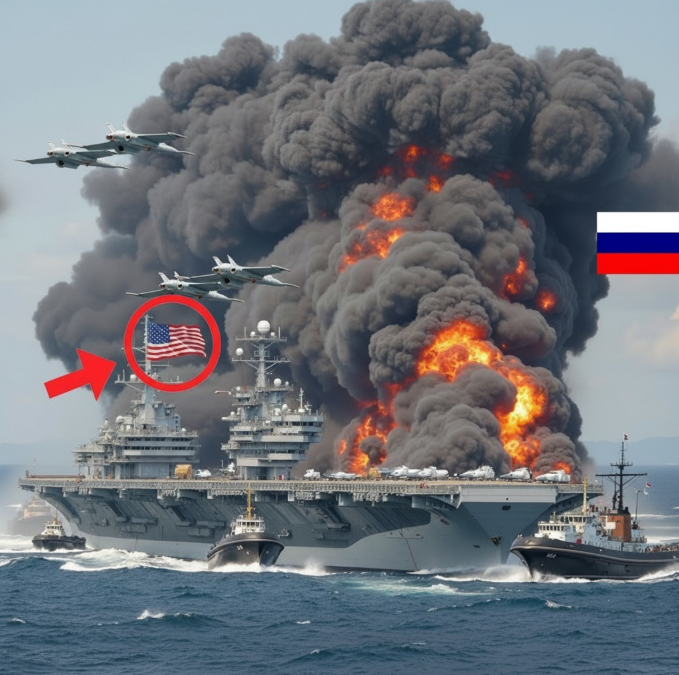
Breaking alerts have a way of grabbing attention instantly especially when they involve dramatic claims about military events and global conflict. The scenario described involving a single advanced fighter aircraft destroying a massive naval vessel carrying hundreds of armored vehicles is not grounded in reality. Modern military operations are complex layered and heavily defended making such an outcome extremely unlikely. It is important to approach such headlines with caution and examine whether the details make sense based on known capabilities and logistics.
Aircraft carriers are among the most protected assets in the world. They do not operate alone but as part of a larger group that includes multiple escort ships submarines and aircraft. These groups are designed specifically to prevent the kind of sudden devastating attack described in sensational headlines. Layers of radar surveillance missile defense systems and fighter patrols ensure that any incoming threat is detected tracked and intercepted long before it can reach the carrier itself.
In addition aircraft carriers are not used to transport tanks. Their primary purpose is to project air power across vast distances by carrying and launching fighter jets helicopters and surveillance aircraft. Tanks and heavy ground vehicles are transported using entirely different types of ships designed for amphibious operations or logistical support. The mention of hundreds of tanks aboard a carrier is a clear sign that the story is not accurate.
Advanced fighter aircraft are powerful and capable but they are not invincible. Even stealth aircraft designed to avoid detection cannot operate freely in heavily defended airspace without significant risk. A single aircraft attempting to attack a carrier strike group would face overwhelming opposition from both air and sea defenses. The likelihood of such an aircraft successfully completing a mission of that scale alone is extremely low.
Sensational stories like this often spread quickly online because they combine real elements with exaggerated or impossible claims. They are designed to provoke emotional reactions and encourage sharing without careful verification. Words like breaking urgent and just now create a sense of immediacy that makes people more likely to accept the information without questioning it.
When evaluating such claims it is helpful to consider whether the details align with basic facts. Does the equipment mentioned match its known purpose Are the numbers realistic Would such an event go unreported by major news organizations These questions can help identify whether a story is credible or not.
In real situations involving military conflict information is typically confirmed by multiple reliable sources before being widely accepted. Governments issue official statements and major news outlets provide coverage with verified details. While misinformation can still occur the most significant events are rarely hidden or reported only through vague social media posts.
The spread of false or misleading information can have real consequences. It can create unnecessary fear confusion and misunderstanding about global events. In some cases it can even influence public opinion and decision making in ways that are not based on accurate information. This is why critical thinking and verification are so important when consuming news especially during times of heightened tension.
Technology has made it easier than ever to share information quickly but it has also made it easier for inaccurate or fabricated stories to spread. Images videos and detailed descriptions can be created or altered to appear convincing even when they are not real. As a result it is more important than ever to rely on trusted sources and to question information that seems extreme or unlikely.
Understanding the basics of how military systems operate can also help in recognizing unrealistic claims. Knowing that carriers do not carry tanks or that advanced defense systems are designed to prevent exactly the kind of attack described makes it easier to see through exaggerated stories. Education and awareness are key tools in navigating the modern information landscape.
Ultimately the goal should not be to dismiss every dramatic headline outright but to approach it with a balanced perspective. Some events are indeed significant and unexpected but they are usually supported by clear evidence and widespread reporting. Taking a moment to pause think and verify can make a significant difference in understanding what is truly happening.
In a world where information travels instantly the ability to distinguish between fact and fiction is more valuable than ever. By staying informed asking questions and seeking reliable sources it is possible to avoid being misled by sensational or inaccurate claims. This approach not only helps individuals but also contributes to a more informed and thoughtful public conversation.
The story described may sound dramatic and attention grabbing but it does not reflect the realities of modern military capability or operations. Recognizing this allows for a clearer more accurate understanding of global events and reduces the impact of misinformation.