The headline spread like wildfire across screens, notifications lighting up phones from Washington to Tokyo: BREAKING: Iranian Parliament Approves the Closure of the Strait of Hormuz. At first, many dismissed it as another exaggerated alert, the kind that thrives in the fast-moving chaos of social media. But within minutes, major networks began confirming fragments of the story. Analysts were pulled onto live broadcasts, maps were displayed, and a quiet but unmistakable tension began to ripple through global markets.
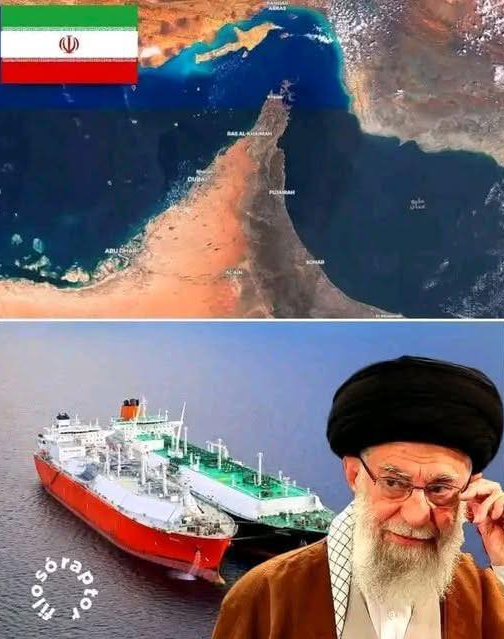
The Strait of Hormuz is not just another waterway. It is one of the most strategically vital chokepoints on the planet, a narrow passage connecting the Persian Gulf to the open ocean. Roughly a fifth of the world’s oil supply flows through it. Any disruption there doesn’t stay regional—it becomes global almost instantly. The mere suggestion of its closure is enough to send oil prices soaring and governments scrambling.
Inside Iran, the parliamentary vote had reportedly followed days of escalating rhetoric and mounting pressure. Hardline lawmakers argued that the move was a necessary response to what they described as increasing external threats and economic warfare. In their view, controlling the Strait was one of the few powerful levers Iran could still pull in a world where sanctions had tightened and diplomatic options felt increasingly constrained.
But even as the vote passed, questions swirled. What did “closure” actually mean? Was Iran preparing for a full naval blockade, laying mines, or simply signaling intent as a deterrent? Military experts cautioned against jumping to conclusions. Closing the Strait is far easier to declare than to sustain. The waterway is heavily monitored, and the presence of international naval forces—especially from the United States and its allies—complicates any attempt at a prolonged shutdown.
In Washington, officials moved quickly but carefully. Public statements were measured, emphasizing the importance of freedom of navigation and warning against any actions that could destabilize global trade. Behind the scenes, however, the tone was far more urgent. Defense officials were reportedly reviewing contingency plans, while diplomatic channels lit up with calls to allies in Europe, the Middle East, and Asia.
Global markets reacted almost instantly. Oil prices spiked sharply in early trading, reflecting fears of supply disruptions. Shipping companies began reassessing routes, calculating risks, and preparing for potential delays. Insurance premiums for vessels passing through the region surged, as underwriters tried to price in a scenario that, until now, had largely been theoretical.
For countries heavily dependent on energy imports, the news was particularly alarming. Nations in Asia, including Japan, South Korea, and India, rely heavily on oil shipments that pass through the Strait. Any sustained disruption could have cascading effects on their economies, driving up fuel costs, increasing inflation, and potentially slowing growth.
Meanwhile, in the Gulf region itself, reactions were swift and cautious. Neighboring countries issued statements calling for restraint and emphasizing the need to keep trade routes open. Behind the scenes, regional leaders were likely weighing their own options, balancing the need for security with the desire to avoid further escalation.
Back in Iran, state media framed the parliamentary decision as a bold assertion of sovereignty and strength. Commentators spoke of resilience, of standing firm in the face of pressure. Yet even within the country, there were likely differing views. Closing the Strait, even partially, carries risks not just for global markets but for Iran’s own economy. Oil exports are a critical source of revenue, and any disruption could have unintended consequences.
As the hours passed, the world waited for clarity. Would Iran move quickly to implement the decision, or was this primarily a political signal—a warning shot rather than an immediate action? Military analysts pointed out that even limited steps, such as increased naval patrols or the positioning of defensive systems, could raise tensions and increase the risk of miscalculation.
The situation also underscored a broader reality: how interconnected the modern world has become. A decision made in one البرلمان chamber can ripple outward, affecting gas prices in distant cities, influencing stock markets, and shaping geopolitical strategies. It is a reminder that in today’s world, local actions often have global consequences.
For ordinary people, the implications might not be immediately visible, but they are real. Higher fuel prices, increased costs for goods, and economic uncertainty can all trace their roots back to events like this. It is a chain reaction, complex and often invisible, linking distant regions in ways that are easy to overlook until something disrupts the balance.
As night fell in some parts of the world and dawn broke in others, the story continued to evolve. Governments issued updates, analysts refined their assessments, and citizens refreshed their news feeds, searching for the latest developments. The uncertainty itself became a central feature of the moment—a reminder that in geopolitics, clarity often comes slowly, if at all.
What happens next will depend on a delicate interplay of decisions. Iran’s leadership must weigh the benefits and risks of any action. Other nations must decide how to respond—whether through diplomacy, economic measures, or military presence. And all the while, the Strait of Hormuz remains what it has always been: a narrow stretch of water carrying an outsized share of the world’s attention.
In the end, the headline is only the beginning. The real story lies in what follows—the choices made, the reactions triggered, and the consequences that unfold over time. Whether this moment becomes a brief spike in tensions or the start of something more serious will depend on what happens in the hours and days ahead. For now, the world watches, waits, and hopes that cooler heads will prevail in a situation where the stakes could hardly be higher