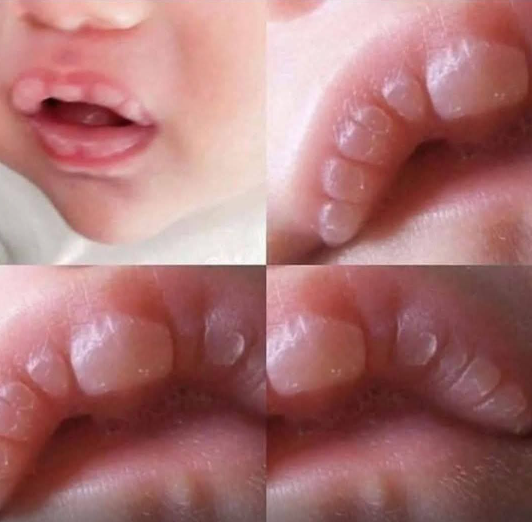
Headlines like “If your baby has these marks it means… See more” are extremely common on social media. They are written to spark curiosity and sometimes even fear, encouraging parents to click on the post quickly. Because parents naturally want to protect their children, any suggestion that a mark on a baby’s skin might signal something important can immediately grab attention.
In reality, most marks on a baby’s skin are completely normal and harmless. Many infants are born with birthmarks or develop them shortly after birth. These marks vary in color, shape, and size, and they usually do not indicate any health problem. Pediatricians often reassure parents that such marks are simply part of natural development.
Birthmarks: One of the Most Common Explanations
One of the most likely reasons a baby might have visible marks is the presence of birthmarks. Birthmarks occur when certain cells—such as pigment cells or blood vessels—develop differently in a particular area of the skin. Some birthmarks are present at birth, while others appear during the first weeks of life.
There are two main types of birthmarks: vascular birthmarks and pigmented birthmarks. Vascular birthmarks happen when blood vessels cluster together near the skin’s surface, often creating red or pink areas. Pigmented birthmarks are caused by extra pigment in the skin and may appear brown, blue, or gray.
“Stork Bites” and “Angel Kisses”
Some babies are born with small pink or reddish patches on the back of the neck, eyelids, or forehead. These are often called “stork bites” or “angel kisses.” They are extremely common and occur when tiny blood vessels become visible through the baby’s thin skin.
These marks usually fade gradually during the first few years of life. In many cases, they disappear completely without any treatment. Because they are harmless, doctors generally do not consider them a medical concern.
Infant Hemangiomas
Another type of mark that may appear in early infancy is called a hemangioma. These are small clusters of blood vessels that form a red or purplish bump on the skin. Hemangiomas often grow slightly during the first year of life but then begin to shrink on their own.
Most hemangiomas eventually fade significantly or disappear as the child grows. In rare situations—such as when the mark affects vision or breathing—doctors may recommend treatment. But in most cases, they simply monitor the mark over time.
Mongolian Spots
Some babies are born with bluish-gray patches on their lower back or buttocks. These marks are often called Mongolian spots, although doctors now prefer terms like dermal melanocytosis. They are caused by pigment cells that remain deeper in the skin during development.
These spots are particularly common among babies with Asian, African, Native American, or Hispanic heritage. They are completely harmless and usually fade as the child grows older.
What Viral Posts Often Claim
Posts with titles like “If your baby has these marks it means…” often imply dramatic or mysterious explanations. Some suggest that the marks predict personality traits, special abilities, or spiritual meanings. Others claim the marks indicate serious health issues without providing scientific evidence.
These claims are rarely supported by medical research. While certain skin changes can sometimes indicate underlying conditions, doctors evaluate them based on appearance, location, and medical history—not myths circulating online.
When Parents Should Pay Attention
Although most marks are harmless, there are situations where it is wise to consult a pediatrician. Parents should seek medical advice if a mark:
-
Changes rapidly in size or color
-
Becomes swollen, painful, or infected
-
Bleeds frequently
-
Interferes with the baby’s vision, breathing, or movement
Doctors can examine the mark and determine whether further evaluation is necessary. In most cases, however, they simply reassure parents that the mark is a normal variation in skin appearance.
Why These Headlines Spread So Easily
The reason these posts go viral is simple: parents care deeply about their children’s health. A headline hinting at hidden meanings behind a baby’s skin marks triggers curiosity and concern. When the sentence ends with “see more,” readers feel compelled to click and discover the explanation.
This technique is known as curiosity-driven clickbait. It works because it creates suspense while tapping into emotional instincts. Even if the information turns out to be ordinary or misleading, the headline has already succeeded in attracting attention.
The Importance of Reliable Information
Parenting can already feel overwhelming, especially for new parents who are learning about infant development for the first time. That is why it is important to rely on trusted medical sources rather than viral posts. Pediatricians, healthcare organizations, and medical websites provide accurate explanations backed by scientific research.