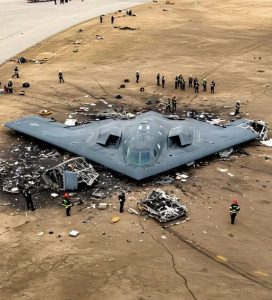
Rumors sometimes spread quickly online claiming that a B-2 Spirit stealth bomber has been shot down. Because the aircraft is one of the most advanced and recognizable bombers in the world, any claim about its destruction instantly attracts attention and emotional reactions. However, reports like these should always be treated with caution until confirmed by reliable sources.
The B-2 Spirit is a strategic stealth bomber operated by the United States Air Force. Designed and manufactured by Northrop Grumman, the aircraft is known for its distinctive flying-wing shape and advanced stealth technology. Its design allows it to evade radar detection and penetrate heavily defended airspace, making it one of the most valuable aircraft in the U.S. military arsenal.
Because of its unique capabilities and extremely limited numbers, any confirmed loss of a B-2 would be considered a significant event in global military aviation. Only twenty-one of these aircraft were ever built, and each one represents billions of dollars in research, engineering, and technology.
Claims that a B-2 has been “shot down” often circulate during periods of heightened geopolitical tension. In modern conflicts and political disputes, misinformation can spread rapidly through social media platforms, online forums, and unverified news outlets. These reports sometimes appear dramatic but may not be supported by credible evidence.
In reality, the B-2 Spirit was specifically designed to survive in environments filled with advanced air defense systems. Its stealth coating and unique shape minimize radar reflections, allowing it to approach targets without being easily detected. In addition to stealth features, the aircraft relies on sophisticated electronic warfare systems that can confuse or disrupt enemy radar and missile guidance systems.
The bomber also flies at high altitude and long range, allowing it to strike targets from thousands of miles away. It can carry both conventional and strategic weapons and has been used in several major military operations since it entered service in the late 1990s.
The aircraft first demonstrated its operational capabilities during the Kosovo War in 1999. During that conflict, B-2 bombers flew directly from bases in the United States to targets in Europe, completing missions that lasted more than thirty hours. This remarkable range showed how the bomber could operate globally without needing forward bases.
Later, the B-2 was used during the War in Afghanistan and the Iraq War. In these operations, the aircraft delivered precision-guided weapons against strategic targets. Its ability to strike quickly and accurately from long distances made it a critical part of U.S. military planning.
Despite its advanced technology, the B-2 is not completely immune to accidents or technical problems. Aviation is inherently complex, and even the most sophisticated aircraft can encounter unexpected issues. In fact, there has been at least one confirmed crash involving the B-2.
In 2008, a B-2 Spirit crashed shortly after takeoff from Andersen Air Force Base in Guam. Investigators later determined that faulty sensor data caused the aircraft’s flight control systems to miscalculate airspeed, leading to a stall. Fortunately, both pilots were able to eject safely before the aircraft was destroyed.
That accident remains the only confirmed total loss of a B-2 bomber due to a crash. Because the fleet is so small, every aircraft is carefully monitored and maintained to extremely high standards. Specialized crews inspect the stealth coatings and advanced systems after nearly every mission to ensure the bomber remains fully operational.
If a B-2 were ever shot down in combat, it would likely become a major international news story within minutes. Governments, defense analysts, and media organizations closely monitor the movements of strategic bombers. Satellite tracking, radar networks, and military reporting systems make it very difficult for such an event to remain hidden.
Another reason the B-2 is rarely seen in dangerous situations is that the aircraft typically operates in carefully planned missions with significant support. These operations often include intelligence gathering, electronic warfare aircraft, surveillance satellites, and other protective measures that reduce the risk of enemy interception.
In addition to its stealth and defensive systems, the B-2 also benefits from careful mission planning. Military strategists analyze potential threats before deploying the aircraft, selecting flight paths that minimize exposure to hostile defenses.
While rumors about a B-2 being shot down can generate dramatic headlines, they often lack verified evidence. In the modern information age, false claims can spread faster than official confirmation. That is why it is important to rely on credible sources and official statements when evaluating such reports.
The B-2 Spirit remains one of the most iconic aircraft ever built. Its sleek black flying-wing design has become a symbol of advanced military technology and strategic airpower. Even decades after its introduction, it continues to play a vital role in the United States’ long-range strike capabilities.
Looking toward the future, the B-2 will eventually be joined and gradually replaced by the next-generation stealth bomber known as the B-21 Raider. Also developed by Northrop Grumman, the B-21 is expected to incorporate even more advanced stealth materials, digital systems, and operational flexibility.
Until that transition is complete, the B-2 Spirit will continue serving as a cornerstone of strategic aviation. Its missions remain highly classified, and its capabilities continue to evolve with technological upgrades.
Stories claiming that such an aircraft has been shot down may appear shocking and dramatic, but without verified information they should be viewed carefully. The reality is that the B-2 Spirit remains one of the most survivable and technologically sophisticated aircraft ever created, designed specifically to operate in the most challenging environments on Earth