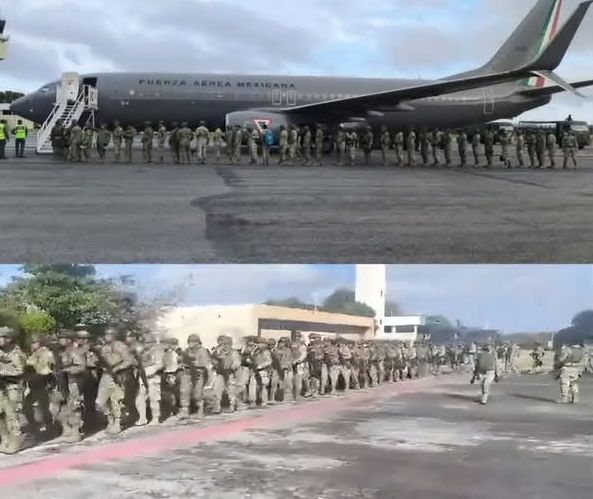
Latest reports indicate that Mexico has begun mobilizing large numbers of military personnel and security forces across several regions of the country following a surge in cartel-related violence and security concerns. The move comes after a series of dramatic developments in the country’s ongoing battle against powerful drug cartels and preparations for major international events.
Mexico’s government recently announced a large-scale security deployment that will involve nearly 100,000 personnel, including soldiers, National Guard members, and local police. The operation will focus mainly on key cities such as Mexico City, Guadalajara, and Monterrey. Authorities say the objective is to maintain public safety, protect infrastructure, and reassure citizens and international visitors that the situation is under control.
Why Mexico Is Mobilizing Its Armed Forces
One of the main reasons behind the military mobilization is the recent killing of a powerful cartel leader, Nemesio Oseguera Cervantes, widely known as “El Mencho.” He was the head of the Jalisco New Generation Cartel (CJNG), one of the most dangerous criminal organizations in the country. Mexican military forces carried out a targeted operation in Jalisco state in February 2026 that resulted in his death.
The death of such a high-ranking figure immediately triggered retaliatory violence from cartel members. Criminal groups launched coordinated attacks across several states, including burning vehicles, blocking highways, and attacking businesses and security forces. Authorities reported hundreds of roadblocks and dozens of violent incidents during the unrest.
Because of this sudden surge in violence, the government decided to deploy large numbers of troops to restore order and prevent further chaos.
Massive Security Plan Across the Country
The plan, often referred to as “Plan Kukulkán,” is one of the largest security operations in recent years. The strategy involves multiple branches of the Mexican security apparatus, including the Army, Navy, National Guard, and federal police.
Under the plan:
-
About 20,000 soldiers will be deployed in key areas.
-
More than 55,000 local and state police officers will assist the effort.
-
Thousands of military vehicles, surveillance drones, and aircraft will support security operations.
Authorities are also setting up joint command centers in each major city to coordinate intelligence, surveillance, and emergency responses. These command centers will monitor suspicious activity and respond quickly to threats.
Concerns Ahead of the 2026 FIFA World Cup
Another major factor behind the mobilization is the upcoming 2026 FIFA World Cup, which Mexico will co-host with the United States and Canada. Several matches will be played in Mexican cities, drawing millions of international visitors.
Security experts worry that cartel violence could threaten the event or damage Mexico’s international reputation. As a result, the government is determined to demonstrate that it can keep host cities safe.
Mexican President Claudia Sheinbaum recently visited Jalisco, one of the areas most affected by the violence, to reassure the public that authorities are prepared. Officials emphasized that a multi-agency strategy will protect stadiums, airports, hotels, and transportation systems.
A Long War Against Cartels
Mexico has been battling drug cartels for decades in what is often called the Mexican Drug War. Since 2006, the government has increasingly relied on military forces to combat organized crime.
Cartels like CJNG and the Sinaloa Cartel control major drug trafficking routes into the United States and operate extensive criminal networks involving:
-
Drug production and trafficking
-
Kidnapping and extortion
-
Human trafficking
-
Arms smuggling
Despite numerous arrests and military operations, these groups remain extremely powerful and well-armed.
Experts say the killing of a cartel leader often triggers violent power struggles inside criminal organizations. Rival factions fight to take control, which can lead to temporary spikes in violence.
Cooperation With the United States
The recent operation that eliminated El Mencho reportedly involved intelligence cooperation between Mexican and U.S. agencies. A joint task force provided intelligence that helped Mexican forces locate the cartel leader.
Security cooperation between the two countries has increased in recent years because the cartel crisis affects both sides of the border. Drug trafficking, especially fentanyl and methamphetamine, remains a major concern for U.S. authorities.
However, the idea of deeper U.S. military involvement in Mexico remains controversial within the country.
Regional Tensions and Military Strategies
The mobilization also comes amid broader discussions in the Americas about using stronger military measures against organized crime. Some policymakers argue that cartels should be treated similarly to terrorist groups due to their resources and violent tactics.
Others warn that relying heavily on the military could worsen violence or lead to human rights concerns. Mexico’s government insists that the current deployments are necessary to stabilize affected regions.
What Happens Next
For now, Mexican authorities say the situation is under control, but security forces remain on high alert. Military patrols, checkpoints, and surveillance operations will continue for the foreseeable future.
Officials hope the massive deployment will achieve several goals:
-
Prevent further cartel retaliation
-
Protect civilians and infrastructure
-
Stabilize regions affected by violence
-
Ensure the safety of international visitors during the World Cup
Whether the strategy will succeed remains uncertain. Mexico’s fight against organized crime has been ongoing for years, and many analysts believe that long-term solutions will require not only security operations but also economic reforms, social programs, and anti-corruption efforts.
Still, the latest mobilization shows that the Mexican government is willing to deploy significant military power to maintain order during one of the most sensitive security moments in recent years.