US Navy Launched Something That Shouldn’t Exist… Iran Can’t Stop It
In modern warfare, the balance of power can shift overnight when a new weapon changes the rules of combat. Over the last decade, the United States Navy has quietly developed technologies that many analysts once believed were still decades away. From hypersonic missiles to directed-energy weapons, the Navy is deploying systems that travel faster, strike farther, and react quicker than anything used in previous conflicts.
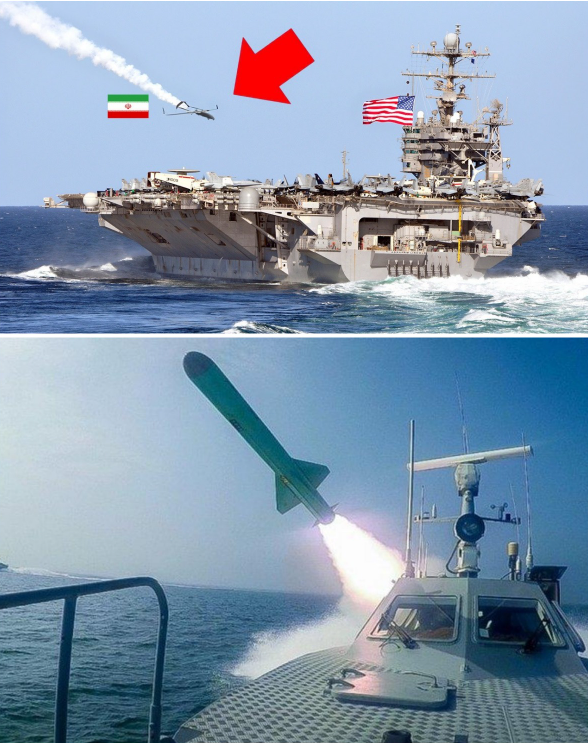
Some defense experts now say these weapons are so advanced that they appear to “break the rules” of traditional military strategy. In scenarios involving tensions with Iran in the Persian Gulf, these new systems could dramatically alter the battlefield before an enemy even realizes what has happened.
A New Era of Naval Warfare
For decades, naval combat revolved around missiles, aircraft, submarines, and large fleets of ships. But recent technological breakthroughs have introduced entirely new categories of weapons. These include hypersonic missiles that travel at extreme speeds and directed-energy weapons that fire lasers or powerful microwave bursts instead of traditional explosives.
One example is the development of hypersonic strike systems capable of traveling at speeds greater than Mach 5 — more than five times the speed of sound. These weapons are designed to maneuver unpredictably during flight, making them extremely difficult for enemy defenses to intercept. The U.S. military has been investing heavily in this technology, including systems that can be launched from ships or submarines.
Unlike traditional ballistic missiles, which follow predictable arcs, hypersonic weapons glide through the atmosphere and change direction mid-flight. That ability allows them to evade radar tracking and defensive missiles.
In a region like the Persian Gulf, where distances between opposing forces are relatively short, such weapons could strike targets in minutes.
The Rise of Directed-Energy Weapons
Another revolutionary technology being integrated into U.S. Navy warships is directed-energy weaponry. These systems fire concentrated beams of energy rather than physical projectiles. High-energy lasers can burn through drones, missiles, or small boats almost instantly, while microwave weapons can disable electronics.
Recent reports have highlighted laser systems mounted on Navy destroyers that successfully destroyed incoming drones and missiles during military operations.
These weapons provide several advantages:
-
Speed of light engagement: Lasers hit targets instantly once fired.
-
Precision: They can destroy specific components of a drone or missile.
-
Low cost per shot: Firing a laser costs far less than launching a missile interceptor.
For example, intercepting a drone with a traditional missile can cost hundreds of thousands of dollars. Using a laser beam may cost only a few dollars’ worth of electricity.
That cost advantage is crucial when facing swarms of drones, a tactic often associated with Iranian military strategies.
Drone Warfare and the Changing Battlefield
Iran and its regional allies have increasingly relied on drones and cruise missiles in modern conflicts. These systems can be produced relatively cheaply and launched in large numbers, overwhelming conventional defenses.
However, directed-energy weapons were designed specifically to counter this threat. A ship equipped with a laser system can potentially destroy dozens of incoming drones without running out of ammunition.
This is one reason analysts say these technologies could neutralize one of Iran’s primary strategies at sea.
Advanced Missile Defense Systems
Beyond offensive weapons, the U.S. Navy also operates some of the most advanced missile defense systems ever built. Warships equipped with the Aegis Combat System can detect, track, and intercept ballistic missiles from hundreds of miles away.
In certain cases, interceptor missiles such as the Standard Missile-3 can even destroy targets outside Earth’s atmosphere.
These interceptors do not rely on explosive warheads. Instead, they use a “kinetic kill vehicle” that collides directly with the incoming missile at extremely high speeds, destroying it through sheer force.
Combined with powerful radar and satellite tracking networks, this layered defense makes it extremely difficult for hostile missiles to reach their targets.
Submarines and Stealth Dominance
Another major advantage for the United States lies beneath the ocean’s surface. U.S. Navy submarines are among the quietest and most advanced ever built.
Armed with torpedoes capable of breaking large warships in half, these submarines can strike without warning. Modern heavyweight torpedoes, such as the Mark 48, are designed to detonate beneath a ship’s hull, creating a massive bubble that can snap the vessel apart.
Submarines can also launch cruise missiles against land targets or enemy fleets from hundreds of miles away.
Because they operate silently underwater, they are extremely difficult to detect.
Cheap but Deadly Drone Systems
Interestingly, not all new weapons are expensive. The U.S. military has also experimented with low-cost attack drones designed to overwhelm enemy defenses.
Some of these systems resemble the loitering drones widely used in modern conflicts. They can hover in the air while searching for a target before diving in to strike.
Recent operations have reportedly included the deployment of such drones as part of broader strike packages that also used cruise missiles and rocket systems.
The goal is to combine high-end weapons with inexpensive systems to create overwhelming force.
The Strategic Message
The emergence of these technologies sends a powerful strategic message. Naval power has always been about control of the seas, but modern weapons are extending that influence into space, cyberspace, and the electromagnetic spectrum.
The integration of satellites, cyber warfare, and artificial intelligence allows modern naval forces to identify threats faster and respond almost instantly.
Military analysts often refer to this concept as “multi-domain warfare.” It means that a single naval operation might involve satellites tracking missile launches, cyber units disrupting enemy communications, and ships launching missiles or laser beams simultaneously.
Can Any Nation Stop It?
While no defense system is perfect, the combination of hypersonic weapons, laser defenses, stealth submarines, and advanced missile interceptors creates an extremely formidable force.
For nations attempting to challenge U.S. naval power, the difficulty lies in countering multiple layers of technology at once.
A missile might have to evade radar detection, survive electronic jamming, avoid interceptor missiles, and then somehow bypass laser defenses — all before reaching its target.
That complexity is why many analysts believe the next generation of naval warfare will be dominated by nations that can integrate advanced technologies across multiple domains.
The Future of Naval Combat
The weapons now entering service represent only the beginning of a broader transformation. Artificial intelligence, autonomous ships, and space-based sensors are expected to further change the nature of warfare at sea.
Future fleets may include unmanned warships, swarms of autonomous drones, and even more powerful directed-energy weapons.
For now, however, the technologies already being deployed demonstrate how quickly military innovation can reshape global power.
In an age where seconds matter and detection ranges stretch across continents, the side with the most advanced technology may decide the outcome of a conflict long before the first traditional shot is fired.