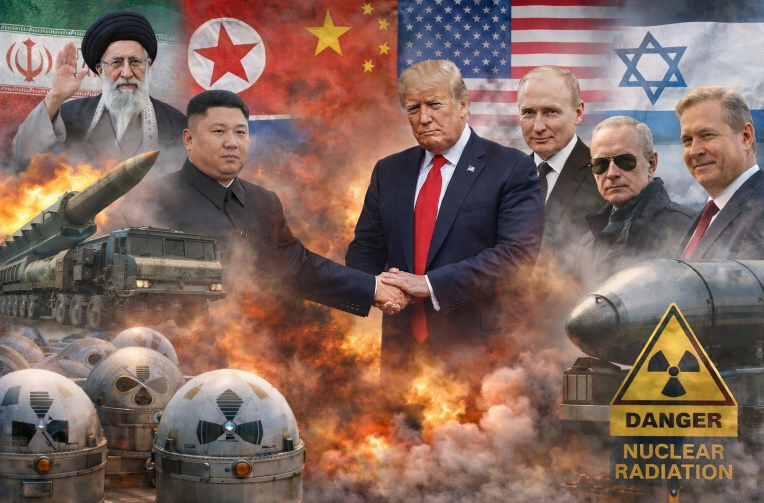
BREAKING NEWS headlines claiming “6 countries join forces to attack” are spreading widely online, but the real situation is more complex and tied to a rapidly escalating conflict in the Middle East. Much of the viral wording comes from social media posts that exaggerate or simplify ongoing events. In reality, the situation involves multiple countries responding to a widening war involving the United States, Israel, Iran, and several regional states.
Below is a detailed explanation of what is actually happening and why so many headlines are using dramatic phrases like “six countries joining forces.”
The Background of the Current Conflict
The current escalation traces back to late February 2026, when the United States and Israel launched coordinated strikes on Iranian military and government targets. The campaign targeted infrastructure, missile facilities, and senior officials in cities including Tehran and Isfahan.
These strikes were part of a broader operation aimed at weakening Iran’s military capabilities and preventing the country from developing nuclear weapons. Iranian leaders strongly condemned the attack and vowed retaliation. The conflict quickly spread across the region.
Within days, Iran began launching missile and drone strikes at multiple locations across the Middle East, particularly at countries hosting U.S. military bases.
This retaliation triggered a chain reaction of military responses and defensive alliances across the region.
Countries Drawn Into the Conflict
Reports indicate that Iran’s retaliatory strikes have targeted several countries across the Persian Gulf and surrounding region. These include:
-
Qatar
-
Kuwait
-
Bahrain
-
Saudi Arabia
-
United Arab Emirates
-
Israel
Many of these countries host American military bases or cooperate with U.S. security forces. Missile and drone attacks were reportedly launched toward some of these locations as part of Iran’s response to the initial strikes.
For example, Iranian missiles and drones have been fired toward Gulf nations where U.S. forces are stationed. Some of these projectiles were intercepted by regional air defense systems.
While the attacks caused alarm and some damage, many were intercepted before reaching their targets.
Why People Are Saying “Six Countries Joined Forces”
The viral phrase “six countries join forces to attack” is misleading.
In reality, several different situations are happening simultaneously:
-
Iran launching attacks against multiple countries hosting U.S. forces.
-
Regional states cooperating defensively with the United States and Israel.
-
Military coordination between allied nations to intercept missiles and drones.
In some discussions, analysts mention a regional security network involving several Arab nations and Israel that share intelligence and air-defense coordination against threats from Iran.
This coordination is sometimes misinterpreted online as a joint offensive coalition.
Missile Attacks Across the Gulf
The Gulf region has seen several waves of missile and drone attacks since the conflict began.
For instance, Iran launched missiles toward countries including Kuwait, Qatar, Saudi Arabia, and Bahrain—locations where U.S. troops are stationed.
These attacks are widely viewed as retaliation for the earlier strikes carried out by the United States and Israel.
Some missiles landed in or near territorial waters, while others were intercepted mid-air. Governments in the region reported limited casualties but warned their populations to remain alert.
Military Escalation in the Region
The situation has grown more complicated as additional armed groups and countries become involved.
For example, the Lebanese militant group Hezbollah—an ally of Iran—has launched attacks on Israel as part of the broader confrontation.
Meanwhile, several Western countries have increased their military presence in the region, deploying ships and air-defense systems to protect bases and shipping routes.
There are also concerns about the Strait of Hormuz, one of the most important oil shipping routes in the world. Disruptions there could have global economic consequences.
Civilian Impact and Global Concerns
The escalation has raised serious fears about a broader regional war.
Airports in several countries have temporarily closed or restricted flights due to missile threats and airspace safety concerns. In some cases, flights were diverted or delayed as military forces responded to incoming projectiles.
There have also been warnings from governments urging their citizens to leave certain areas or avoid traveling to parts of the Middle East.
Humanitarian groups warn that if the conflict continues to expand, it could lead to displacement, economic disruptions, and significant civilian hardship.
International Reactions
World leaders have responded with a mixture of concern and diplomatic pressure.
Several countries and international organizations have called for immediate de-escalation and negotiations to prevent a full regional war.
At the same time, some nations have taken sides politically or militarily. Defense systems across the region have been placed on high alert, and additional naval forces have been deployed.
Experts say the next few weeks will be critical in determining whether the situation stabilizes or escalates further.
The Role of Social Media in “Breaking News” Headlines
Many viral posts claiming “six countries joining forces to attack” originate from social media pages that exaggerate or oversimplify real events.
These posts often combine fragments of real news—such as missile strikes or regional alliances—with dramatic wording designed to attract attention.
In reality, the situation is not a simple coalition attack but rather a complex regional conflict involving multiple retaliatory actions, defensive alliances, and geopolitical tensions.
What Happens Next
Military analysts say several possible scenarios could unfold:
-
Diplomatic negotiations that reduce tensions.
-
Continued limited strikes between regional rivals.
-
A wider war involving additional countries.
Much depends on whether diplomatic efforts succeed in slowing the escalation.
For now, governments across the world are monitoring the situation closely as the conflict continues to develop.
✅ In short:
The phrase “6 countries join forces to attack” circulating online is misleading. What is actually happening is a rapidly escalating regional conflict where Iran, the United States, Israel, and several Middle Eastern nations are involved in a series of retaliatory strikes and defensive alliances