Iran Tried to Sink a U.S. Aircraft Carrier — What Really Happens Next
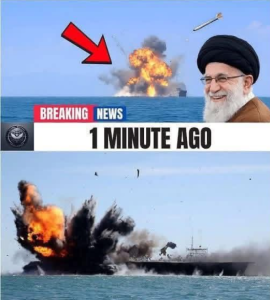
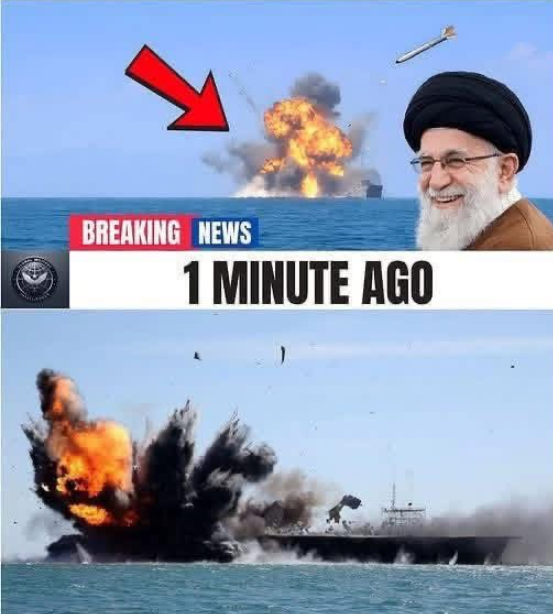
The headline “Iran Tried to Sink a U.S. Aircraft Carrier — 32 Minutes Later, Everything Was Gone” sounds like a cinematic war story—fast, explosive, and absolute. But in reality, no confirmed event like that has happened. What has happened is a mix of military tension, close calls, propaganda, and misinformation.
To understand what such a scenario would actually look like, we need to separate fact from fiction, and then explore how a real confrontation could unfold.
The Reality: No U.S. Carrier Has Been Sunk
Despite viral claims online, there is no verified case of Iran successfully striking—let alone sinking—a U.S. aircraft carrier.
In fact, recent reports confirm the opposite. False images and videos circulated claiming a U.S. carrier had been destroyed, but these were debunked by officials. U.S. Central Command confirmed that ships like the USS Abraham Lincoln remained fully operational.
Even when tensions escalated in 2026, the closest real incidents involved:
-
Iranian drones approaching U.S. carriers and being shot down before impact
-
Missile and drone attacks in the region targeting other assets
-
Heavy naval clashes—but not carrier losses
So the “32 minutes later everything was gone” claim is not factual reporting—it’s more like a dramatized or hypothetical scenario.
Why Aircraft Carriers Are So Hard to Destroy
A U.S. aircraft carrier is not just a ship—it’s the center of a carrier strike group, one of the most powerful military formations on Earth.
Here’s what protects it:
1. Layered Missile Defense
Carriers are surrounded by destroyers and cruisers equipped with systems like Aegis radar, capable of tracking and intercepting incoming missiles from long distances.
2. Air Superiority
Fighter jets patrol constantly, meaning any incoming threat—missile, drone, or aircraft—is likely intercepted far before reaching the carrier.
3. Close-In Defense Systems
Even if something gets through, carriers have last-line defenses like rapid-fire guns designed to shoot down incoming threats seconds before impact.
4. Mobility and Intelligence
Carriers rarely sit still. They constantly move, and they are supported by satellites, surveillance aircraft, and intelligence networks.
Because of this, experts widely agree:
Iran cannot realistically sink a U.S. supercarrier with its current capabilities.
Where the Story Comes From
So why do headlines like this exist?
There are a few key reasons:
1. Military Drills and Propaganda
Iran has repeatedly staged exercises where it attacks a mock U.S. aircraft carrier—a full-scale replica used for training and messaging.
These drills include:
-
Missile strikes
-
Swarms of speedboats
-
Helicopter commando landings
But importantly, these targets are fake.
2. Social Media Amplification
Videos from drills, simulations, or even video games are often:
-
Edited
-
Re-captioned
-
Shared as “real combat footage”
This creates viral stories that seem believable—but aren’t.
3. Hypothetical War Scenarios
Military analysts and YouTube channels often simulate “what if” battles:
-
Iran fires missiles
-
The U.S. responds instantly
-
Enemy forces are destroyed within minutes
These scenarios are not real events, but they are often mistaken for real news.
What Would Actually Happen in a Real Attack?
Let’s imagine a realistic version of the headline:
Minute 0–5: Detection
Iran launches missiles or drones toward a U.S. carrier.
-
Satellites and radar detect launches almost immediately
-
U.S. ships begin tracking threats
Minute 5–15: Interception
The carrier strike group responds:
-
Interceptor missiles are launched
-
Fighter jets scramble
-
Electronic warfare systems jam incoming threats
Most, if not all, incoming weapons are destroyed before getting close.
Minute 15–30: Counterattack
If the attack is confirmed, the U.S. response would be swift:
-
Cruise missiles strike launch sites
-
Aircraft target bases, ships, or missile batteries
-
Cyber and electronic warfare disrupt communications
This is likely where the “32 minutes later everything was gone” idea comes from—the concept of overwhelming retaliation.
Aftermath
Instead of a single dramatic explosion, the result would be:
-
Escalation across the region
-
Attacks on multiple targets
-
Potential involvement of allies
Not a quick, clean ending—but a dangerous, expanding conflict.
Real-World Tensions Are Still Serious
Even though the viral story isn’t real, the underlying situation is very real and volatile.
Recent developments include:
-
U.S. strikes destroying Iranian naval assets
-
Iranian drone and missile attacks across the region
-
Accidental shootdowns and chaotic air defense responses
These incidents show how quickly things can spiral—even without a carrier being hit.
The Bottom Line
The headline you saw is not a real historical event. It’s likely:
-
A fictional scenario
-
A dramatized retelling
-
Or misinformation built from real tensions
But it’s based on a real fear: what would happen if a major power directly attacked a U.S. aircraft carrier.
And the answer is clear:
-
It wouldn’t be over in 32 minutes
-
It wouldn’t be one-sided
-
And it would likely trigger a much larger conflict