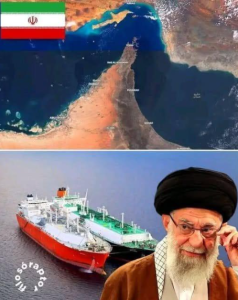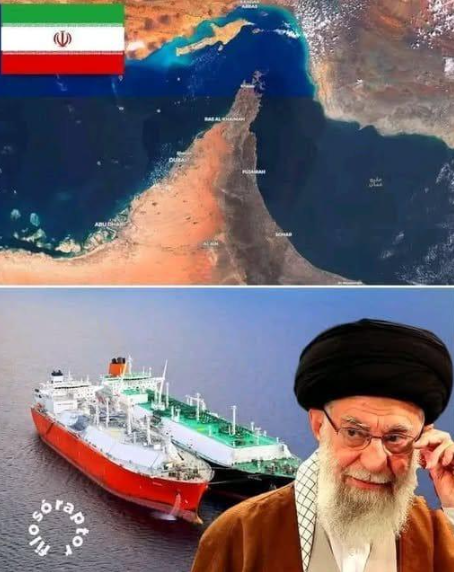
🚨BREAKING: Iranian Parliament Approves Closure of the Strait… What It Could Mean
The headline spreads fast, urgent and alarming: “BREAKING: Iranian Parliament approves the closure of the…”—leaving readers to click, speculate, and react before the full context is even clear. In most cases, this refers to the strategic waterway known as the Strait of Hormuz, one of the most important النفط (oil) transit routes in the world.
But before jumping to conclusions, it’s important to understand what such a claim actually means—and what it doesn’t.
Why the Strait of Hormuz Matters
The Strait of Hormuz sits between Iran and Oman, acting as a narrow gateway connecting the Persian Gulf to the open ocean. Despite its relatively small size, it carries an enormous amount of global energy supply.
Roughly 20% of the world’s oil shipments pass through this route.
That makes it one of the most strategically sensitive chokepoints on Earth. Any disruption—real or threatened—can immediately impact global markets, shipping routes, and international relations.
What “Parliament Approval” Really Means
When headlines claim that the Iranian Parliament has approved closing the Strait, it often creates the impression that the action is imminent or guaranteed.
In reality, things are more complicated.
Iran’s parliament (also known as the Majlis) can pass motions or express support for certain actions, but final decisions—especially military or strategic ones—are typically controlled by higher authorities, including national security leadership.
So, an “approval” may be:
-
A political signal rather than an immediate action
-
A response to external pressure or conflict
-
A way to influence negotiations or international messaging
It does not automatically mean the Strait will be closed.
Is Closing the Strait Even Possible?
Technically, Iran has the capability to disrupt or threaten traffic through the Strait using naval forces, mines, or other means. However, fully closing it for an extended period would be extremely difficult.
Why?
Because the Strait is not just important to one country—it’s vital to the global economy.
Countries and organizations such as the United States Navy and allied forces maintain a presence in the region specifically to ensure freedom of navigation.
Any attempt to block the Strait would likely trigger:
-
Immediate international response
-
Military tension or escalation
-
Efforts to reopen the passage quickly
Global Impact of a Closure
Even the threat of closure can have major consequences.
-
Oil Prices Surge
Markets react quickly to uncertainty. Prices can spike within hours of such news. -
Shipping Disruptions
Tankers may reroute or delay shipments, affecting supply chains worldwide. -
Economic Ripple Effects
Higher energy costs can impact transportation, manufacturing, and daily life globally. -
Geopolitical Tension
The situation could escalate into broader conflict depending on responses from other nations.
The Role of Headlines and Misinformation
The phrase “BREAKING” combined with “See more…” is designed to create urgency—but often at the cost of clarity.
Important details are frequently missing:
-
Is the decision official or symbolic?
-
Has it been confirmed by multiple sources?
-
What is the timeline?
Without those answers, people may react to incomplete or exaggerated information.
In fast-moving geopolitical situations, misinformation can spread just as quickly as facts—sometimes even faster.
What Experts Usually Advise
When you see headlines like this, it’s best to:
-
Wait for official confirmation from multiple sources
-
Check statements from governments or international organizations
-
Avoid sharing unverified claims
-
Look for context, not just urgency
Because in global politics, words are often used strategically—not just to describe events, but to influence them.
The Bigger Picture
Tensions in the region are not new. The Strait of Hormuz has long been at the center of geopolitical discussions, especially during periods of conflict or sanctions.
Announcements like this—whether symbolic or serious—are part of a larger pattern of signaling, negotiation, and power dynamics.
They remind us how interconnected the world is.
A decision—or even a statement—in one region can affect fuel prices, economies, and daily life thousands of miles away.
Final Thoughts
The headline may sound dramatic, but the reality requires careful interpretation.
An “approval” does not necessarily mean immediate action. A threat does not always become reality. And a viral post rarely tells the full story.
What matters most is staying informed, patient, and critical of what we read—especially when the stakes are global.