The Simple Puzzle That Quietly Teaches Us How We View the World
At first glance, it looks like nothing more than a harmless brain teaser—something you might scroll past on your phone or solve casually while waiting in line. A grid of shapes, a sequence of numbers, or perhaps an optical illusion that asks a deceptively simple question: What do you see? Yet hidden within these seemingly trivial puzzles is something far more profound. They are not just tests of intelligence or observation—they are mirrors, quietly reflecting how we interpret the world around us.
Consider the classic example of an image that can be seen in two ways. Some people see a vase; others see two faces looking at each other. Neither answer is wrong, yet the difference reveals something fascinating: perception is not purely objective. What we notice first, what we prioritize, and how we interpret ambiguity are shaped by our experiences, expectations, and even our emotions at that moment.
This is the subtle power of simple puzzles—they strip away complexity and expose the underlying mechanics of thought.
When faced with a puzzle, most people assume there is a correct answer waiting to be discovered. That assumption alone says a lot. It reflects a mindset shaped by education systems and societal norms that reward certainty and correctness. We are trained to believe that problems have solutions, and that our job is to find them as efficiently as possible. But many puzzles don’t follow that rule. Some are intentionally ambiguous, designed not to test knowledge, but to explore perspective.
And that’s where things get interesting.
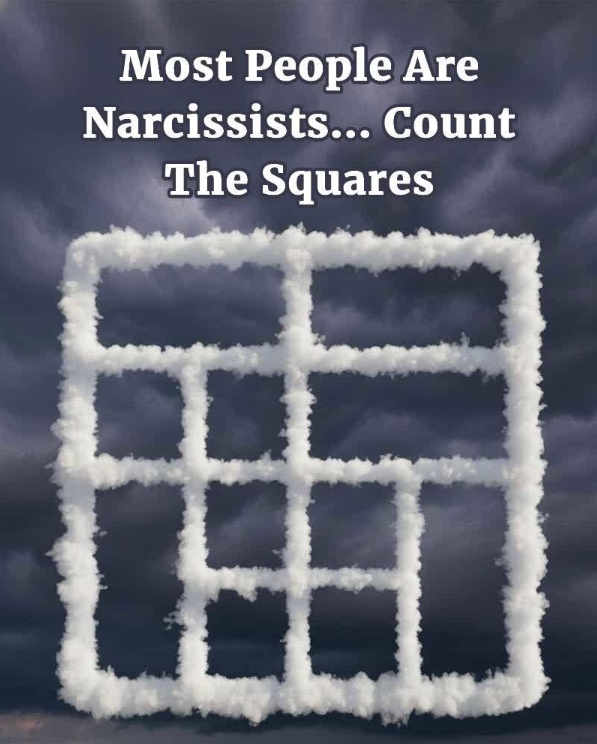
Take, for instance, a puzzle that asks you to count how many squares are in a grid. At first, you might count the obvious ones and arrive at a quick answer. But then someone points out the larger squares formed by combining smaller ones. Suddenly, your answer changes. The puzzle hasn’t changed—but your perspective has. What you initially overlooked was always there, waiting to be seen.
This simple shift mirrors how we navigate real life. We often make quick judgments based on limited information, confident in our conclusions. Yet, with a change in perspective—new information, a different viewpoint, or simply more time—we realize that our initial interpretation was incomplete.
In this way, puzzles teach humility. They remind us that seeing isn’t always understanding.
Another layer to consider is how we approach problem-solving itself. Some people dive in immediately, trusting their instincts. Others pause, analyze, and plan before making a move. Neither approach is inherently better, but each reveals something about how we process uncertainty. Do we value speed over accuracy? Intuition over analysis? Confidence over caution?
Even frustration plays a role. When a puzzle resists our efforts, it can trigger a range of reactions—determination, annoyance, curiosity, or even the urge to give up entirely. These reactions are not just about the puzzle; they reflect how we handle challenges in general. Do we persist when things get difficult, or do we move on? Do we see obstacles as opportunities to learn, or as barriers to avoid?
Interestingly, puzzles also highlight the influence of bias. If a problem looks familiar, we might assume it follows a pattern we’ve seen before—even if it doesn’t. This can lead us down the wrong path, not because we lack intelligence, but because our past experiences shape our expectations. In other words, what we think we know can sometimes prevent us from seeing what’s actually there.
This is especially evident in lateral thinking puzzles, where the solution requires stepping outside conventional logic. The answer often seems obvious in hindsight, which makes it all the more striking. Why didn’t we see it sooner? The answer lies in our mental frameworks—the invisible rules we apply to make sense of the world. These frameworks are useful, but they can also be limiting.
Perhaps the most profound lesson these puzzles offer is the idea that multiple perspectives can coexist. In many cases, different interpretations are equally valid. This challenges the notion that there is always a single “right” way to see things. Instead, it suggests that understanding is often layered and nuanced.
This has important implications beyond puzzles. In our daily lives, we encounter situations where people see things differently—whether it’s in conversations, conflicts, or decisions. It’s easy to assume that someone else is wrong simply because their perspective doesn’t match ours. But what if, like the puzzle, the situation allows for more than one valid interpretation?
Simple puzzles encourage us to pause and consider that possibility.
They also remind us of the importance of curiosity. When we approach a puzzle with genuine interest rather than pressure to solve it, we open ourselves to discovery. We become more willing to explore, to question, and to rethink our assumptions. This mindset is not just useful for puzzles—it’s essential for learning, creativity, and growth.
In a world that often feels fast-paced and overwhelming, these small moments of reflection can be surprisingly powerful. A puzzle might take only a few minutes to solve, but the insights it offers can linger much longer. It invites us to slow down, to look closer, and to recognize that what we see is only part of the story.
Ultimately, the value of these puzzles lies not in the answers they provide, but in the questions they raise. How do we perceive the world? What do we overlook? How do our experiences shape our understanding? And perhaps most importantly, are we willing to change our perspective when presented with something new?
The next time you come across a simple puzzle, take a moment before rushing to solve it. Notice your first instinct, your assumptions, and your reactions. Then, look again. What changes? What did you miss the first time?
You might find that the puzzle is not just testing your mind—it’s quietly revealing how you see the world