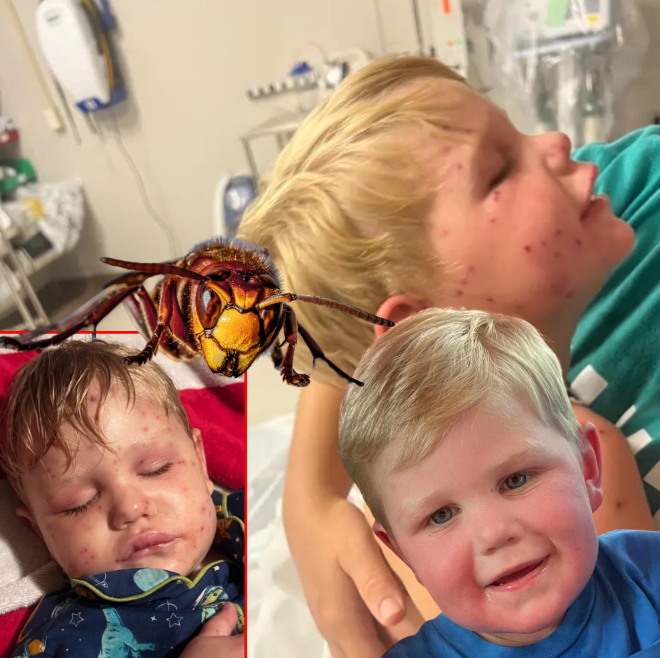
Georgia Toddler, 2, Is on Life Support After Being Stung Over 150 Times by Yellowjackets
A quiet Georgia community is rallying together after a devastating incident left a 2-year-old child fighting for her life. According to family members, the toddler is currently on life support after being stung more than 150 times by yellowjackets in what doctors are describing as a severe and traumatic attack.
The incident reportedly occurred outdoors near the child’s home, where she had been playing under adult supervision. Yellowjackets, which are a type of aggressive wasp, are known to build nests in the ground, trees, or inside structures. In many cases, their nests are difficult to spot until disturbed. Family members say the toddler may have unknowingly stepped near or on a nest, triggering a swarm response.
Yellowjackets are particularly dangerous because, unlike honeybees, they can sting multiple times without dying. When they perceive a threat to their colony, they release alarm pheromones that signal other wasps to attack. This can lead to rapid and repeated stings within seconds.
Emergency responders were called immediately after the attack. By the time paramedics arrived, the child had already sustained an extraordinary number of stings. She was transported to a nearby hospital and later transferred to a pediatric intensive care unit where she remains on life support.
Medical experts explain that while a single wasp sting is typically painful but manageable for most people, a large number of stings can cause serious complications — even in individuals who are not allergic. In cases involving dozens or hundreds of stings, the body may experience what is known as venom toxicity.
Venom toxicity occurs when the amount of venom injected overwhelms the body’s systems. In young children, whose body weight is significantly lower than adults, the risk is even higher. Complications can include swelling of the airways, organ damage, muscle breakdown, kidney failure, and severe inflammatory responses.
Doctors treating the toddler are closely monitoring multiple organ systems. Supportive care in cases like this often includes ventilator assistance, intravenous fluids, medications to stabilize blood pressure, and treatments to manage inflammation and prevent further damage.
Family members have asked for prayers and privacy as they navigate what they describe as an unimaginable ordeal. Friends and neighbors have organized community support efforts, including meal deliveries and fundraising initiatives to assist with mounting medical costs.
Experts note that yellowjacket activity tends to increase during warmer months, particularly late summer and early fall when colonies are at their largest. Unlike bees, yellowjackets are more aggressive and territorial, especially when their nests are disturbed.
Ground nests pose a particular hazard for children and pets because they are not always visible. Nests may appear as small holes in lawns, near tree roots, or along fence lines. In some cases, there are no obvious warning signs until the colony is triggered.
Pest control professionals emphasize that individuals should never attempt to remove a yellowjacket nest without proper protective equipment and training. Disturbing a nest can result in rapid swarm attacks that escalate quickly.
Medical professionals also stress the importance of immediate action following multiple stings. Symptoms that require emergency attention include:
-
Difficulty breathing
-
Swelling of the face or throat
-
Rapid heartbeat
-
Dizziness or fainting
-
Severe vomiting
-
Extreme fatigue
-
Confusion
Even without an allergic reaction, a high number of stings alone can be life-threatening, particularly for small children.
In this case, the sheer volume of stings — reportedly over 150 — created a critical situation. Pediatric toxicology experts explain that venom from wasps contains compounds that can damage tissues and disrupt normal cell function. When delivered in large quantities, these toxins can strain the heart, kidneys, and other vital organs.
Community members describe the toddler as energetic and joyful, known for her bright smile and love of being outdoors. The suddenness of the incident has left many shaken.
“It happened so fast,” one neighbor said. “You never think something like this could happen in your own yard.”
Public health officials are using the tragedy as an opportunity to remind families to remain vigilant during peak insect seasons. Suggestions include:
-
Regularly inspecting yards for ground holes or unusual insect activity
-
Teaching children to avoid areas with high wasp presence
-
Wearing protective clothing in wooded or grassy areas
-
Contacting licensed pest control services if a nest is suspected
Doctors caution that while allergic reactions are often the focus of insect sting concerns, venom toxicity from mass stings is equally serious and can affect anyone regardless of allergy status.
As the toddler continues to receive critical care, the medical team remains focused on stabilizing her condition and preventing long-term complications. Recovery from mass envenomation can be complex and may involve extended hospitalization and rehabilitation, depending on organ involvement.
The family has expressed gratitude for the overwhelming support from strangers and loved ones alike. Messages of encouragement have poured in from across the state, with many offering prayers for healing and strength.
While incidents involving such a high number of stings are rare, they serve as a stark reminder of how quickly outdoor hazards can escalate. Experts stress that awareness and prompt emergency response are key to improving outcomes in severe sting cases.
For now, the community waits anxiously for updates, hoping for positive news. The resilience of young children is remarkable, and medical teams are working tirelessly to give this toddler every possible chance at recovery.