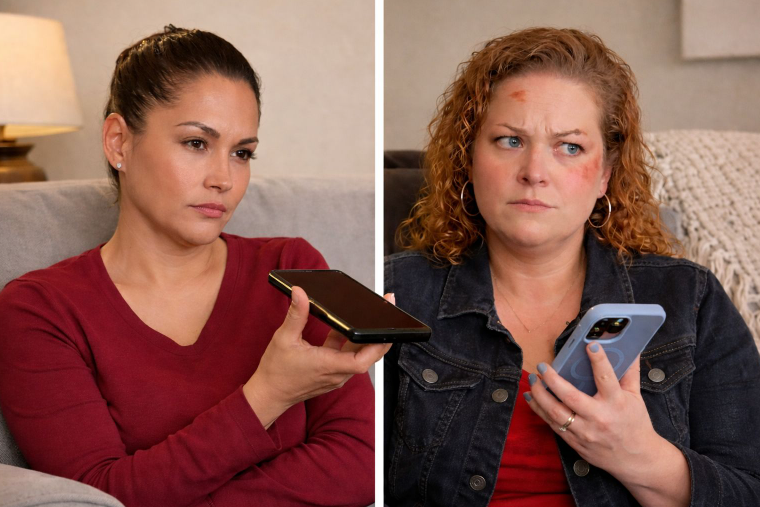
The late afternoon sun slanted through the kitchen window when Lynette finally gathered the courage to make the call. For days, she had rehearsed what she would say, pacing her living room, staring at her phone, and reminding herself that someone had to be the bigger person. Their families had once shared holidays, birthdays, and Sunday dinners. Now they shared only silence.
The argument that divided them had started small, as so many life-altering conflicts do. A misunderstanding over money. A misinterpreted comment at a family barbecue. Hurt feelings that hardened into resentment. Over time, sides were chosen, words were exchanged, and pride sealed the cracks shut. Children who once played together now asked awkward questions about why they no longer saw their cousins.
Lynette had reached her breaking point the night her youngest son asked, “Are we not family anymore?”
That question lingered in her mind long after he had fallen asleep. She knew the adults’ anger was costing the children something precious—connection, history, belonging. And so, swallowing her pride, she picked up the phone.
Bethany answered on the fourth ring.
“Hello?” Her voice was cautious, guarded.
“Bethany… it’s me,” Lynette said softly.
There was a brief pause. “I figured.”
Lynette took a breath. “I’m not calling to argue. I just… I wanted to talk. For the kids. For all of us.”
Another silence, heavier this time.
“I don’t think there’s anything left to say,” Bethany replied, her tone sharpening.
“There is,” Lynette insisted gently. “There has to be. We’ve been family for twenty years. We’ve celebrated births, mourned losses, helped each other move houses and through heartbreaks. That doesn’t just disappear.”
“It did,” Bethany snapped. “The day you accused my husband of lying.”
Lynette closed her eyes. That moment again. The spark that ignited everything. “I shouldn’t have said it the way I did,” she admitted. “I was frustrated. I felt blindsided. But I never meant to destroy our relationship over it.”
“You didn’t mean to?” Bethany’s voice rose. “You questioned our integrity in front of everyone. My parents. Your parents. The kids were right there.”
“I know,” Lynette said, her voice trembling. “And I’m sorry.”
The apology hung in the air, fragile as glass.
Bethany let out a sharp breath. “An apology doesn’t fix what you did.”
“No,” Lynette agreed. “It doesn’t. But it’s a start. I’m willing to sit down. To talk everything through. To clear the air. We don’t have to agree on everything, but we can’t keep doing this.”
“You think this is easy for me?” Bethany demanded. “You think I enjoy not speaking to you? Do you know how many times my daughter has asked why Aunt Lynette doesn’t come over anymore?”
“That’s exactly why I’m calling,” Lynette said quickly. “They don’t understand adult pride. They just know they’ve lost people they love.”
Bethany’s voice hardened again. “Love doesn’t humiliate someone.”
The words stung, but Lynette forced herself to remain calm. “I was wrong to confront things publicly. I should have spoken to you privately. I regret that every day.”
“Regret doesn’t erase embarrassment,” Bethany replied. “Or betrayal.”
Lynette felt tears welling up, but she blinked them away. “What can I do, then? Tell me. If there’s something I can do to fix this, I will.”
“You can’t fix it,” Bethany said flatly.
“Why not?”
“Because trust doesn’t come back just because you want it to.”
The firmness in her voice felt like a slammed door.
Lynette’s heart pounded. “So that’s it? We just throw away everything?”
“You threw it away,” Bethany shot back.
Silence fell between them again, thick and suffocating.
“I’m not your enemy,” Lynette said quietly. “I never was.”
“It sure felt like it,” Bethany replied.
Lynette’s voice softened. “I miss you.”
That caught Bethany off guard. She didn’t respond immediately.
“I miss our talks,” Lynette continued. “I miss the way we used to laugh about the kids’ antics. I miss having someone who understood what it’s like juggling family and work and everything else. I miss my sister-in-law… my friend.”
Bethany’s breathing was audible on the other end. For a fleeting moment, Lynette thought she sensed hesitation.
But then Bethany spoke, her tone tight with anger. “You should have thought about that before you attacked us.”
“I wasn’t attacking,” Lynette said. “I was reacting. There’s a difference.”
“Not to me.”
Lynette felt the conversation slipping away. “Bethany, please. Let’s meet. Just once. Coffee. Neutral ground. No accusations. Just listening.”
“No,” Bethany said immediately.
“Why?”
“Because I’m tired of being the one who has to forgive and move on while you say whatever you want.”
“That’s not fair,” Lynette said, hurt creeping into her voice. “I’m the one reaching out.”
“And I’m the one protecting my family,” Bethany replied. “We’ve had enough drama.”
“So this is it?” Lynette whispered.
“Yes,” Bethany said firmly. “I don’t want to rehash this. I don’t want to sit across from you pretending everything’s fine. It’s not fine.”
“We don’t have to pretend,” Lynette said. “We just have to try.”
“I’m done trying,” Bethany said. “Please don’t call again about this.”
The words landed like a final verdict.
“Bethany—”
“I said no.” Her voice was cold now, controlled. “You made your choice that day. I’m making mine now.”
And with that, the line went dead.
Lynette stared at her phone long after the call ended. The house was quiet, but her thoughts roared. She had hoped for resistance, maybe even anger—but not a complete refusal.
She felt a mixture of sadness and frustration. She had humbled herself, admitted fault, offered reconciliation. But reconciliation requires two willing hearts.
In the weeks that followed, the silence between their families remained. Holidays came and went without shared meals. Birthdays passed with no joint celebrations. The children slowly stopped asking questions.
But Lynette held onto one thing: she had tried.
Sometimes, healing doesn’t happen on our timeline. Sometimes pride and pain build walls too thick for a single apology to break through. Bethany’s anger, though harsh, came from a place of hurt. Lynette understood that now more clearly than ever.
Though the call had ended in rejection, it marked a turning point for Lynette. She had chosen humility over stubbornness. She had chosen peace, even if peace had not been returned.
And somewhere, beneath Bethany’s anger, there remained history—years of shared memories that could not be erased so easily.
Whether time would soften the bitterness or cement the divide was uncertain. But one thing was clear: families are fragile, and words spoken in anger can echo far longer than intended.