“Sad news” spreads faster than almost anything else on the internet. When people see a name they recognize — especially someone as universally loved as Ma Dong-seok — followed by words like “sadly announced the bad news”, most people instinctively assume the worst. That reaction is human: grief, shock, confusion — these feelings hit almost simultaneously, before any fact-checking happens. It’s a psychological reflex born out of empathy and concern.
Ma Dong-seok — also known internationally as Don Lee — is one of South Korea’s most popular actors. He became a household name not only through powerful performances in Korean cinema, such as Train to Busan and The Roundup, but also through his friendly, grounded public persona. He’s known for strong characters with big hearts, and his presence in Marvel’s Eternals brought him global recognition as well.
He is also happily married to Ye Jung-hwa, a model and television personality who has appeared on Korean TV and worked as a fitness trainer and entertainer. They registered their marriage in 2021 after several years together, and their relationship has been celebrated by fans worldwide.
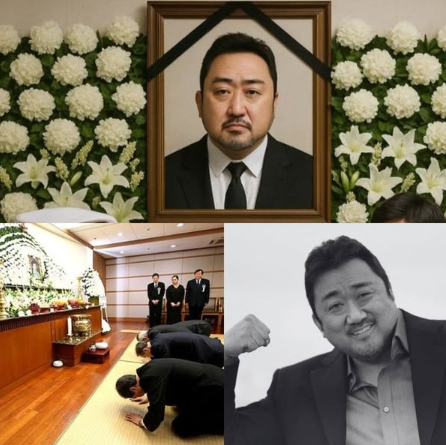
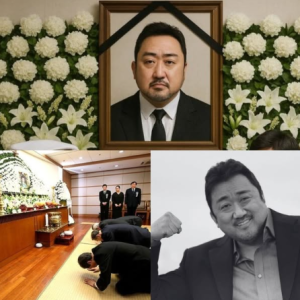
Despite all of this, in recent months, numerous false social media posts claimed that Ma Dong-seok had died and that Ye Jung-hwa had cried publicly over his passing. These posts went viral with images that, at a glance, looked real — photos of funerals or mourning — but in reality were AI-generated or misattributed. There has been no official announcement from his agency, family, or any reputable news organization confirming the actor’s death. In fact, fact-checking outlets have explicitly debunked the rumors as misinformation.
This pattern — viral death rumors about celebrities — is not new. In the age of social media, thousands of posts can circulate within minutes, often without any verification. A single unsubstantiated claim can be shared millions of times before anyone checks the facts. Photos can be altered with AI, old funeral images can be repurposed, and emotional language can be added to create a narrative that seems plausible at first glance.
The speed at which these rumors spread is tied to something deeper than just curiosity. It comes from emotional investment. Fans feel connected to public figures, especially actors like Ma Dong-seok, who convey humanity and warmth both on screen and in interviews. When someone feels they “know” a celebrity, even indirectly, the idea of that person dying triggers real grief. People share, comment, and post because they are trying to process that shock — not realizing that many others are doing the same thing with incomplete or inaccurate information.
Another reason such rumors take hold is because many users don’t check who posted the claim in the first place. Viral posts often come from anonymous pages, accounts with sensationalized names, or profiles that use AI-generated images to look convincing. These details don’t matter when the headline is emotionally evocative: “Famous actor dies at 54.” The brain jumps, reacting first and questioning later.
This mismatch between emotional reaction and factual verification plays out every time a celebrity — particularly someone beloved across cultures — is the subject of false death rumors. Similar instances have happened with other actors and public figures, where fans rush to express condolences before official sources even weigh in. Human empathy is real and immediate; fact-checking takes time and often comes later.
For Ma Dong-seok, the truth remains: he is very much alive. There has been no official or reputable news organization reporting that he died at 54, nor that his wife has made any public announcement of such a tragic event. Social media posts claiming otherwise have been flagged and debunked because they are not grounded in credible reporting.
This distinction matters deeply. When we see a claim like “bad news” attached to someone’s name, our hearts may leap to concern. But responsible reporting — and responsible sharing — means waiting for confirmation from trustworthy sources: major news outlets, official statements from an actor’s agency, or direct communication from the individual’s family. In the absence of those, rumors remain just that — rumors.
It can be painful to realize that something you saw and reacted to emotionally isn’t true. But there is a broader lesson here about how information flows in the digital age. We live in a world where truth and falsehood can look the same at first glance. Screens can display fabricated images so convincingly that many people don’t notice until someone else points it out. This is not a failure of personal judgment — it’s a structural feature of modern media.
The emotional toll of viral rumors also affects the subjects of those rumors. Imagine being married to someone whose death is falsely announced online: the shock, the invasion of privacy, the distress of having grief publicly performed without cause. For Ye Jung-hwa, and for fans who care about Ma Dong-seok, that kind of digital misinformation is not just a prank — it’s an intrusion.
It’s important to separate feeling from fact. Feeling shocked, sad, or anxious when reading a headline about someone you admire is natural. Your brain is responding to the possibility of loss. But feeling must be paired with critical thinking: where is this information coming from? Has it been confirmed? Are there official sources?
When enough people start asking those questions instead of immediately clicking “share,” the cycle of misinformation weakens. Instead of spreading fear, people start spreading clarity. Instead of amplifying speculation, they prioritize truth. That’s how digital communities can become healthier, safer spaces.
In the case of Ma Dong-seok and Ye Jung-hwa, the responsible truth remains: he continues his life and career, and there is no verified report that he has passed away. False reports might pop up again, because social media thrives on sensationalism, but every time a rumor appears, there is an opportunity — and a responsibility — for people to pause before sharing.
The world mourns when loss is real. But spreading sadness for something that did not happen only amplifies anxiety and confusion. Genuine compassion means waiting for confirmed facts, supporting truth, and standing with those we admire without surrendering to unfounded digital noise.
And for fans of Ma Dong-seok around the world, that truth — unvarnished by rumor — is something worth holding onto. In a time when uncertainty feels omnipresent, knowing the difference between what’s real and what’s fabricated matters more than ever.