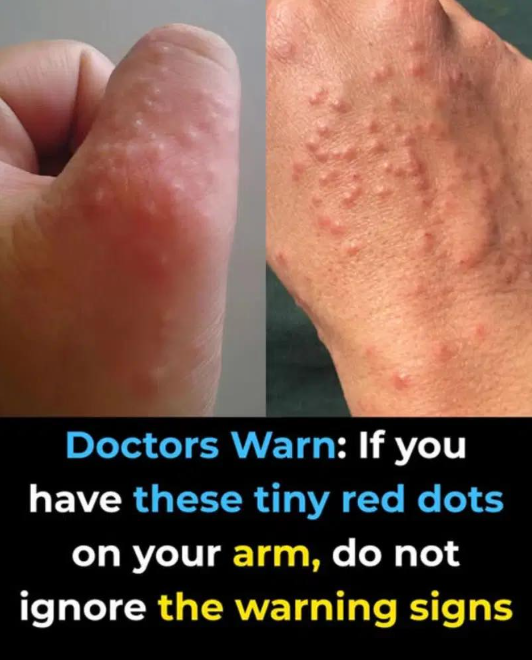
Doctors Warn: If You Have These Tiny Red Dots on Your Arm or Hand, Do Not Ignore the Warning Signs 🚨
You glance down at your arm and notice something new: tiny red dots scattered across your skin. They don’t itch much. They don’t hurt. But they weren’t there before. Most people ignore them, assuming they’re just a rash, a bug bite, or nothing serious. But doctors say those little red dots can sometimes be an important signal from your body — and ignoring them could mean missing an early warning sign of something bigger.
Let’s talk about what those red dots might mean, when they’re harmless, and when you should not brush them off.
1. What Are These Tiny Red Dots?
Tiny red dots on the skin are often called petechiae, cherry angiomas, or purpura, depending on how they look and what causes them.
They usually appear as:
• Small, pin-point sized red or purple dots
• Flat (not raised like a pimple)
• Often grouped together
• Not fading when you press on them
They show up most often on the arms, hands, legs, chest, or face.
2. When They’re Harmless
Not all red dots are dangerous. Some very common, harmless causes include:
✔ Cherry Angiomas
These are small, bright-red spots made of tiny blood vessels. They usually appear with age and are completely benign. Many adults have them by their 30s or 40s.
✔ Minor Skin Irritation
Shaving, friction from clothing, dry skin, or allergies can cause red spots.
✔ Heat Rash
If you’ve been sweating a lot, tiny red bumps can appear when sweat glands get blocked.
✔ Insect Bites
Fleas, bedbugs, or mites can leave clusters of small red dots.
These usually:
• Itch
• Fade in days
• Come and go
3. When Red Dots Can Be a Warning Sign
Doctors become concerned when the dots are:
• Sudden
• Spreading quickly
• Not itchy
• Not painful
• Not fading with pressure
These may indicate problems inside the body — not just on the skin.
Here are some serious causes doctors look for:
4. Low Platelet Count (Thrombocytopenia)
Platelets help your blood clot. If your platelet level drops too low, tiny blood vessels can leak under the skin and create red or purple dots.
Warning signs include:
• Easy bruising
• Nosebleeds
• Bleeding gums
• Fatigue
• Tiny red dots on arms or legs
This can be caused by infections, medications, autoimmune diseases, or bone marrow issues.
5. Blood Vessel Inflammation (Vasculitis)
Vasculitis means your blood vessels are inflamed. That inflammation weakens the vessel walls and causes small bleeding spots under the skin.
You may also have:
• Joint pain
• Muscle aches
• Fever
• Numbness
• Weakness
The dots often look purplish and may cluster.
6. Infections That Affect the Blood
Some viral and bacterial infections cause petechiae. These can include:
• Meningococcal infection
• Certain viral illnesses
• Severe sepsis
If red dots appear with:
• Fever
• Headache
• Stiff neck
• Confusion
• Vomiting
👉 That’s a medical emergency. Seek help immediately.
7. Vitamin Deficiencies
Lack of certain vitamins can weaken blood vessels:
Vitamin C deficiency (scurvy)
• Causes fragile capillaries
• Leads to red dots, bruising, and bleeding gums
Vitamin K deficiency
• Affects clotting
• Causes easy bleeding and spotting
Poor diet, absorption problems, or long-term illness can lead to these deficiencies.
8. Liver Problems
Your liver helps make clotting factors. If your liver isn’t working well, you may notice:
• Red dots
• Bruising
• Yellowing skin
• Swelling
• Fatigue
The skin can show signs long before other symptoms feel serious.
9. Allergic Reactions & Drug Side Effects
Some medications can trigger red spotting, especially:
• Blood thinners
• Chemotherapy drugs
• Antibiotics
• Anti-seizure meds
Allergic reactions can also cause red patches or dots, often with itching or swelling.
10. Why Doctors Say “Don’t Ignore It”
The danger isn’t the dots themselves — it’s what they might represent inside your body.
Skin is like a window into your health. When blood, immune, liver, or nutritional systems start failing, the skin often shows it first.
Doctors worry when:
• The dots come suddenly
• They spread
• They don’t fade
• You also feel sick or weak
11. What You Should Do
If you notice tiny red dots on your arm or hand:
✔ Press on them — if they don’t fade, get checked
✔ Watch if they spread or multiply
✔ Pay attention to other symptoms
✔ See a doctor if they last more than a few days
Seek urgent care if you have:
• Fever
• Bleeding
• Confusion
• Severe fatigue
• Rapid spreading rash
12. How to Protect Your Skin & Health
You can lower your risk by:
• Eating vitamin-rich foods (fruits, vegetables, leafy greens)
• Staying hydrated
• Avoiding unnecessary medications
• Treating infections early
• Getting regular checkups
Your skin often speaks before your organs do.
Final Thought
Those tiny red dots might look small — but sometimes they’re your body waving a red flag. Most are harmless, yes. But some are early signs of blood, immune, or organ problems that get worse if ignored.