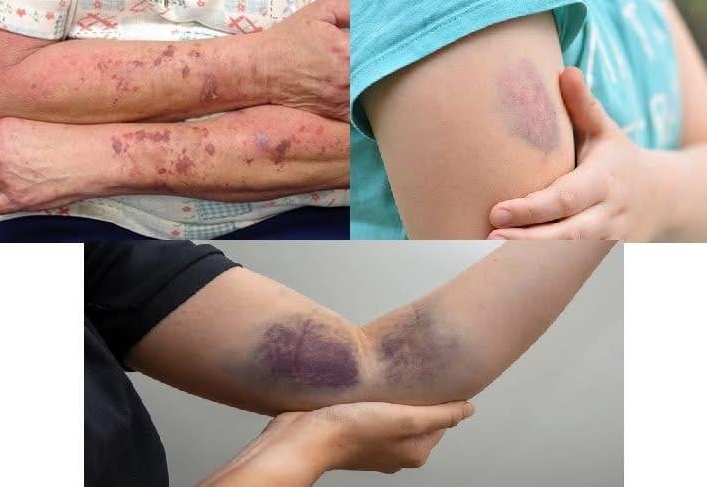
⚠️ BE CAREFUL: If You Get These Bruises on Your Body, It Could Mean Something Serious — Here’s What Your Body Might Be Telling You
Bruises are common. You bump into a table. You catch the corner of a door. You forget about it… and a few days later there’s a purple mark on your skin.
No big deal, right?
Most of the time, yes.
But sometimes — and this is the part people don’t talk about enough — bruises can be a warning sign that something deeper is happening inside your body. Not every bruise is dangerous, but certain types of bruising patterns deserve attention.
So let’s talk about what bruises normally mean… and when they might be trying to tell you something much more serious.
🩸 First, What Is a Bruise?
A bruise (medically called a contusion) happens when tiny blood vessels under your skin break and leak blood into surrounding tissue. That’s why bruises change colors — from red to purple, blue, green, and yellow as your body reabsorbs the blood.
Most bruises happen because of:
• Minor injuries
• Pressure
• Sports
• Accidental bumps
These are normal.
But when bruises start appearing without any clear reason, that’s when you should pause and pay attention.
🚨 Bruises That Should Raise Red Flags
Not all bruises are equal. These patterns deserve extra attention:
1. Bruises That Appear Without Injury
If you’re finding bruises and thinking:
“I don’t remember hitting anything…”
That’s important.
Unexplained bruising can happen when your blood isn’t clotting the way it should — or when your blood vessels are weaker than normal.
2. Bruises That Keep Coming Back
One random bruise is nothing.
But frequent bruising — especially if it’s new for you — can mean your body is struggling with:
• Platelet production
• Blood clotting
• Bone marrow function
Your body normally repairs tiny vessel damage quickly. If it can’t, bruises show up more easily.
3. Large, Dark, or Painful Bruises
Big bruises that seem too intense for a minor bump may mean your body isn’t stopping bleeding efficiently.
Size matters.
So does how long they last.
Bruises that take weeks to fade deserve attention.
4. Bruises in Strange Places
Bruises on:
• The torso
• The back
• The stomach
• The upper arms
• The thighs
…especially without injury, are more concerning than bruises on shins or knees.
Why? Because those areas don’t usually get hit accidentally.
🧬 So What Could Bruises Be Signaling?
Now here’s the part where people jump straight to fear.
You might’ve seen headlines like:
“Bruising Means You Have Cancer 😱”
That’s not how real medicine works.
Bruising does not automatically mean cancer.
But — and this is important — certain cancers and serious illnesses can affect how your blood and bone marrow function, which can lead to abnormal bruising.
Some conditions that can be associated with unusual bruising include:
• Blood disorders
• Vitamin deficiencies
• Liver problems
• Autoimmune diseases
• Certain infections
• Side effects from medications
• And yes — in rare cases — some cancers of the blood or bone marrow
Again:
👉 Bruising alone does NOT equal cancer.
👉 But bruising plus other symptoms may signal something that needs checking.
⚠️ Bruising + These Symptoms = Don’t Ignore
If bruising shows up along with any of the following, you should take it seriously:
• Extreme fatigue
• Unexplained weight loss
• Frequent infections
• Night sweats
• Pale skin
• Shortness of breath
• Dizziness
• Bleeding gums or nosebleeds
These combinations suggest your body’s blood system might not be working the way it should.
And your blood system is essential — it carries oxygen, fights infection, and stops bleeding.
🧠 Why People Miss the Warning Signs
There are three reasons most people ignore bruises:
-
They seem harmless
Bruises don’t usually hurt much. So people don’t worry. -
They don’t connect the dots
They see fatigue as stress. Bruising as clumsiness. Weight loss as “good.” -
They’re afraid of what they might find
So they wait.
But early action saves lives — not panic, not fear, just awareness.
🏥 When You Should See a Doctor
You should talk to a healthcare provider if:
• You bruise easily and often
• You don’t remember injuring yourself
• Bruises are large, dark, or spreading
• They don’t fade after 2–3 weeks
• You also feel weak, tired, dizzy, or unwell
• You’re bleeding easily elsewhere
Doctors can do simple blood tests to check:
• Platelets
• Red and white blood cells
• Clotting factors
• Vitamin levels
These tests are fast. Painless. And often reassuring.
🛑 Let’s Be Clear About Cancer
Because the internet loves fear:
👉 Most people with bruises do NOT have cancer.
👉 Bruising alone is not a diagnosis.
👉 Cancer is rare compared to stress, medication effects, or vitamin deficiency.
But here’s the smart truth:
If your body suddenly starts acting differently — and stays that way — it deserves attention, not dismissal.
🧩 The Real Message
Your body doesn’t send panic signals first.
It sends small, quiet changes.
Bruising is sometimes just a bruise.
But repeated, unexplained bruising is your body saying:
“Look closer.”
Not “panic.”
Not “assume the worst.”
Just: don’t ignore me.
❤️ Final Thought
The goal is not fear.
The goal is awareness.
You don’t protect your life by being scared.
You protect it by paying attention early.
So if you notice strange bruises that don’t make sense — especially if they come with fatigue, weight loss, or weakness — don’t scroll past your body’s message.
Listen to it.
And let a professional help you understand what it means.