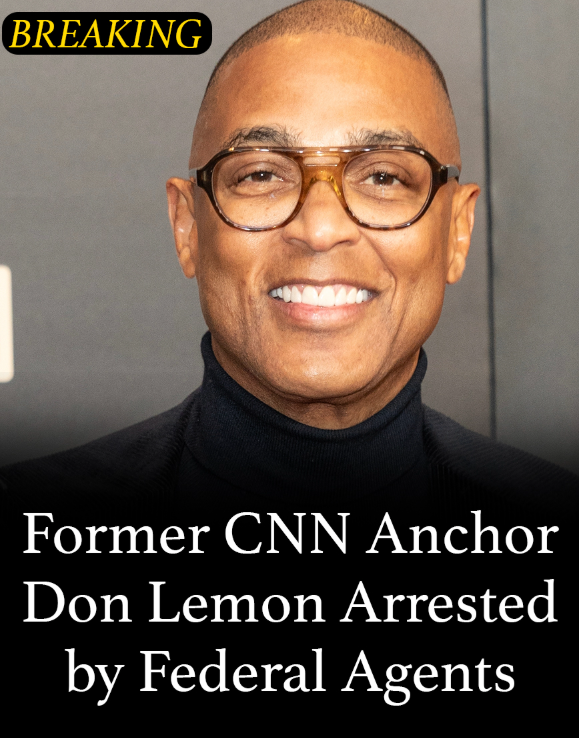
📌 What Happened: Arrest of Don Lemon by Federal Agents
On January 30, 2026, former CNN anchor Don Lemon was taken into federal custody in Los Angeles by federal law enforcement officials, including the U.S. Marshals Service, in connection with an incident that occurred earlier this month in St. Paul, Minnesota. The arrest took place while Lemon was in L.A. covering events tied to the upcoming Grammy Awards.
Lemon — who now works as an independent journalist with his own show — was one of four people arrested, alongside at least one other journalist and two activists connected to the same event in Minnesota.
Attorney General Pam Bondi confirmed the arrests and said they were related to what the Department of Justice described as a “coordinated attack” on a church in St. Paul where an Immigration and Customs Enforcement (ICE) official also served as a pastor.
📍 The Minnesota Church Incident: What Led to Charges
The genesis of the arrest stems from a January 18 protest in St. Paul’s Cities Church, where a group of anti-ICE demonstrators entered during a Sunday worship service, chanting and confronting churchgoers.
According to multiple reports:
-
Protesters aimed to highlight opposition to federal immigration enforcement, specifically targeting the church because one of its pastors holds a role with ICE.
-
Don Lemon was present, livestreaming and reporting on the protest, interviewing both participants and those inside the church.
-
Federal authorities allege that some actions disrupted the service and may have interfered with the constitutional rights of worshippers.
Although Lemon’s presence was reported as journalistic, authorities appear to view his role differently, suggesting his coverage may have crossed legal boundaries related to interference.
⚖️ Legal Claims and Potential Charges
While the exact criminal charges had not yet been publicly unsealed at the time of reporting, some indicators include:
Possible Legal Theories Cited
-
Conspiracy to Deprive Civil Rights: Allegedly interfering with others’ civil liberties, including religious practices.
-
Violation of the Freedom of Access to Clinic Entrances (FACE) Act: A federal statute often used to protect access to clinics and places of worship from obstruction or force.
These theories are controversial — especially when tied to someone acting as a journalist — because they raise complex questions about news reporting, public protest, and free speech rights.
Earlier Judicial Pushback
Before the federal arrest, a federal magistrate judge in Minnesota declined to approve initially proposed charges against Lemon for lack of probable cause related to his conduct at the church protest. Later, prosecutors sought a grand jury indictment — which appears to have occurred, leading to the arrest.
📣 Lemon’s Response: First Amendment Defense
Lemon’s legal team — led by attorney Abbe Lowell — has strongly criticized the arrest, framing it as an attack on press freedom and the First Amendment.
Lowell’s statement argued that:
-
Lemon was present at the protest in his capacity as a journalist, not a protester.
-
His actions were protected under the First Amendment, which guarantees freedom of the press and reporting on matters of public interest.
-
Targeting Lemon diverts attention from other serious issues, including killings involving federal immigration agents in Minneapolis earlier this month.
Several press freedom organizations have echoed these concerns, suggesting the arrest could set a dangerous precedent if journalists face criminal liability for reporting on protests.
🧑⚖️ Press Freedom and First Amendment Questions
The controversy highlights a broader debate in American law and journalism:
-
Does reporting on protests that disrupt public spaces cross a legal line?
-
Can journalists be held legally responsible for actions of protesters if they are documenting rather than participating?
-
What protections does the First Amendment truly offer when private or semi-private spaces (like a church) are involved?
Legal experts note that the First Amendment typically protects newsgathering and reporting even in charged situations — but the application can vary depending on whether someone is seen as a participant or observer. These questions are likely to emerge as central issues if Lemon’s case proceeds to court.
🗣️ Public and Political Reactions
Reactions to Lemon’s arrest have been sharply divided:
Supporters of Lemon
Many colleagues, civil liberties advocates, and lawmakers have condemned the arrest, arguing it undermines:
-
Freedom of the press
-
The right of journalists to cover controversial events
-
Constitutional safeguards against government overreach
Some political figures have framed the arrest as an escalation by the current administration against critics and independent journalism.
Critics and Officials
Supporters of the Justice Department’s actions argue that maintaining public order and protecting worshippers’ rights is paramount — and that no individual, regardless of profession, stands above the law if they allegedly interfere with others’ rights. U.S. Attorney General Pam Bondi emphasized federal commitment to enforcing laws protecting religious freedoms.
🧠 Why This Matters
The arrest of Don Lemon raises important issues for:
-
Journalistic freedom and risk
-
How protests intersect with federal civil rights laws
-
The authority of the Justice Department in politically charged contexts
For many observers on both sides of the political spectrum, Lemon’s arrest is more than a news event — it’s a test case for how the U.S. balances free expression against enforcement of federal statutes in a deeply polarized environment.
🧾 Summary
In short:
-
Don Lemon was arrested by federal agents in Los Angeles in connection with a Minnesota church protest incident.
-
The protest involved demonstrators entering a church where worship was underway, and Lemon was documenting the event.
-
Authorities allege violations of federal law tied to civil rights and interference with worship services.
-
Lemon’s attorney insists the arrest is an assault on press freedom and the First Amendment, since he was acting as a journalist.
-
The situation has sparked intense debate about journalism, protest coverage, and constitutional rights.