What Happened — The Key Event
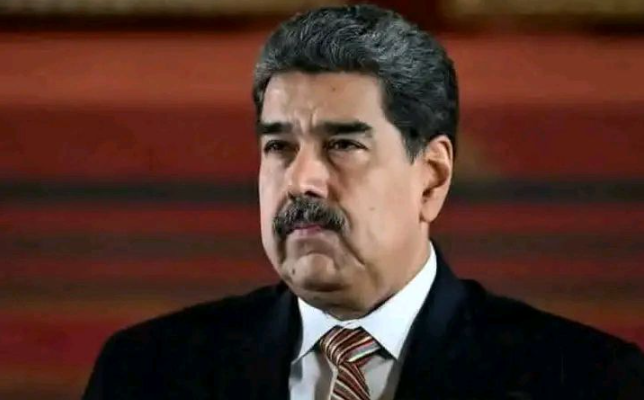
On January 3, 2026, the United States carried out a major military operation in Caracas, the capital of Venezuela, resulting in the capture and removal of Venezuelan President Nicolás Maduro and his wife, Cilia Flores. The U.S. government, under former President Donald Trump, announced that Venezuelan leader Maduro was taken into custody by U.S. military personnel and transported out of Venezuela.
After his capture, Maduro and Flores were arraigned in a U.S. federal court in New York on charges including narco-terrorism and weapons-related offenses, with prosecutors alleging involvement in large-scale drug trafficking operations. Both pleaded not guilty during their initial court appearance.
President Trump stated that the U.S. would oversee Venezuelan affairs until a “safe, proper and judicious transition” could occur and signaled a significant role for U.S. oil companies in the country’s recovery.
How the World Reacted — Divisions and Diplomacy
Global Political Reactions
The U.S. operation and subsequent removal of Maduro sparked intense international reactions:
-
Some governments expressed support for removing Maduro, especially among Venezuelan expatriate communities who celebrated his ouster as the end of an authoritarian regime.
-
European and other global leaders criticized Trump’s demands and actions, especially regarding U.S. intentions toward Venezuelan territory and resources like oil, prompting diplomatic pushback.
-
Legal experts and international relations scholars raised concerns that the operation violates international law, particularly norms against unilateral military intervention without United Nations authorization.
Regional Politics
In Latin America, the reaction was mixed:
-
Some opposition politicians and activists who had long opposed Maduro expressed support for his removal, hoping it could open the door to democratic reforms after years of political repression.
-
Others condemned the U.S. intervention, arguing that it set a dangerous precedent for foreign powers removing sovereign leaders — regardless of their governance record — and could destabilize the region.
Within the United States
Political debate over the legality and strategic wisdom of the intervention has intensified:
-
U.S. policymakers, including Secretary of State Marco Rubio, have indicated that while there are no immediate plans for further military action, the U.S. still intends to exert pressure to shape Venezuela’s political future while opening possibilities for reopening diplomatic channels.
-
Critics in Congress and legal experts have questioned whether the Trump administration acted within constitutional limits and whether the federal government properly consulted Congress before authorizing military action.
-
Questions about U.S. policy toward Venezuelan natural resources and influence from powers like Russia, China, and Iran remain central to bipartisan debates.
Immediate Aftermath in Venezuela
The removal of Maduro has triggered a multifaceted transition process, with substantial internal and external effects:
Political Power Shift
With Maduro detained, Delcy Rodríguez, the former vice president, has emerged as a leading interim figure in Venezuelan governance. Rodríguez has been interacting with the U.S. administration — a development sharply contrasting with Venezuela’s prior adversarial relationship with Washington.
However, critics argue that Rodríguez and other Maduro-era hardliners retained significant control over state institutions, slowing reforms and complicating efforts to democratize Venezuela.
Political Prisoners and Human Rights
One of the administration’s early moves was to begin releasing political detainees held under Maduro’s government. However, the process has been slow and incomplete, with hundreds of prisoners still in detention and concerns over their treatment remaining acute.
Human rights organizations note that many detainees have suffered mistreatment and that legal charges against them remain in place even after release.
Public Reaction in Venezuela
The Venezuelan population’s response has been complex and varied:
-
Some Venezuelans celebrated Maduro’s ouster as liberation from authoritarian rule and repression associated with years of economic decline and political violence.
-
Others fear instability, uncertainty, and potential retaliation from remaining regime loyalists or criminal networks that filled power vacuums during years of weak governance.
Many Venezuelans are cautiously hopeful but deeply anxious about what long-term governance and economic recovery will look like.
Strategic and Economic Implications
Oil and Resources
Venezuela sits on some of the largest proven oil reserves in the world. The U.S. has already signaled interest in facilitating U.S. oil company involvement in Venezuelan energy assets, which could reshape global oil markets and regional geopolitics.
Control over oil revenues and infrastructure is likely to be a central factor in the country’s political transition and foreign investment strategies.
Foreign Influence
Before his removal, Maduro’s government maintained relationships with global powers such as Russia and China. Analysts suggest that the U.S. intervention may weaken China’s influence in the region, but also could create openings for new geopolitical maneuvering.
Venezuela’s strategic alliances and military equipment sourced from these powers were reportedly targeted or neutralized during the U.S. operation, including alleged use of advanced disabling technology.
Legality and Precedent: A Major Debate
One of the central controversies is whether the U.S. action violated international law:
-
Critics argue the operation lacked United Nations authorization and violated principles of sovereignty and non-intervention that underpin the international order.
-
Proponents contend that Maduro’s regime had forfeited legitimacy due to alleged fraudulent elections, human rights abuses, and involvement in drug trafficking, though these arguments do not carry automatic legal justification for external military action.
The legal debate extends into U.S. domestic law, with disputes over war powers and presidential authority in deploying military forces without explicit Congressional approval.
What Happens Next?
Political Transition
The biggest question is whether Venezuela can transition toward a legitimate democratic government without plunging into further instability. Already, questions persist about elections, constitutional reform, and how to rebuild state institutions after years of polarization.
International organizations, regional alliances, and foreign governments will play crucial roles in shaping Venezuela’s next chapter, whether through peacekeeping, election monitoring, or economic partnerships.
Stability and Security
Ensuring stability will require addressing power vacuums that have developed over years — including criminal networks, military factions, and entrenched corruption. The release of political prisoners and legal reforms could be confidence-building measures, but slow progress risks renewed unrest.
U.S. Policy and Global Order
Decisions about U.S. involvement in reconstruction and policy toward Latin America will influence broader global norms about sovereignty, intervention, and democracy promotion.
Why This Matters
The removal of Nicolás Maduro — a sitting head of state — by another country’s military is historically unprecedented in the Western Hemisphere since the U.S. invasion of Panama in 1989. The event has significant implications:
-
Shifts the balance of power in Latin America.
-
Sets a potential precedent for how powerful states engage with authoritarian regimes.
-
Raises urgent questions about international law, sovereignty, and the limits of intervention.
-
Affects global energy markets due to Venezuela’s oil reserves.
-
Impacts millions of Venezuelans, both at home and abroad, who have endured economic collapse, migration pressures, and political repression.
Conclusion
The removal of Nicolás Maduro is one of the most consequential geopolitical events of 2026. It has reshaped Venezuelan politics overnight, fueled international debate, and opened an unpredictable new era for Venezuela’s future. The world is watching closely as Venezuela grapples with questions of legitimacy, governance, human rights, and the influence of global powers.