Patel Suspends FBI Official Who Helped Lead ‘Russian Collusion’ Probe
The headline alone feels like a political earthquake: Patel Suspends FBI Official Who Helped Lead “Russian Collusion” Probe. It brings together three powerful forces—politics, law enforcement, and one of the most controversial investigations in modern U.S. history. To understand why this matters, you have to look beyond the surface and into the long shadow cast by the Russia investigation, the evolving leadership inside federal agencies, and the growing tension between government institutions and public trust.
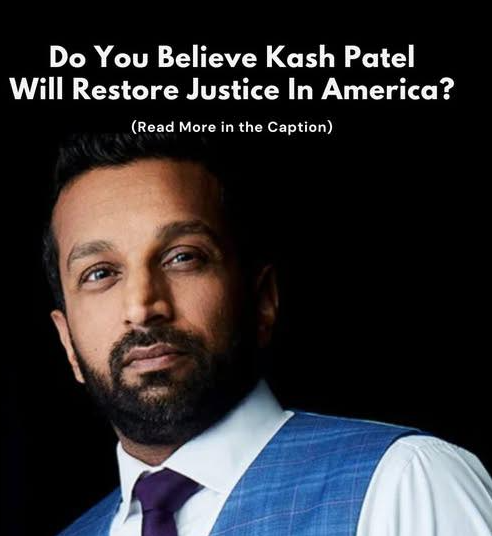
At the center of this story is Kash Patel, a figure who has risen from relative obscurity to become a major power player in conservative legal and intelligence circles. Known for his role in efforts to challenge the FBI’s handling of the Russia probe, Patel has long argued that the investigation into alleged collusion between Donald Trump’s 2016 campaign and Russia was politically motivated, flawed in its origins, and damaging to the integrity of federal law enforcement.
Now, with Patel in a position of authority, the suspension of an FBI official who helped lead that investigation is being seen by many as more than a routine personnel move. Supporters call it accountability. Critics call it retaliation.
So what’s really going on?
The Legacy of the “Russian Collusion” Investigation
The Russia investigation—formally launched in 2016 and later overseen by Special Counsel Robert Mueller—sought to determine whether the Trump campaign coordinated with the Russian government to influence the election. It was one of the most divisive political episodes in U.S. history.
On one side, many believed the investigation was essential to protect democracy from foreign interference. On the other, Trump and his allies insisted it was a “witch hunt” driven by political bias within the FBI and intelligence agencies.
When the Mueller report was released in 2019, it did not establish that the Trump campaign conspired with Russia, though it documented extensive Russian interference and raised questions about obstruction of justice. Still, for millions of Americans, the damage was already done. Trust in institutions had eroded, and the FBI—once one of the most respected agencies in the country—became a lightning rod for controversy.
Enter Kash Patel
Kash Patel built his reputation as a fierce critic of the FBI’s role in the Russia probe. He worked as a key staffer for House Intelligence Committee Republicans and helped draft a memo accusing the FBI of abusing surveillance powers to monitor a Trump campaign adviser.
To Patel and his supporters, the FBI leadership had crossed a line—using its power not just to investigate, but to influence politics. To his critics, Patel’s work blurred the line between oversight and partisan warfare.
Either way, Patel became symbolic of a broader movement: a push to “clean house” in federal agencies and reshape them in ways more aligned with conservative skepticism of what they call the “deep state.”
So when news breaks that Patel has suspended an FBI official connected to the Russia probe, it’s not just about one person. It’s about whether the balance of power inside federal law enforcement is shifting.
The Suspension: Accountability or Retribution?
Details around the suspension are still emerging, but the framing is clear: the official played a leadership role in the Russia investigation. That alone is enough to make the move explosive.
Supporters of Patel argue this is long-overdue accountability. They believe officials who pushed what they see as a flawed and politically biased investigation should face consequences. From this perspective, the suspension is not revenge—it’s reform.
They say:
• The FBI misused surveillance tools.
• It relied on unverified information.
• It damaged a presidency and public trust.
In their view, suspending a senior official sends a message: no one is above scrutiny, even inside powerful institutions.
Critics see it very differently. They warn this looks like political punishment for doing one’s job. The Russia probe, after all, was launched with bipartisan concern and involved multiple agencies. Suspending someone years later, based on their role in it, risks turning law enforcement into a tool of politics.
They argue:
• Investigators followed the evidence they had.
• Mueller’s team included respected professionals from across the legal world.
• Punishing people retroactively undermines independence.
To them, this move threatens the idea that federal agents can pursue cases without fear of future political retaliation.
What This Means for the FBI
The FBI has always depended on a delicate balance: independence paired with accountability. Too much independence, and it risks becoming unaccountable. Too much political control, and it risks becoming a weapon.
The suspension by Patel lands right in the middle of that tension.
Inside the Bureau, it may send a chilling signal. Agents and officials could start wondering: If I work on a politically sensitive case today, will I be punished tomorrow if the political winds change?
That kind of uncertainty can reshape behavior. Investigators might become more cautious. Cases involving powerful figures could be handled more slowly—or avoided altogether. The fear isn’t that the FBI will stop doing its job, but that it may start doing it differently, under political pressure.
Public Trust and the Long Memory of Scandal
One reason this story matters so much is because public trust in institutions is already fragile. Polls consistently show that Americans are deeply divided in how they view the FBI, the Justice Department, and intelligence agencies.
For some, Patel’s action is a step toward restoring trust—proof that wrongdoing won’t be swept under the rug.
For others, it deepens mistrust—evidence that agencies are being reshaped based on political loyalty rather than professional standards.
Either way, the Russia investigation is not just history. It’s a living wound in American politics. Every new development reopens old arguments:
Was the probe necessary or corrupt?
Were investigators heroes or villains?
Was the system protecting democracy—or undermining it?
The Bigger Picture
This suspension is about more than one official. It’s about how power changes hands in Washington. When new leaders take control, they don’t just change policies—they change people.
Patel’s move signals a broader attempt to redefine what accountability means in the federal government. Is accountability about following rules as written? Or about aligning with the political direction of those in power?
That question will shape not only the FBI, but every agency watching from the sidelines.
Final Thought
The headline “Patel Suspends FBI Official Who Helped Lead ‘Russian Collusion’ Probe” isn’t just breaking news. It’s a symbol of a deeper struggle over truth, power, and memory in America.
To some, it’s justice delayed but finally delivered.
To others, it’s politics reaching into the heart of law enforcement.
What’s certain is this: the story of the Russia investigation still isn’t over. It has simply entered a new chapter—one where the investigators themselves are now being investigated, judged, and reshaped by the very political forces they once examined