🛫 Twin-Engine Tragedy: Two Pilots Killed After Venezuela Plane Fails to Lift Off
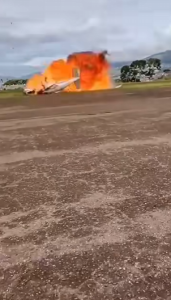
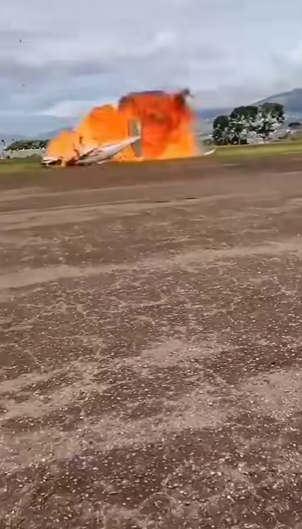
PARAMILLO, Táchira, Venezuela — A devastating aviation accident has claimed the lives of two experienced pilots after a small twin-engine plane failed to take off properly and crashed violently at the Paramillo Airport in the southwestern Venezuelan state of Táchira. The aircraft plunged into the runway shortly after the attempted departure, sparking a massive explosion and fireball that reduced the plane to rubble and left the aviation community and local residents in shock.
📰 What Happened: The Crash Sequence
The aircraft, a Piper Cheyenne 1 (PA-31T1) twin-engine turbo-prop with Venezuelan registration YV1443, was attempting take-off early in the morning when it failed to achieve lift and lost control. Eyewitnesses described the plane accelerating down the runway before it suddenly pitched and flipped toward the asphalt. Moments later, it slammed into the ground and erupted in flames, with a powerful explosion shaking the airfield and prompting emergency crews to rush toward the scene.
Local authorities with the Instituto Nacional de Aeronáutica Civil (INAC) confirmed that the crash took place during the initial phase of the take-off roll, and that two crew members on board were killed.
📍 Location: Paramillo Airport, Táchira
Paramillo Airport, located near the border with Colombia, serves primarily regional and private flights. It is not a major international hub but is often used by chartered and private aircraft due to its strategic position for cross-border and civilian traffic.
The crash has deeply affected the airport community, with many workers and nearby residents recounting the horrific sound of the impact and the ensuing explosion. Surveillance footage and cellphone recordings from witnesses quickly spread across social media, showing the aircraft’s sudden instability and violent descent.
✈️ The Victims: Experienced Pilots Lost
The two pilots aboard the aircraft were identified by local media as Juan Maldonado and José Antonio Bortone, seasoned aviators with longstanding experience in civil aviation. According to reports:
-
José Antonio Bortone was noted for his decades-long flying career, having worked as a flight dispatcher, copilot, and captain for numerous charter and private operators. He had logged thousands of hours in a variety of twin-engine aircraft, including the Piper series and other turboprops.
-
Juan Maldonado, whose aviation background also included extensive flight hours, was in the cockpit as a co-pilot or mission crew member at the time of the accident.
Their deaths have prompted an outpouring of grief from colleagues in the aviation sector, many of whom described both men as respected professionals who were deeply committed to flight safety and training.
🔍 Initial Response and Investigation
Emergency services, including airport firefighters, ambulance teams, and INAC investigators, were on the scene within minutes of the crash. Fire crews worked to contain the inferno that engulfed the wreckage, while medical and rescue units confirmed that both pilots had died on impact.
The Venezuelan air accident investigation body, Junta Investigadora de Accidentes de Aviación Civil (JIAAC) — the state authority responsible for probing civil aviation incidents — has been activated to determine the cause of the crash. Investigators will examine:
-
Engine performance data
-
Runway condition
-
Weather conditions at the time of take-off
-
Maintenance records of the aircraft
-
Pilot communication and flight plan data
In its brief initial statement, INAC noted that several hypotheses are being considered, including technical malfunction, human error, or external factors, but that no definitive cause has yet been determined.
🧑✈️ Technical and Safety Context
The Piper Cheyenne 1 is a light twin-engine aircraft commonly used for corporate, charter, and private operations. Its design offers reliable performance when properly maintained and operated within weight and environmental limits.
However, like all aircraft, it can be vulnerable to:
-
Improper take-off configuration
-
Engine power imbalance or failure
-
Exceeding weight or balance limitations
-
Runway surface issues
-
Adverse wind or weather conditions
These factors, alone or in combination, are typical areas of scrutiny in preliminary accident analyses. Official investigators will also consider whether aircraft systems provided accurate performance readings before and during the take-off roll.
📣 Witness Accounts and Social Media Reaction
Videos shared on social platforms depict the moment the plane pitched, rotated, and descended sharply before impact. These visuals have sparked intense public reaction and concern, with many observers calling for enhanced aviation safety measures at smaller airports throughout Venezuela.
Some eyewitness accounts described the aircraft seeming to “flip” or lose aerodynamic stability almost immediately after the engines spooled up. The horrifying footage, combined with the explosion that followed impact, has renewed discussions both within the aviation community and among the general public about safety standards and oversight.
🇻🇪 Aviation Safety in Venezuela: Broader Context
Venezuela has a history of aviation tragedies dating back decades. Notable past accidents include:
-
Santa Bárbara Airlines Flight 518 (2008), a scheduled domestic flight that crashed into mountainous terrain shortly after take-off from Mérida.
-
Viasa Flight 742 (1969), one of the deadliest accidents in the country’s history, in which a DC-9 crashed minutes after take-off due to loss of control.
-
West Caribbean Airways Flight 708 (2005), which entered a stall and crashed at cruising altitude, killing all on board.
These incidents have prompted incremental changes in regulation, oversight, and training — but challenges remain, particularly at smaller regional airports and in private aviation operations.
🕊️ Legacy and Mourning
Across the aviation sector, tributes have poured in for Maldonado and Bortone. Pilots, engineers, airport staff, and private aircraft owners have expressed deep sorrow, emphasizing the inherent risks that aviators face and the importance of honoring their dedication to the skies.
In Paramillo and surrounding communities, makeshift memorials have appeared near the airport entrance, with colleagues and residents alike leaving flowers and messages of condolence.
🧾 What Comes Next
The investigation into this tragic crash will likely take weeks or months to conclude. Final reports from JIAAC will offer a detailed breakdown of causal factors and recommended safety improvements. These findings will be shared both domestically and with international aviation authorities to prevent similar accidents in the future.
For now, the Venezuelan aviation community mourns two of its own — professional pilots whose final flight underscores the unforgiving nature of aviation when technical, human, or environmental factors align against safe continuation of flight.