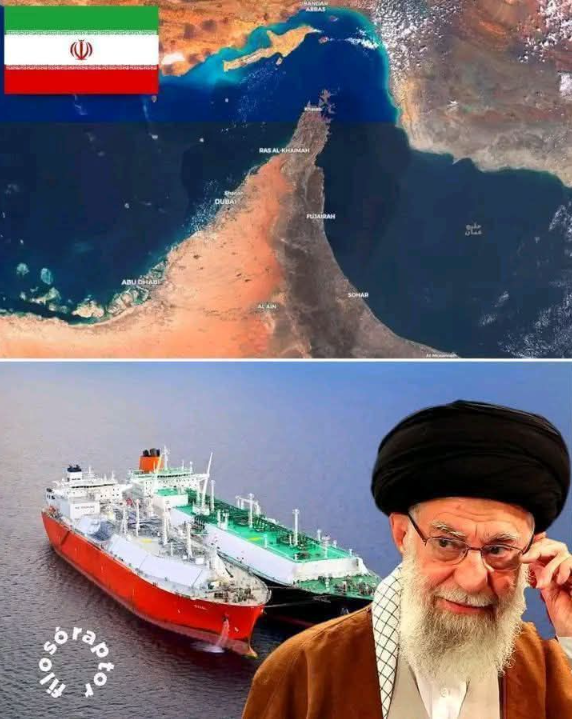
BREAKING: Iranian Parliament Approves Motion to Close the Strait of Hormuz
In a dramatic escalation of tensions in the Middle East, Iran’s national legislature — the Islamic Consultative Assembly, often called the Iranian Parliament or Majlis — has voted in favor of a resolution that would authorize the closure of the Strait of Hormuz, a critical maritime chokepoint through which a significant share of the world’s oil and gas supplies transit.
The move is widely seen as a political response to recent U.S. airstrikes against Iranian nuclear facilities, which Iranian officials and lawmakers have described as a blatant act of aggression. However, the parliamentary vote is not itself the final step — the decision to actually seal or close the strait must be made by Iran’s Supreme National Security Council, the country’s highest authority on security and defense matters.
Why the Strait of Hormuz Matters
The Strait of Hormuz is one of the most strategically important waterways in the world — and for good reason:
-
It connects the Persian Gulf with the Gulf of Oman and the Arabian Sea, acting as the only sea route for most oil exports from Gulf producers.
-
On an average day, tens of millions of barrels of crude oil and liquefied natural gas pass through the strait. Estimates often put this figure at around 20% or more of the world’s total seaborne oil trade.
Because there is no practical sea alternative for many of these shipments, any sustained disruption could ripple across global energy markets, leading to sharp increases in oil and gas prices, supply shortages in importing countries, and severe economic consequences worldwide.
The Vote in Tehran: What Parliament Said
State media and international reporters in June 2025 documented the parliamentary vote:
-
Lawmakers overwhelmingly backed a resolution stating that Iran should close the Strait of Hormuz in retaliation for foreign military actions.
-
Members of the National Security Commission, including Revolutionary Guards Commander Esmail Kosari, framed the measure as both a defensive move and a political signal that Tehran is prepared to protect its “vital interests.”
-
Parliamentary Speaker Mohammad Bagher Qalibaf and other lawmakers echoed strong rhetoric about opposing Western intrusion, emphasizing that a range of options was available — of which closing the strait was now on the agenda.
Despite this high-profile vote, it is important to highlight that:
The parliamentary vote itself does not automatically close the Strait of Hormuz.
Under Iran’s constitutional system, such a strategic decision requires approval by the Supreme National Security Council, which includes senior political and military leaders and answers ultimately to Iran’s Supreme Leader.
The Strategic Context: Why This Happened Now
Iran’s parliamentary action did not occur in isolation. It took place against the backdrop of mounting regional conflict:
Military Tensions
Iran had been enduring U.S. military strikes on nuclear sites, which Tehran characterized as an attack on its sovereignty and strategic program. This included significant damage to facilities central to Iran’s nuclear infrastructure, prompting outrage among hardliners in Tehran.
Retaliation Narrative
For many Iranian lawmakers, closing the strait represents a way to apply pressure on the United States and its allies without immediately resorting to open warfare. The resolution is as much a symbolic assertion of strength as it is a strategic threat. The parliament’s language framed the option as a response to what they saw as hostile foreign actions.
Domestic Politics
Hardliners have used external threats to consolidate power internally. Pushing for a dramatic decision like closing a global energy route can be politically beneficial for factions in Tehran that argue for a robust, uncompromising posture toward the U.S. and Israel.
Global Economic Implications
If the Strait of Hormuz were to be closed — even partially — the consequences could be far-reaching:
Oil and Gas Markets
-
Oil prices reacted strongly to the news of the possible closure, hitting multi-month highs as traders priced in supply disruption risk.
-
Many countries rely on Gulf oil and LNG exports for energy needs; disruptions could increase costs for consumers, strain manufacturing sectors reliant on petroleum products, and stimulate inflationary pressures globally.
Shipping and Trade
-
Commercial shipping companies already monitor the situation closely and adjust routes or insurance coverage accordingly. Heightened risk can lead to higher freight costs and logistical bottlenecks.
Impact on Importing Nations
Major importers — such as China, Japan, South Korea, and European countries — could face energy supply challenges. This is one reason why U.S. officials publicly urged China to use its influence with Iran to avert the closure.
Strategic and Military Risks
It’s worth underscoring that closing the strait — or trying to make it unnavigable — would likely trigger widespread military and diplomatic responses:
-
The United States and its allies maintain a significant military presence in and around the Gulf region and have repeatedly affirmed that freedom of navigation is a strategic priority.
-
Gulf Arab states, particularly those whose own economies depend on shipping through Hormuz, have also expressed concern about potential disruptions.
-
A military escalation could draw in regional powers, potentially expanding conflict zones beyond the immediate Iran-U.S. dispute.
Most analysts say that while Iran can threaten closure and might attempt to make shipping too risky for cruisers and tankers, a full and prolonged closure is unlikely because it would also damage Iran’s own economy. This includes its oil export revenues and overall trade.
Diplomacy and International Responses
In response to mounting tensions:
-
The U.S. has attempted to mobilize diplomatic channels, including reaching out to China to leverage relations with Tehran to avert drastic steps.
-
Other global powers have urged restraint and highlighted the need for negotiations to de-escalate the situation.
At the same time, Tehran has signaled that it sees diplomacy as available but has sharply criticized Western military actions. The Iranian foreign minister stressed that Iran has several options to respond but that diplomacy should remain a priority.
What Happens Next?
As of now:
-
The Iranian Parliament has signaled strong political resolve by approving a motion to close the Strait of Hormuz — a dramatic and symbolic step.
-
The decision now moves to the Supreme National Security Council, whose members have the authority to implement or reject the closure.
-
Global markets and governments are watching closely, as even the possibility of closure affects oil prices, trade routes, and geopolitical calculations.
In short, the vote represents a watershed moment in an increasingly tense geopolitical landscape — one that could reshape regional dynamics and global energy markets if it leads to concrete action