🚨 BREAKING NEWS: U.S. Launches Military Strikes on Venezuela — Trump Says Nicolás Maduro Captured and Flown Out of the Country 🇺🇸 🇻🇪
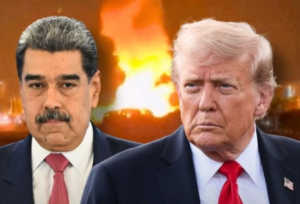
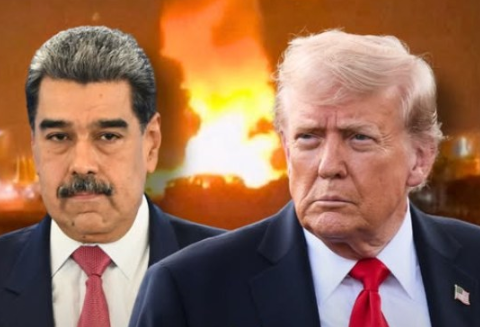
In a dramatic and unprecedented development early January 3, 2026, the United States carried out large-scale military strikes against Venezuela, targeting strategic locations in and around the capital city of Caracas. Shortly afterward, U.S. President Donald Trump announced that Venezuelan President Nicolás Maduro and his wife, Cilia Flores, had been “captured and flown out of the country.”
The strike — described by Trump as swift and overwhelmingly effective — marked a dramatic escalation in tensions between the U.S. and Venezuela, drawing immediate global reactions, political debate within the United States, and sharp condemnations from several foreign governments.
What Happened: The U.S. Strike and Alleged Capture
According to reports based on statements from the Trump administration:
-
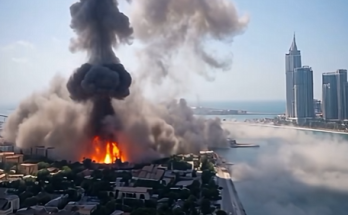
Early on the morning of January 3, explosions were heard across Caracas, accompanied by sightings of low-flying aircraft and military activity.
-
President Trump said the strikes were part of an operation in conjunction with U.S. law enforcement to capture Maduro and his wife, after months of intense pressure on the Venezuelan leader.
-
Trump shared a photo on social media showing Maduro aboard a U.S. warship and said both he and his wife were now in U.S. custody.
-
The U.S. said the operation was successful and that Maduro was being transported to the U.S. to face legal charges — specifically indicating he would be arraigned in New York.
According to these accounts, the entire military movement was brief — with initial strikes and capture happening in under an hour — and deployed a combination of air and ground forces.
What the Venezuelan Government Says
Maduro’s government vehemently denounced the military action as an act of aggression and a violation of Venezuela’s sovereignty. Venezuelan officials called for proof of life, stating they did not know the whereabouts of Maduro or his wife after the strikes.
Vice President Delcy Rodríguez appeared on state media saying that the government was mobilizing defense plans and describing the strikes as “grave military aggression.”
Authorities in Caracas reported explosions at military bases, airports, and other installations, and called on citizens to take to the streets in response.
International Reactions and Shockwaves
The news quickly rippled across the globe, eliciting a wide range of reactions:
Criticism and Condemnation
-
Russia condemned the U.S. strike as an “act of armed aggression” and warned against further escalation.
-
Iran also denounced the operation, calling it a violation of sovereignty.
-
Several Latin American leaders, including Colombia’s Gustavo Petro, spoke out against the attacks and urged respect for international law and peace.
Support from Some Quarters
-
A few leaders, notably Argentina’s Javier Milei, publicly echoed pro-freedom sentiments, even celebrating the reported capture as an end to a “tyrant.”
Global Stability Concerns
International diplomats expressed alarm that a unilateral military action of this scale could set a precedent for other conflicts and undermine longstanding international norms against forceful removal of state leaders.
U.S. Domestic Reactions and Political Backlash
Inside the United States, the response was deeply divided:
Supporters
Some lawmakers and pro-government commentators praised the strike:
-
Supporters cited Maduro’s long history of human rights abuses and alleged involvement in drug trafficking, often pointing to U.S. indictments from 2020 as justification for his capture.
Critics
Others raised grave concerns:
-
Prominent Democrats and critics described the action as illegal and reckless, emphasizing that Congress had not authorized the use of force as required under U.S. law.
-
Polling reflects deep skepticism, with a majority of Americans saying the intervention was excessive and noting broad disapproval of Trump’s foreign military actions.
This domestic debate highlights ongoing tensions about presidential war powers and U.S. military involvement abroad.
Is the Situation Legally Clear?
The legal basis for the U.S. operation remains controversial:
-
A declassified justice department memo reportedly outlines a legal argument claiming a president can unilaterally authorize a capture of a foreign leader — even without congressional approval — citing precedents like the 1989 Panama operation.
-
But many legal experts argue the strike contradicts international law, including the U.N. Charter, which generally prohibits the use of force against other sovereign states except in self-defense or with Security Council authorization.
The legality will likely be debated in courts, Congress, and international bodies for months or even years.
Venezuela’s Government and Succession
Despite the U.S. claim that Maduro has been captured, Venezuelan authorities — including Vice President Delcy Rodríguez — insisted they remain in power and rejected the U.S. narrative.
Under Venezuelan law, if the presidency is vacant, the vice president assumes leadership. Rodríguez has since declared herself acting president, and loyalist military forces remain active.
Meanwhile, independent observers have called for proof of life from Maduro and his wife — a demand repeated by Venezuelan officials since the strikes.
Casualties and Impact on Civilians
Reports on casualties have varied:
-
Venezuelan officials claimed that strikes caused civilian and military deaths, though exact figures are difficult to independently verify.
-
Local residents described explosions, panic, power outages, and significant infrastructure damage during and after the strikes.
The situation remains fluid, and detailed, independently verified casualty figures are not yet available.
Economic and Strategic Stakes
Venezuela holds some of the world’s largest oil reserves, making stability in the country crucial not just for Venezuelans but for global markets.
Following Maduro’s ouster, U.S. officials have already moved to begin selling Venezuelan oil under U.S. arrangements — including a reported $500 million sale that indicates broader economic intentions in the wake of the operation.
Critics argue that oil and resource control may be a motivating factor behind broader strategic goals — a charge the U.S. denies publicly.
What Happens Next?
This crisis is far from over. Key developments to watch include:
-
Independent verification of Maduro’s status and location
-
International diplomatic responses and possible U.N. Security Council actions
-
Congressional actions regarding war powers and military authorization
-
Civil unrest inside Venezuela as loyalist and opposition factions respond
-
Legal proceedings for Maduro in the U.S. if the capture claim holds
What seemed like a single strike has become a turning point in American foreign policy and Venezuelan history — with potential repercussions across the Americas and beyond.
Summary
This crisis underscores how quickly global geopolitics can shift. A unilateral U.S. military strike, the alleged removal of a sitting president, and questions about legality and international norms are now at the heart of a major diplomatic flashpoint — one that will shape U.S.–Latin American relations for years to come. 🇺🇸🌎