🇻🇪 1. What Just Happened — The Core Events
US Military Operation Over Caracas
In the early hours of January 3, 2026, the United States carried out a large-scale military strike against Venezuela’s capital, Caracas, involving explosions, aerial bombardment, and special operations forces.
According to U.S. authorities, this operation succeeded in:
-
Capturing Venezuelan President Nicolás Maduro and his wife, Cilia Flores — reportedly at their residence inside a military base.
-
Transporting them out of Venezuela to U.S. territory.
President Donald Trump publicly announced that Maduro and Flores had been “captured and flown out of the country,” calling the strike a major action in U.S. foreign policy.
The operation has been described by Trump as a “large-scale strike” and has been linked to a long-running U.S. effort to challenge Maduro’s government over allegations of drug trafficking, corruption, and election interference.
Court Arrest and Charges
Once in the U.S., Maduro and his wife were:
-
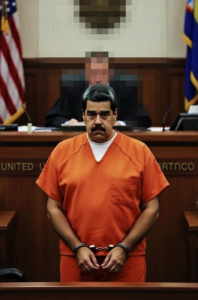
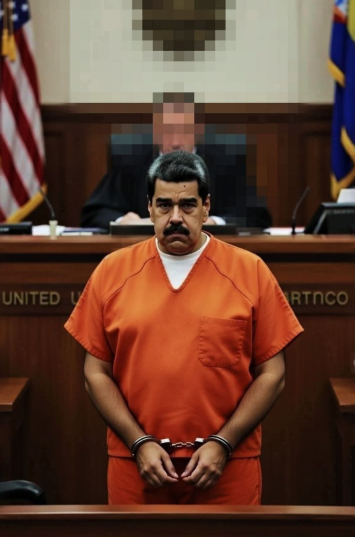
Arraigned in federal court in Manhattan on charges including drug trafficking and narcoterrorism.
-
Both pleaded not guilty to the charges, asserting they were unlawfully removed and are still the legitimate President of Venezuela.
In court, Maduro characterized his removal as a “kidnapping” by the U.S., arguing that as a sovereign head of state he should have immunity. His lawyers are expected to challenge the legality of his arrest.
🌎 2. The U.S. Justification
The U.S. government has framed the action around several key themes:
A. Allegations of Drug Trafficking & Corruption
-
Maduro and his inner circle were alleged to be deeply involved in narco-trafficking, with indictments against them in the U.S. justice system for years.
B. Pressure After Sanctions and Naval Operations
-
The military strike capped months of escalating pressure, including seizures of Venezuelan vessels, sanctions, and efforts to weaken Maduro’s international support.
C. Oil and Strategic Interests
President Trump suggested after the operation that the U.S. could “run” Venezuela — particularly its vast oil industry — at least temporarily, referring to Venezuela’s massive proven oil reserves.
⚖️ 3. Legal & International Ramifications
A. Sovereignty and International Law
This operation — the removal of a foreign head of state by military force — is extremely rare and raises huge questions in international law:
-
Most international law experts argue that forcibly capturing another nation’s leader violates norms of sovereignty unless conducted under a clear self-defense or UN mandate, neither of which was publicly declared.
-
Russia’s Foreign Minister Lavrov and other foreign officials have condemned the action as undermining the global order.
B. Head of State Immunity Debate
Maduro’s defense is expected to argue that, as a sitting head of state, he had immunity from prosecution by another country, saying he was “kidnapped.”
This is a major legal battle — one that could redefine the boundaries of international justice and state immunity if it goes to higher courts.
🇻🇪 4. Immediate Responses in Venezuela
With Maduro removed:
Interim Leadership
-
Venezuela’s Supreme Court has declared Vice President Delcy Rodríguez as interim president.
-
Rodríguez continues to insist Maduro is the legitimate president and that Venezuela remains sovereign despite U.S. actions.
Domestic Unrest & Violence
-
Armed groups and militias have reportedly intensified dangerous checkpoints and targeting of foreigners, prompting U.S. State Department warnings to Americans to leave Venezuela due to security risks.
The situation on the ground remains volatile, with various political and military actors reacting to the leadership vacuum.
📍 5. Regional and Global Reactions
Latin America
-
Neighboring countries like Colombia condemned the U.S. operation and called for urgent United Nations meetings.
-
Venezuelan diasporas and some opposition groups held celebrations across Latin America and in U.S. cities like Doral, Florida.
Russia and China
-
Russia’s government publicly criticized the U.S., saying actions in Venezuela are eroding international legal norms.
Other global powers are watching closely, seeing this as a potential shift in how powerful countries intervene in sovereign states.
🤝 6. Broader Strategic Implications
A. U.S. Policy in Latin America
This intervention marks the most aggressive U.S. military action in Latin America in decades — often compared to the 1989 Panama invasion.
If sustained, this could reshape U.S. influence in the Western Hemisphere:
-
Power vacuums can destabilize regions or invite rival powers to expand their influence.
-
Oil markets may shift depending on how U.S. companies and policy interact with Venezuela’s vast resources.
B. Precedent for Regime Change
Removing and trying a sitting head of state — especially one allied to powerful countries — sets a controversial precedent.
Some analysts argue it could encourage future interventions; others say it may deter global autocrats who believe they can evade international justice.
🧠 7. What This Means Going Forward
Here are the big questions that will define the next weeks and months:
1. Will Maduro’s Legal Team Succeed?
Can they get the charges dismissed on sovereign immunity grounds? This will be a landmark test case.
2. How Will Venezuela Stabilize?
With competing claims to leadership, the risk of civil unrest or militia violence remains high.
3. Will the U.S. Stay Militarily Involved?
Trump hinted Washington will play a role in Venezuela’s future — but how far that goes is unclear.
4. How Will Global Powers Respond?
Countries like Russia and China are diplomatically and strategically invested in Venezuela — their long-term reactions could shape geopolitical dynamics.
🧨 Summary — Why This Matters
In short, the United States conducted a direct military operation that captured Venezuelan President Nicolás Maduro and his wife and transported them to the U.S. to face criminal charges — a historic and controversial event with major legal, diplomatic, and strategic implications.
The world is still grappling with the fallout: from legal battles over sovereignty and immunity to regional instability and international condemnation.