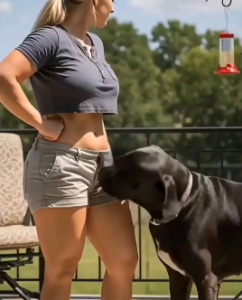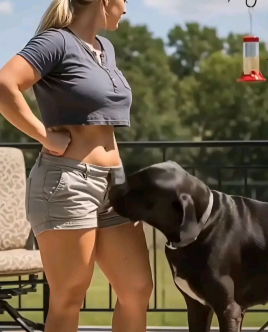
Did You Know That When a Dog Smells Your Private Areas, It’s About Communication, Not Something Inappropriate?
Many people feel awkward or embarrassed when a dog suddenly rushes up and sniffs their private areas. It can seem rude, invasive, or even shocking—especially if it happens in public. However, what feels uncomfortable to humans is, for dogs, a completely natural and information-rich behavior. Understanding why dogs do this helps clear up myths and reduces unnecessary worry.
A Dog’s Nose Is Its Primary Tool
Dogs experience the world primarily through their sense of smell. While humans rely most on sight, dogs rely on scent to gather information about their surroundings and the people and animals in them. A dog’s sense of smell is tens of thousands of times more powerful than a human’s. With one sniff, a dog can learn details that humans could never detect—such as where someone has been, their emotional state, and even certain aspects of their health.
Because of this, dogs naturally gravitate toward areas of the body where scents are strongest. Human private areas contain sweat glands that release chemical signals, making them especially “interesting” from a dog’s perspective.
It’s About Scent Glands and Chemical Signals
Humans have apocrine sweat glands concentrated in areas like the armpits and groin. These glands release pheromones and other chemical compounds that carry information about a person. Dogs are biologically wired to investigate these scents because they provide a clear “profile” of an individual.
When a dog sniffs these areas, it may be learning:
-
Whether the person is male or female
-
If the person is stressed, calm, or excited
-
Where the person has been recently
-
Whether the person is familiar or a stranger
To a dog, this is similar to how humans might recognize someone by their face or voice.
Normal Dog Social Behavior
Among dogs, sniffing is a primary way of greeting. Dogs sniff each other routinely, especially around scent-rich areas, to gather information and establish familiarity. When a dog does the same to a human, it is simply applying the same social rules it uses with other dogs.
This behavior is not meant to be rude, aggressive, or inappropriate. Dogs do not attach social or cultural meaning to body parts the way humans do. For them, it is purely instinctual and practical.
Emotional States and Hormonal Changes
Dogs are also very sensitive to changes in human emotions and body chemistry. Stress, fear, excitement, or nervousness can all subtly change how a person smells. Hormonal changes—such as those related to puberty, pregnancy, or illness—can also affect scent.
This is one reason dogs may seem particularly curious about certain individuals. The dog isn’t reacting to anything “wrong”; it is simply detecting a scent that stands out or is unfamiliar.
Why Some Dogs Do It More Than Others
Not all dogs engage in this behavior equally. Factors that influence how often a dog sniffs people include:
-
Breed (some breeds are more scent-driven than others)
-
Age (puppies are often more curious)
-
Training and socialization
-
Excitement level or anxiety
Well-trained dogs are usually taught to greet politely, which may reduce this behavior. Dogs that haven’t been trained or are overly excited may be more likely to sniff without hesitation.
Is It a Sign of Aggression or Dominance?
No. Sniffing is not a sign of dominance, aggression, or sexual behavior. It is simply information gathering. Dogs that are aggressive usually show clear warning signs such as growling, stiff posture, or avoidance—not calm sniffing.
Misinterpreting this behavior can lead to unnecessary fear or embarrassment, but in most cases, it is harmless.
What You Can Do If It Makes You Uncomfortable
Even though the behavior is normal for dogs, it’s understandable that people may not want to be sniffed. If a dog approaches you:
-
Step calmly to the side or turn your body away
-
Avoid sudden movements or shouting
-
Ask the owner to call the dog back
Dog owners should also take responsibility by training their dogs to greet politely and by keeping them under control in public spaces.
The Role of Dog Training
Training plays a big role in managing this behavior. Dogs can be taught appropriate ways to greet people, such as sitting or staying calm. Professional trainers often focus on impulse control and social manners, which benefits both dogs and humans.
Training doesn’t mean suppressing a dog’s natural instincts entirely—it means teaching the dog when and where certain behaviors are acceptable.
A Matter of Perspective
What feels awkward to humans is, to dogs, a simple exchange of information. Dogs live in a world of scent, and their actions reflect that reality. Understanding this helps people react with patience instead of embarrassment or alarm.
Final Thoughts
When a dog smells your private areas, it is not being inappropriate, disrespectful, or strange—it is simply being a dog. This behavior is rooted in biology, communication, and instinct, not intention. By understanding the reason behind it, people can respond calmly and confidently, and dog owners can take steps to ensure everyone feels comfortable.
In the end, this small interaction highlights the fascinating differences between how humans and dogs experience the world—and how much there still is to learn from our four-legged companions