1) U.S. Capture of Nicolás Maduro – A Stunning Military Action
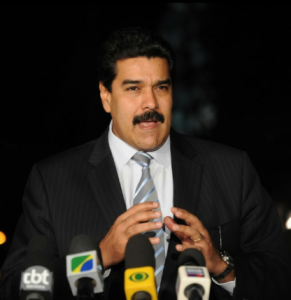
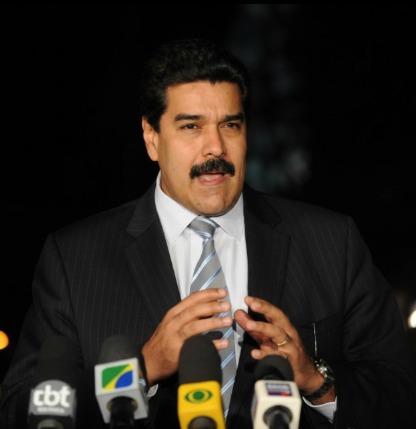
In early January 2026, United States military and law-enforcement forces carried out a highly controversial nighttime operation in Caracas, Venezuela’s capital, resulting in the capturing of President Nicolás Maduro and his wife, Cilia Flores. President Trump’s administration framed the action not as a war but as a law-enforcement effort to bring Maduro to justice on long-standing federal indictments alleging drug trafficking, narcoterrorism, money laundering, and other crimes.
Maduro was flown to New York, where he is being held in custody at the Brooklyn Metropolitan Detention Center, a notorious federal prison.
There is no credible reporting that the U.S. Supreme Court has ordered his release or approved release; the legal matters are now unfolding in federal criminal court in Manhattan. (The Supreme Court has been referenced in legal commentary about precedent, but not in any release order.)
2) Arraignment in U.S. Federal Court
Maduro and his wife have been arraigned in a U.S. federal court in Manhattan on multiple charges, including narco-terrorism and cocaine trafficking — allegations that the Justice Department says are part of a decades-long conspiracy to use the Venezuelan state apparatus to import drugs into the U.S.
In court, Maduro pleaded not guilty and repeatedly insisted he is the legitimate president of Venezuela, describing himself as being “captured” rather than lawfully detained. His defense has signaled plans to challenge both the legality of his capture and whether he is entitled to head-of-state immunity under international law — a rarely tested argument in criminal prosecution but one thrown into the spotlight here.
Legal experts note that U.S. Supreme Court precedent suggests unlawful abductions abroad don’t automatically bar prosecution in U.S. courts, and the topic may be significant if lower courts consider it.
His next scheduled court date is mid-March 2026.
3) Venezuela’s Supreme Tribunal and Interim Presidency
While Maduro remains in U.S. custody, Venezuela’s Supreme Tribunal of Justice (TSJ) — long seen as loyal to him — ordered his vice-president, Delcy Rodríguez, to assume the presidency on an interim basis to “guarantee administrative continuity.” The move is internally framed as constitutional due to Maduro’s “temporary inability to exercise duties,” though international bodies such as the European Union have not recognized her legitimacy.
Rodríguez has sought to position her government as defending Venezuelan sovereignty while navigating immense pressure from both domestic opposition and external powers.
4) Geopolitical and Diplomatic Fallout
The U.S. capture of Maduro has triggered widespread global reactions:
-
State Department warnings urging U.S. citizens in Venezuela to leave due to security concerns.
-
International protests, including in South Africa, where demonstrators condemned U.S. intervention and called for Maduro’s release, framing the action as a violation of Venezuelan sovereignty.
-
Complex and strained diplomatic ties, with some nations backing interim authorities and others decrying U.S. tactics on the international law stage. Analysts emphasize that the capture may leave a long legacy in relations across the Americas and beyond.
No authoritative source corroborates the claim “Supreme Court releases Maduro,” which appears to be misinformation or misinterpretation of legal commentary.
5) Prisoner Releases and Political Moves in Venezuela
In a development closely related to this crisis, Venezuela’s interim authorities — backed by the National Assembly — began releasing detained political prisoners, including both Venezuelan opposition figures and foreign nationals. These releases have been interpreted as gestures toward reconciliation or peace following the upheaval of Maduro’s capture.
Simultaneously, the U.S. State Department confirmed multiple American citizens previously jailed in Venezuela have been freed in recent days, a move welcomed by Washington as a positive step.
Estimates vary widely, with Venezuelan officials claiming several hundred freed while independent human rights groups put the number far lower.
6) Broader Strategic and Economic Context
Beyond legal proceedings and leadership struggles, the U.S. government has pursued additional measures aimed at restructuring Venezuela’s economic landscape, particularly regarding oil:
-
Federal warrants have been filed to seize dozens of oil tankers tied to Venezuelan exports, part of an effort to assert control over the country’s lucrative energy resources amid turmoil.
-
Political figures like Secretary of State Marco Rubio outlined a plan in recent days to sell Venezuelan oil under U.S. control and direct the proceeds toward stabilization and development, bypassing previous state channels.
These moves illustrate how the crisis has rapidly evolved from a legal prosecution to an integrated geopolitical and economic campaign with long-term consequences for Venezuelan society and global oil markets.
7) What Happens Next — Legal and Political Scenarios
With Maduro in custody:
U.S. Legal System
-
Federal prosecutors will pursue the case on drug and related charges.
-
Maduro’s defense will argue head-of-state immunity and challenge the legality of his capture — but established U.S. precedents generally allow prosecution despite alleged abductions.
In Venezuela
-
Debate deepens over the legitimacy of interim authorities.
-
Estates of jailed political opponents and overall political stability remain in flux as domestic institutions adjust to a leadership vacuum.
International Reactions
-
Allied states aligned with U.S. policy may engage in diplomatic recognition of the interim government, while others will continue to denounce the operation.
-
Global legal institutions may be called upon for opinions on international law, sovereignty, and the use of force.
Conclusion: Clarifying the Record
To be clear: no authoritative reporting from credible news agencies shows the U.S. Supreme Court has released Nicolás Maduro. The primary developments involve:
-
His capture by U.S. forces;
-
Criminal charges and arraignment in New York federal court;
-
Questions of immunity and legal jurisdiction;
-
Venezuela’s interim leadership and prisoner releases;
-
Broad geopolitical tensions and economic actions related to the crisis.
If you’d like, I can also provide a timeline visualization or analysis of international law implications around Maduro’s capture