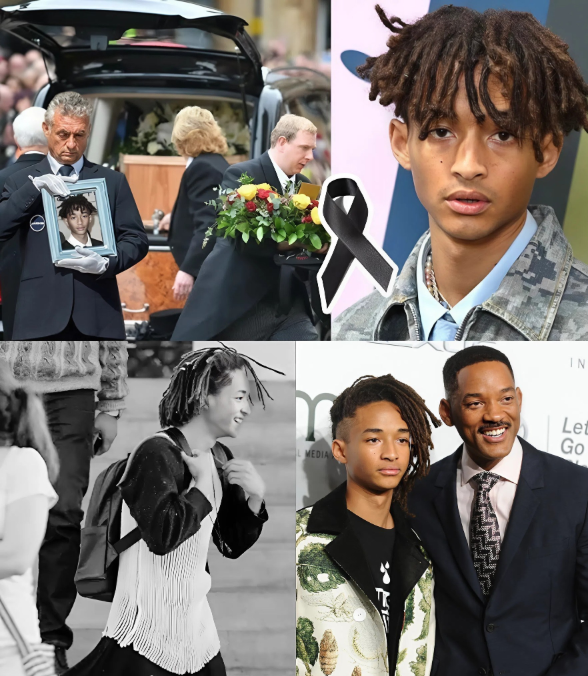
VERY SAD NEWS? The Jaden Smith Headline That Says More About Clickbait Than About Him
Headlines like “VERY SAD NEWS: Jaden Smith, Will Smith’s son, has fulfilled his dream of becoming a girl. But…” are designed to stop readers in their tracks. They rely on shock, emotion, and ambiguity, encouraging people to click before thinking critically. But when we slow down and examine what’s actually being claimed—and what’s actually known—the story shifts dramatically. What initially appears to be “news” quickly reveals itself as a familiar pattern of rumor, misinterpretation, and sensationalism surrounding gender expression and identity.
First, it’s important to be clear: there is no verified, credible report that Jaden Smith has announced a gender transition or stated that he is “becoming a girl.” The headline is misleading. It takes fragments of Jaden’s long-standing openness about fashion, self-expression, and nonconformity, and stretches them into a narrative that simply isn’t supported by facts.
Jaden Smith has been in the public eye since childhood, not only because he is the son of Will and Jada Pinkett Smith, but because he has consistently challenged norms. From wearing skirts on red carpets to modeling clothing traditionally labeled “women’s fashion,” Jaden has been vocal about rejecting rigid gender rules. He has spoken about freedom of expression, individuality, and the harm caused by forcing people into narrow boxes.
That, however, is not the same as declaring a change in gender identity.
Fashion is not gender. Expression is not identity. Androgyny is not transition. These distinctions are often blurred—sometimes intentionally—by viral content creators looking for engagement rather than accuracy. When a headline frames self-expression as “sad news,” it reveals a deeper discomfort with difference rather than an actual event worth reporting.
Why do these headlines spread so fast?
Because they tap into cultural tension around gender. For some audiences, anything that challenges traditional ideas of masculinity and femininity is framed as shocking or tragic. Adding phrases like “VERY SAD NEWS” primes readers emotionally before they even know what’s being discussed. The word “But…” at the end of the headline creates suspense, implying a twist, regret, or consequence that often never materializes in the article itself.
This kind of framing has consequences.
It turns real people into symbols for debate, strips them of nuance, and invites ridicule or hostility. In Jaden Smith’s case, it also ignores the consistency of his message over the years. He has never hidden who he is. He has repeatedly said that people should wear what they want, be who they are, and stop letting society dictate their self-worth. None of that is new. None of it is sudden. And none of it qualifies as “sad news.”
There’s also an important ethical issue at play. Speculating about someone’s gender identity without their explicit statement is inappropriate, whether the person is famous or not. Gender identity is deeply personal. Treating it as gossip or clickbait reduces it to entertainment, which can contribute to misunderstanding and stigma—not just for celebrities, but for everyday people navigating similar conversations in their own lives.
It’s also worth noting how language is used. The phrase “fulfilled his dream of becoming a girl” assumes motivations, desires, and outcomes that Jaden himself has never publicly stated. It imposes a narrative rather than reporting reality. This is a classic tactic in misinformation: present assumption as fact, then build emotional reaction around it.
The “sadness” implied in the headline is equally revealing. Sad for whom? Jaden has repeatedly expressed confidence, creativity, and self-assurance. If sadness exists, it often comes from external judgment rather than internal struggle. Labeling someone’s self-expression as tragic says far more about the viewer’s discomfort than about the subject’s well-being.
Jaden’s parents have also been open about raising their children with freedom of thought and expression. Will Smith has publicly supported Jaden’s individuality, even when it challenges conventional expectations. This family dynamic is often misrepresented as chaos or confusion, when in reality it reflects a philosophy of allowing children to explore who they are without fear.
Another reason these headlines persist is algorithmic reward. Outrage spreads faster than accuracy. Content that triggers emotional reactions—anger, shock, sadness—gets shared more widely than calm, factual explanations. Over time, this creates an ecosystem where truth becomes secondary to virality.
What gets lost in all of this is the actual conversation worth having: Why does gender nonconformity still provoke such extreme reactions? Why does a man wearing a skirt still get framed as a crisis? Why is difference so often labeled as decline?
Jaden Smith’s public life offers an opportunity to expand understanding, not restrict it. He represents a generation that questions inherited rules and asks whether they still make sense. You don’t have to agree with his fashion choices or philosophy to acknowledge that they are his to make—and that they do not automatically signal distress, confusion, or tragedy.
In the end, the headline’s biggest flaw is not just that it’s misleading, but that it’s unnecessary. There is no “sad news.” There is no dramatic reveal. There is only a familiar figure continuing to live authentically in a world that often profits from misunderstanding authenticity.
So when you see headlines like this, pause. Ask what’s being proven, who benefits from the framing, and whether the person at the center has actually said what’s being claimed. More often than not, the truth is far less dramatic—and far more human—than the story trying to sell itself.