Trump Pushes to Reopen and Expand Alcatraz for the “Dregs of Society” — A Provocative Proposal That Rekindles Old Debates
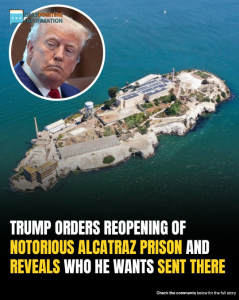
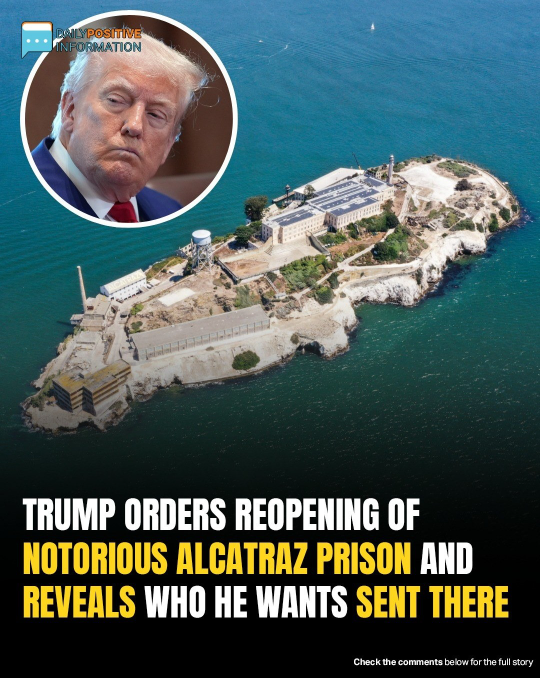
Few landmarks in American history carry the symbolic weight of Alcatraz. Perched on a rocky island in San Francisco Bay, the former federal penitentiary has long occupied a unique place in the nation’s imagination—synonymous with isolation, severity, and the idea that some crimes demand extraordinary punishment. So when claims surfaced that Donald Trump was pushing to reopen and expand Alcatraz to house what he referred to as the “dregs of society,” the reaction was immediate and intense.
Supporters called it a return to “law and order.” Critics labeled it inflammatory rhetoric. Legal experts questioned its feasibility. And historians pointed out that Alcatraz was closed for reasons far more practical than political.
Whether viewed as a serious proposal or a symbolic statement, the idea has reignited a broader national conversation about crime, punishment, and how far the justice system should go in the name of public safety.
The Origins of the Claim
The renewed attention to Alcatraz stems from remarks and commentary attributed to Trump that framed the infamous prison as a potential solution for the most dangerous offenders—violent criminals deemed beyond rehabilitation. The language was stark, intentionally provocative, and consistent with Trump’s long-standing rhetorical style: draw a sharp line between “law-abiding citizens” and those portrayed as irredeemable threats.
The phrase “dregs of society,” in particular, fueled controversy. To supporters, it conveyed frustration with repeat violent offenders and perceived leniency in the justice system. To critics, it dehumanized prisoners and echoed a punitive approach many believe belongs to another era.
Why Alcatraz, and Why Now?
Alcatraz closed in 1963, not because inmates escaped successfully, but because it was prohibitively expensive. Supplying food, water, and fuel to an island prison cost nearly three times more than operating comparable facilities on the mainland. Over time, practical concerns outweighed symbolic value.
Yet symbolism is precisely why Alcatraz still resonates. Mentioning it evokes:
-
Absolute isolation
-
Zero tolerance
-
A hard boundary between society and its most dangerous criminals
In moments of heightened concern about crime, such imagery can be politically powerful—even if implementation remains unlikely.
Legal and Practical Obstacles
Experts across the legal and corrections fields have been quick to note the challenges involved in reopening Alcatraz.
First, the island is now a protected national landmark and a major tourist destination. Reversing that status would require extensive legislative and administrative action. Second, modern correctional standards—covering inmate rights, medical care, and safety—bear little resemblance to those in place during Alcatraz’s operation.
There is also the issue of cost. Any modern facility would require:
-
New infrastructure
-
Updated security systems
-
Compliance with federal and state regulations
-
Ongoing logistical support
In short, reopening Alcatraz would likely be more symbolic than practical.
Political Messaging Versus Policy
Analysts widely view the Alcatraz proposal less as a concrete plan and more as political messaging. Trump has long framed himself as a champion of tough crime policies, and invoking Alcatraz reinforces that image.
Rather than focusing on the logistics of reopening a prison, the message appears aimed at signaling resolve—drawing a contrast between strict punishment and what Trump and his allies describe as a system that has grown too permissive.
In that sense, Alcatraz becomes a metaphor rather than a blueprint.
Supporters Applaud the Tough Talk
Among Trump’s supporters, the idea struck a chord. Many argue that repeat violent offenders cycle through the justice system with little consequence, endangering communities and eroding trust in institutions.
To them, the Alcatraz imagery represents accountability. It conveys the belief that some individuals have forfeited their place in society through repeated acts of violence and that extraordinary measures are justified to protect the public.
For this audience, feasibility matters less than the message: crime should have serious, unmistakable consequences.
Critics Warn of Dangerous Precedent
Opponents, however, see the rhetoric as troubling. Civil rights advocates argue that labeling people as “dregs of society” strips them of humanity and undermines principles of due process and rehabilitation.
They also warn that history offers sobering lessons about extreme punishment regimes. Harsh facilities, critics note, have not consistently reduced crime and often lead to abuse, legal challenges, and long-term costs that outweigh their intended benefits.
To them, reopening Alcatraz symbolizes regression rather than reform.
The Broader Crime Debate
The controversy highlights a deeper divide in American politics: how to balance public safety with fairness, deterrence with rehabilitation.
One side emphasizes incapacitation—removing dangerous individuals from society at almost any cost. The other stresses systemic reform, prevention, and addressing root causes of crime such as poverty, addiction, and mental illness.
The Alcatraz debate doesn’t resolve that divide. It amplifies it.
Historical Echoes
Alcatraz itself has always been more myth than model. It housed a relatively small number of inmates, selected not only for their crimes but for their inability to function in other prisons. Its reputation far exceeded its actual role in the federal system.
Invoking it today taps into nostalgia for a perceived era of order and discipline—even if that perception oversimplifies history.
What Happens Next?
There is no confirmed plan, timeline, or legislative effort to reopen Alcatraz as a prison. For now, the idea exists largely in the realm of rhetoric and reaction.
But the intensity of the response suggests something important: crime and punishment remain among the most emotionally charged issues in American public life. Proposals—real or symbolic—that promise decisive action will continue to attract attention, especially during periods of public anxiety.
Final Thoughts
The call to reopen and expand Alcatraz for the “dregs of society” is less about an island prison than about a vision of justice. It reflects frustration, fear, and a desire for clear boundaries in an uncertain time.
Whether seen as bold leadership or dangerous posturing, the proposal underscores how deeply divided the nation remains over how to define safety, accountability, and humanity within the justice system.
Alcatraz may no longer hold prisoners, but as this debate shows, it still holds powerful meaning.