😳😳 If You Have These Two Holes in Your Back, It Means You Don’t… What Everyone Gets Wrong About Them
You may have seen the viral posts: “If you have these two holes in your lower back, it means you don’t gain weight,” or “People with these dimples are naturally more attractive,” or even “Only a small percentage of people have them—and it means something special.” The suspense-heavy captions usually end with “See more”, leaving readers curious, confused, or convinced that their body is hiding a secret message.
So what are these mysterious “two holes” in the back really about? Are they rare? Do they signal health, beauty, or something more? Let’s separate fact from fiction and uncover the real story behind one of the internet’s most misunderstood body features.
What Are the “Two Holes” in the Back?
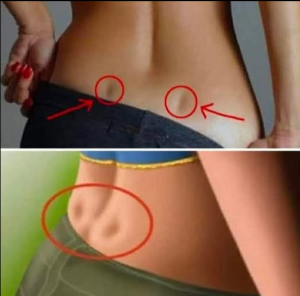
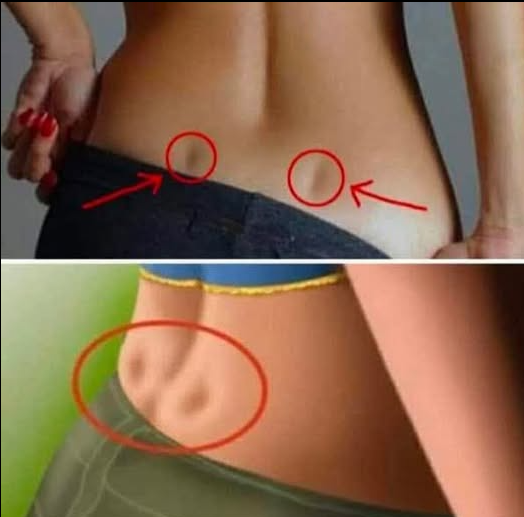
Those small indentations located symmetrically on the lower back—just above the buttocks—are commonly known as Dimples of Venus (for women) or Dimples of Apollo (for men). Medically, they are referred to as posterior superior iliac spine dimples, which sounds complicated but simply describes their position on the pelvic bones.
These dimples are not holes, defects, or signs of anything missing. They are natural indentations in the skin where ligaments connect the skin to the underlying pelvic structure. In other words, they are a normal anatomical feature.
Are They Rare?
Despite what social media claims, these dimples are not extremely rare. A noticeable portion of the population has them, though their visibility varies. Some people have deep, clearly defined dimples, while others have faint ones that only appear in certain positions or lighting.
Genetics plays the biggest role. If your parents or grandparents had them, there’s a good chance you might too. They are not something you can develop through exercise, posture, or lifestyle changes.
Do They Mean You’re Healthier?
This is one of the most common myths.
Having Dimples of Venus does NOT automatically mean:
-
You are healthier than others
-
You have better circulation
-
You have a faster metabolism
-
You are immune to weight gain
-
Your spine is “perfectly aligned”
However, because these dimples are more visible in people with lower body fat in that specific area, they sometimes get wrongly associated with fitness or leanness. That’s correlation, not causation.
A person can be perfectly healthy without them—and someone with them can still experience health issues. They are neutral, medically speaking.
Do They Have Any Medical Significance?
In most cases, no. Dimples of Venus are harmless and require no treatment. They do not indicate disease, deficiency, or structural problems.
That said, they should not be confused with sacral dimples found in infants, which are different and sometimes monitored by doctors. Adult Dimples of Venus are simply a variation of normal human anatomy.
Why Are They So Hyped Online?
The internet thrives on mystery and exclusivity. Saying “only 5% of people have this” or “your body is trying to tell you something” is far more clickable than “this is a normal genetic feature.”
These dimples are also often associated—rightly or wrongly—with attractiveness in popular culture. Because they sit at the curve between the lower back and hips, they draw attention to body contours, which fuels their portrayal as a “desirable” trait.
But beauty standards are cultural, change over time, and are never universal.
Do They Affect Movement or Strength?
No. They don’t make you stronger, faster, or more flexible. They don’t improve balance or posture. They don’t weaken you either.
Athletes, non-athletes, dancers, office workers—people across all activity levels may or may not have them. Performance and physical ability depend on muscle, training, nutrition, and overall health, not skin indentations.
Can You Lose Them or Gain Them?
Because they’re largely genetic and tied to bone structure, you can’t intentionally create them. Significant weight changes may make them more or less visible, but the underlying structure remains the same.
If someone online claims an exercise routine can “give you Venus dimples,” that’s misleading. Exercise can tone muscles, not reshape where ligaments attach to bones.
The Psychological Side: Why People Compare
Viral body trends often make people scrutinize themselves unnecessarily. Seeing posts that imply you’re missing out if you don’t have a certain feature can trigger self-doubt.
But here’s the truth:
Human bodies are incredibly diverse, and no single feature determines worth, beauty, or health. What social media labels as “special” today will be replaced by something else tomorrow.
The Bottom Line
If you have those two small dimples on your lower back:
-
They are normal
-
They are genetic
-
They don’t predict your health or future
-
They don’t define your attractiveness
And if you don’t have them:
-
You’re not lacking anything
-
Nothing is “wrong” with your body
-
You’re just as normal
The human body doesn’t need viral myths to be interesting—it already is.
Sometimes, the biggest mystery isn’t what these features mean…
…it’s why we let the internet convince us they mean anything at all