The World’s Thinnest Woman: Myth, Media, and the Real Cost of Extreme Thinness
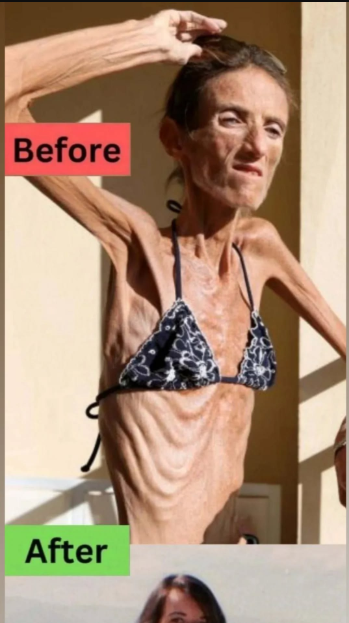
Headlines declaring “the world’s thinnest woman” have circulated for decades, fueled by shock value and curiosity. These stories often spread rapidly across social media, accompanied by dramatic photos, minimal context, and exaggerated claims. But behind the sensational phrasing lies a far more serious reality—one that involves health risks, ethical concerns, and the way society views bodies, illness, and worth.
To begin with, there is no official or medically recognized title such as “the world’s thinnest woman.” Human bodies are constantly changing, and weight alone is not a reliable or ethical metric for defining someone. Yet the phrase persists because it taps into extremes. Extremes grab attention, and attention generates clicks. Unfortunately, this kind of framing often strips people of dignity and reduces complex medical conditions to spectacles.
In many cases, stories about extreme thinness are connected to severe medical issues. These may include eating disorders such as anorexia nervosa, chronic gastrointestinal diseases, endocrine disorders, genetic conditions, cancer, or other illnesses that affect metabolism and nutrient absorption. In some situations, individuals featured in viral headlines did not choose their condition at all. Their bodies became thin as a consequence of disease, not desire.
Eating disorders, in particular, are among the most dangerous mental health conditions worldwide. Anorexia nervosa has one of the highest mortality rates of any psychiatric disorder. It affects the heart, brain, bones, hormones, and immune system. Extreme thinness is not a sign of discipline or beauty—it is often a sign that the body is under severe stress and struggling to survive. When media outlets frame such conditions as curiosities or records, they risk glamorizing suffering.
There is also a psychological impact on audiences. Constant exposure to extreme body images—whether extremely thin or extremely muscular—can distort perceptions of what is normal or healthy. Young people, especially, may internalize these images and compare themselves in harmful ways. For someone already vulnerable, such content can reinforce disordered thinking and unhealthy behaviors.
Historically, society has had a complicated relationship with thinness. In different eras, thinness has been associated with poverty, illness, elegance, or self-control, depending on cultural context. In modern times, thinness is often marketed as an ideal, even when it falls far outside healthy ranges. This cultural pressure can make it difficult to separate health from appearance. A body can look socially “acceptable” while being medically unwell—and vice versa.
Another overlooked issue is consent. Many people labeled in extreme headlines never asked to be public figures. Their images are shared, reshared, and commented on by millions of strangers. They become objects of speculation rather than individuals with privacy, families, and emotions. Ethical storytelling requires asking not just “Will this go viral?” but “Is this fair?”
From a medical standpoint, health cannot be determined by weight alone. Doctors evaluate overall well-being using many factors: blood pressure, heart rate, bone density, hormone levels, mental health, nutrition, mobility, and quality of life. Someone at a very low weight is at increased risk for complications such as heart arrhythmias, organ failure, infertility, weakened bones, hair loss, cognitive impairment, and immune suppression. These are not abstract risks—they are well-documented realities.
It is also important to acknowledge recovery and resilience. Many individuals who once lived in bodies defined by extreme thinness have gone on to heal, regain strength, and reclaim their lives. Recovery is rarely linear. It requires medical care, psychological support, patience, and compassion. When stories focus only on extremes, they erase the possibility of healing and reinforce hopelessness.
A healthier approach to such topics shifts the focus from shock to understanding. Instead of asking “Who is the thinnest?” we might ask “Why are we so drawn to extremes?” or “How can we better support people facing serious health challenges?” These questions open the door to empathy rather than judgment.
In recent years, there has been a growing movement toward body neutrality and body respect. This perspective does not insist that everyone love their body all the time, but it emphasizes that bodies deserve care regardless of size, shape, or ability. It recognizes that health looks different for different people and that no one should be reduced to a number on a scale.
Ultimately, the phrase “the world’s thinnest woman” tells us more about media culture than about health. It reflects a tendency to sensationalize human suffering and to rank bodies as if they were achievements. Real people are not records. They are lives in progress, shaped by biology, environment, trauma, and circumstance.
If there is a lesson to take away, it is this: extreme thinness is not a goal, a curiosity, or a badge of honor. It is often a warning sign. And behind every shocking headline is a human being who deserves understanding, privacy, and care—not labels.