Red in the Whiteout: A Bold Drive Through the Snow
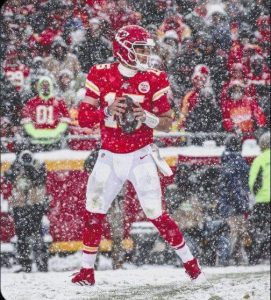
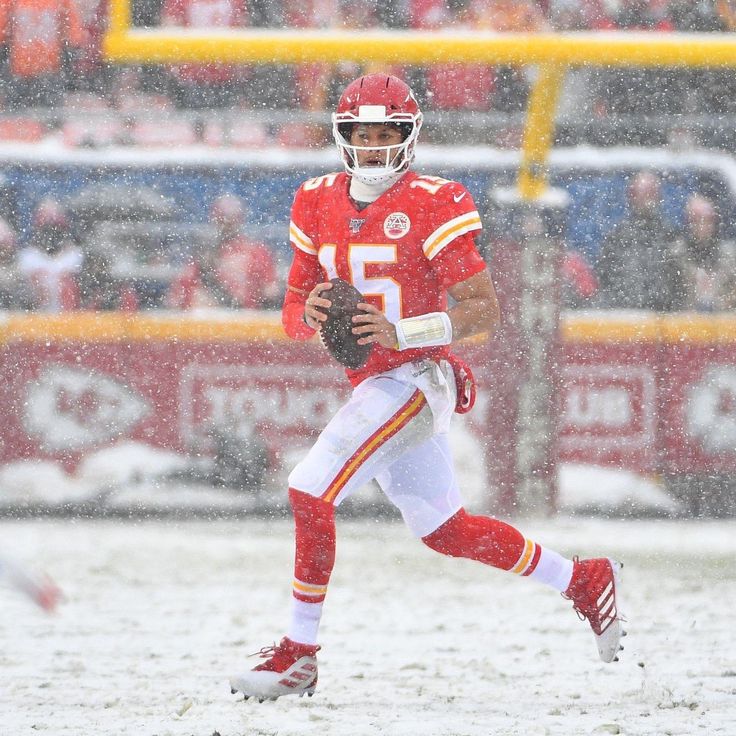
The storm had rolled in fast, swallowing the stadium in a curtain of swirling white. At kickoff, the field had been green, crisp, and perfect. Now, just an hour later, it looked like the heart of a blizzard—yard lines nearly erased, players’ footsteps pressed into the powder like fleeting echoes, and visibility so low the crowd could barely make out shapes moving on the field. It was the kind of weather that made even seasoned fans shiver, the kind that turned every play into a test of willpower rather than athletic skill.
And yet, in the midst of the storm, one figure in bright, blazing red moved with purpose.
The quarterback stood tall in the huddle, snow clinging to his helmet, shoulders, and facemask. He wiped a glove across his visor, clearing the film of white just long enough to lock eyes with his teammates. They leaned in close, breath fogging the air, waiting for the call. Wind howled through the open stadium, tugging at jerseys and whipping snow in unpredictable spirals.
This wasn’t just football anymore. It was survival.
“Let’s make it count,” he said, voice steady despite the cold. The offense broke from the huddle and lined up.
As the ball snapped, the quarterback caught it cleanly, but the footing beneath him threatened to give. Ice disguised as snow had formed a slick layer atop the turf. He pivoted, slipping for half a heartbeat before regaining traction. In that moment of imbalance, defenders surged through gaps in the line like wolves chasing prey. The pass play the team had planned evaporated instantly.
The quarterback tucked the ball into his arm and ran.
The crowd roared—not a sharp, clear roar, but a muffled one, as though filtered through layers of snowfall. Even so, it pulsed through the stadium like thunder. The quarterback sprinted past the line of scrimmage, boots slicing through six inches of snow. Each step sent white sprays up around him like tiny explosions.
Snow games were notorious for slowing runners, but somehow he looked faster. Lighter. As though the snow wasn’t a burden but a stage built for this exact moment.
A linebacker broke through the protection, charging toward him. The quarterback lowered his center of gravity and cut to the right. The linebacker slid past, unable to stop. The quarterback kept running, eyes scanning the white haze for any hint of the sideline markers. The field was a blur—a mix of dim crowd shapes, swirling flakes, and flashes of red and white.
Defenders closed in again, two this time, angling to sandwich him. He planted his foot, intending to stop and cut back inside. But the snow gave way, nearly sending him tumbling. He recovered with a desperate leap, snow erupting around him as he lunged forward, the defenders’ arms grasping at nothing but frozen air.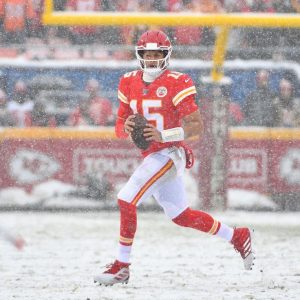
The sideline felt miles away.
Players on the bench jumped up, shouting encouragement that he couldn’t hear over the wind. Their silhouettes, coated in snow, looked ghostly—silent witnesses to the charge unfolding in front of them.
The quarterback pushed forward, breath tearing through the cold as clouds of vapor. His red jersey practically glowed against the whiteout, a single ember refusing to be snuffed out by the storm. His legs burned. The cold cut deep into his lungs. Still, he didn’t slow.
The ball felt heavier, soaked with snow and sleet. He tightened his grip, knuckles whitening under the stress. The field felt endless, the storm pressing down like a weight. But he could see the first-down marker now—a faint orange blur in the corner of his vision.
He angled toward it.
A safety appeared suddenly, materializing from the storm like a phantom. The quarterback had only a second to react. He didn’t brace for impact. He didn’t slide. Instead, he twisted his body sideways and spun. The snow beneath him burst like a bomb as both cleats dug in simultaneously. The safety lunged, reached, grasped nothing.
The quarterback completed the spin, found his footing, and hurled himself forward for the final few yards.
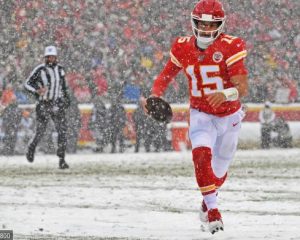
When he crossed the marker, the officials’ hands shot up, signaling the first down. But the quarterback didn’t stop running immediately—momentum carried him a few more steps before he slid onto the snowy turf, skidding like a stone across ice. He punched the ground with joy, sending snow flying as he got up.
The offense swarmed him.
Teammates slapped his helmet, his shoulders, gripping him with gloved hands that were half frozen. Their cheers mixed with laughter, breath fogging around them in clouds. They looked like children celebrating the perfect snow day, energized not by warmth but by the raw thrill of what had just happened.
On the sideline, coaches waved their arms and pointed toward the play clock, urging everyone to regroup. But even they couldn’t hide their awe.
This wasn’t just a run. It was a statement.
In normal conditions, it would’ve been impressive. In a whiteout, it was iconic.
The quarterback jogged back to the huddle, chest rising and falling as he sucked in lungfuls of icy air. Snowflakes clung to his eyelashes. His cheeks were red with cold and adrenaline. His teammates looked at him with a fire in their eyes they hadn’t had earlier.
He had given them more than yards. He had given them belief.
As they lined up for the next snap, the storm intensified. Snow whipped around the stadium in thick sheets, making everything shimmer in a kind of dreamlike haze. And yet, amid the chaos, that flash of red stood out vividly—defiant, determined, undaunted.
The quarterback crouched behind the center. The crowd held its breath. The storm howled. The ball snapped.
And the drive continued.
It didn’t matter that the world was frozen. It didn’t matter that wind and snow fought against every movement. In that moment, on that field, surrounded by the fiercest winter fury the game had seen all season, one truth stood out: