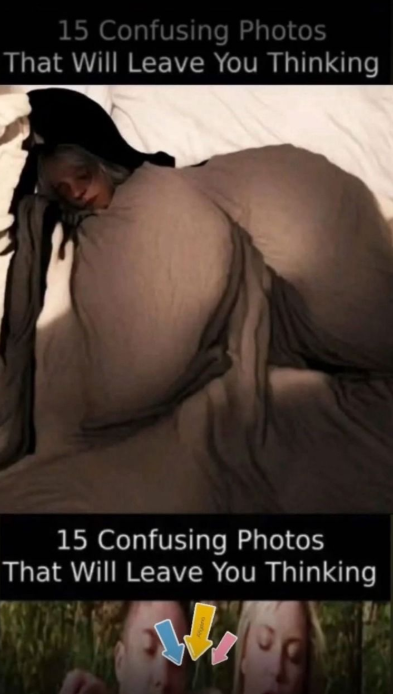

Innocent Pictures That Prove You Have a Dirty Mind
Every once in a while, the internet hands us an image so unexpectedly misleading that we can’t help but pause, squint, and wonder for a split second if we’re seeing something inappropriate. Then, as our brain catches up, we realize the picture is totally harmless. These moments say less about the images themselves and more about how human perception works. Optical illusions, odd angles, and the brain’s tendency to jump to conclusions can turn the most innocent snapshots into something hilariously suggestive.
This phenomenon—often called “accidental innuendo photography”—has become one of the internet’s favorite sources of humor. It’s wholesome, funny, and endlessly fascinating. Let’s explore why these images trick our minds, why we instantly assume the wrong thing, and what these illusions say about the wonderful quirks of human perception.
Why Our Brains Misinterpret Innocent Photos
Before diving into examples, it helps to understand why our brains so quickly register something “dirty” when the subject is completely pure. The answer lies in a cognitive shortcut called pareidolia—the tendency to perceive familiar patterns, shapes, or meanings where none actually exist. Most people associate pareidolia with seeing faces in clouds, but it extends to all kinds of recognizable forms.
Add to that the brain’s love of context clues. When a picture is taken at an unexpected angle or captures two objects overlapping at just the right moment, the brain fills in the missing details based on what seems most familiar. When something resembles a mature image, even vaguely, the mind often jumps there instantly—long before we have time to think logically.
This doesn’t mean someone “has a dirty mind.” It just means the brain is doing what it always does: making fast predictions before examining the full picture. Once you understand the trick, the illusion disappears, usually leaving you laughing at your own imagination.
The Power of Angles and Timing
Some of the funniest misleading pictures are created by pure accident. A dog leaping behind a person at the exact moment the shutter clicks can make it look like the person has a tail. A person holding a balloon in the wrong place can create a silhouette that looks much naughtier than intended.
For example:
-
A perfectly innocent photo of someone holding a baguette close to a dark background can look shockingly different at first glance.
-
A person leaning forward in front of a sculpture or plant can look like they have strange body parts.
-
A shadow cast on a wall can transform into something wildly misleading.
These are everyday objects and poses, but when shot from an unfortunate—or fortunate, depending on your perspective—angle, the result becomes hilarious.
The Role of Shadows in Optical Illusions
Shadows are some of the biggest culprits in tricking the mind. Without color, detail, or context, the human brain relies heavily on shape alone, making it easy for shadows to resemble other things entirely.
A shadow cast by two people standing apart may merge into a single silhouette that looks completely different. A shadow from a hand gesture can resemble something more risqué. Even a harmless garden hose shadow falling across a lawn can take on an unintended form.
Shadows flatten information. They strip away depth, leaving only outlines. When the outline mimics a shape our brain quickly recognizes, we make assumptions instantly.
When Objects Mimic Human Forms
One of the funniest aspects of accidental innuendo pictures is how ordinary objects can mimic human body parts. Nature does this frequently—trees, rocks, fruits, and vegetables often grow in shapes that resemble humans or animals. Architecture, furniture, and even food arrangements sometimes line up in ways that cause a double-take.
Consider:
-
A pair of overlapping coffee mugs that resemble curves of the human body.
-
A bent tree branch that looks an awful lot like a leg sticking out of nowhere.
-
A melted candle forming a shape that could raise eyebrows at first glance.
-
Foam on a cappuccino that unintentionally forms a cheeky silhouette.
In every case, the humor is harmless. The only thing “dirty” is how quickly our mind jumps to a conclusion.
Why We Find These Pictures So Funny
Part of the humor comes from the shared experience. The thrill isn’t just in seeing a misleading picture—it’s in realizing that almost everyone else sees the same thing at first. There’s comfort in the collective moment of “Wait… ohhh, now I see it.”
It also plays on the tension between expectation and reality. When an image seems suggestive but turns out to be completely innocent, the sudden shift in interpretation creates a burst of laughter. It’s the same psychological mechanism behind jokes, magic tricks, and certain kinds of art.
These illusions also remind us that perception is fallible. Our eyes don’t always tell the truth the first time around. That reminder, delivered through humor, feels disarming and playful.
A Wholesome Reminder About Human Nature
Ironically, the popularity of these images shows more about our sense of humor than anything else. People enjoy harmless misinterpretations because they reveal how unpredictable the mind can be. It’s a small, shared vulnerability—our brains leap before we think, and we can laugh at ourselves afterward.
It also reminds us that the world is full of unintended coincidences. A snapshot taken a fraction of a second earlier or later would have been ordinary—but because everything lined up perfectly, it becomes a moment worth sharing.
Why These Photos Go Viral So Quickly
Social media loves content that is:
-
surprising,
-
instantly recognizable,
-
universally relatable,
-
and funny without being offensive.
Accidental illusions check all these boxes. They’re safe for most audiences, but still mischievous enough to spark reactions. They rely on visual humor, which transcends language barriers. People don’t need explanations—just a glance and a laugh.
A single picture can spread across platforms because the humor is shared, immediate, and irresistible.
Conclusion
“Innocent pictures that prove you have a dirty mind” aren’t really about being dirty—they’re about the wonderfully flawed way our brains interpret the world. These illusions are moments where angle, lighting, timing, and imagination collide to create something unexpectedly funny.
They remind us not to take ourselves too seriously. They show us that our perception is playful, creative, and sometimes mischievous—exactly why these photos continue to charm millions.
So next time you see an image that makes you do a double-take, enjoy the moment. Your brain isn’t misbehaving—it’s doing what it does best: trying to make sense of the world, one hilarious illusion at a time.